This content was first published on IGR – Italian Gemological Review no. 23 in 2026. The information provided here is therefore current as of the original publication date.
Gem-quality corundum, in its ruby and sapphire varieties, accounts for over 50% of global production of colored gems. Given their critical importance to the jewelry industry, this mineral became the focus of a 2026 scientific study by Sorokina and colleagues, titled “High-Spatial-Resolution Oxygen Isotopic Analysis to Distinguish Natural, Treated, and Synthetic Corundum”, and published in 2026 on the European Journal of Mineralogy.
The research stems from the need to fill the gaps in traditional diagnostic techniques, which have been increasingly challenged by the sophisticated synthesis methods developed in recent decades. Moving well beyond classic gemological analyses like refractive index and specific gravity measurements, and past established geochemical techniques such as LA-ICP-MS spectrometry, the study tested secondary ion mass spectrometry (SIMS) for oxygen isotope ratio analysis (δ18O). The technique delivers exceptionally high spatial resolution, minimal material consumption, and superior sensitivity compared to LA-ICP-MS, making it ideal for already-cut gemstones.
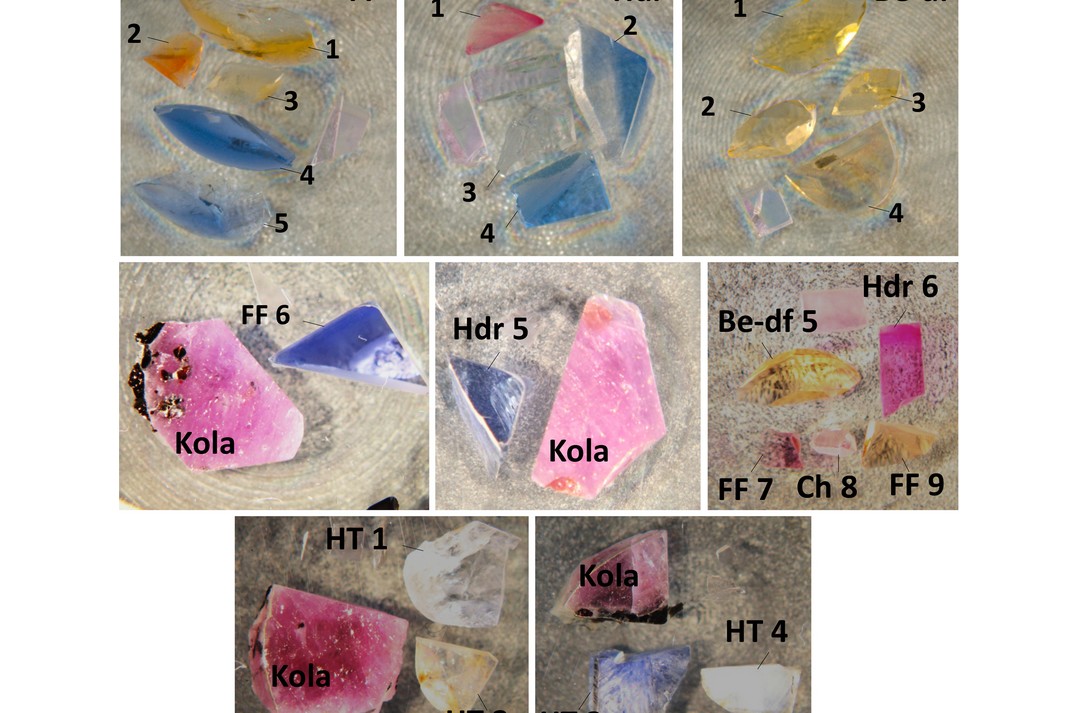
Chemical analyses proved crucial in revealing distinctly different isotopic signatures between natural and synthetic samples. Sorokina et al. clarified the isotopic mechanisms driving differences in corundum of varying origin, establishing δ18O as a robust, reliable diagnostic parameter.
Synthetic corundum from hydrothermal synthesis showed strongly negative values, ranging from −7.84‰ to −14.54‰ against the VSMOW standard, entirely atypical for natural corundum and traceable to the isotopic composition of water used in the synthesis process. Flame Fusion (Verneuil) method samples yielded values between −6.73‰ and −17.46‰ for sapphires and +28.51‰ to +30.47‰ for rubies, also outside the variability range of natural deposits.
A key finding: high-temperature treatments and beryllium diffusion do not significantly alter the gemstone’s original isotopic composition, enabling clear distinction between treated natural stones and synthetics. This research marks a significant contribution to forensic gemology and paves the way for future integration with 17O isotope analysis, which could identify individual growth methods — including flux synthesis — with even greater precision.
The study is available at the following web address: https://ejm.copernicus.org/articles/38/123/2026/.
Gem news published on IGR – Italian Gemological Review #23 – Autumn 2026.