This content was first published on IGR – Italian Gemological Review no. 2 in 2017. The information provided here is therefore current as of the original publication date.

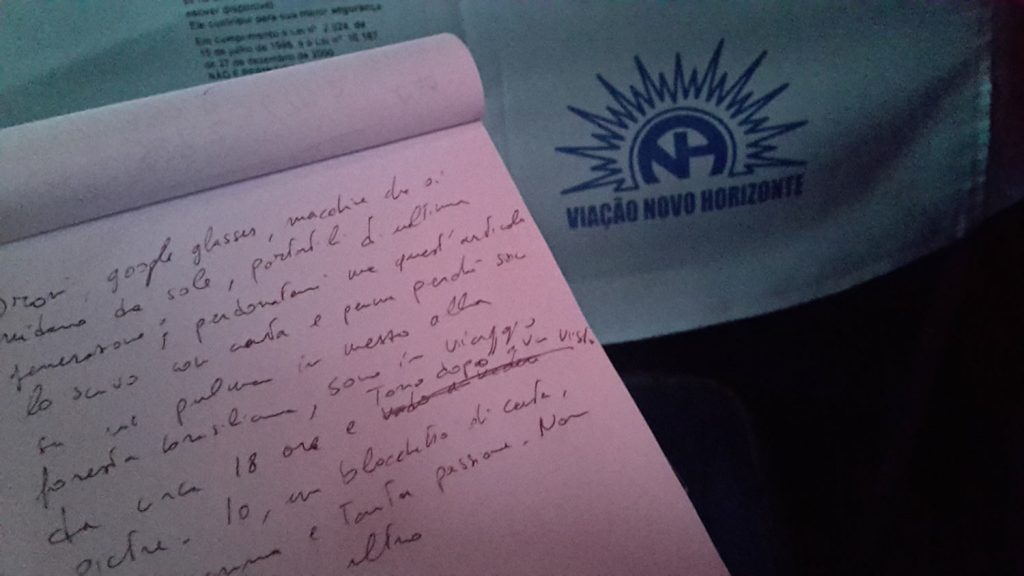
Drones, Google Glasses, self-driving cars, cutting edge laptops; I hope you will forgive me, but I am writing this article on paper with a pen as I am currently on a coach in the middle of the Brazilian forest (Figure 1).
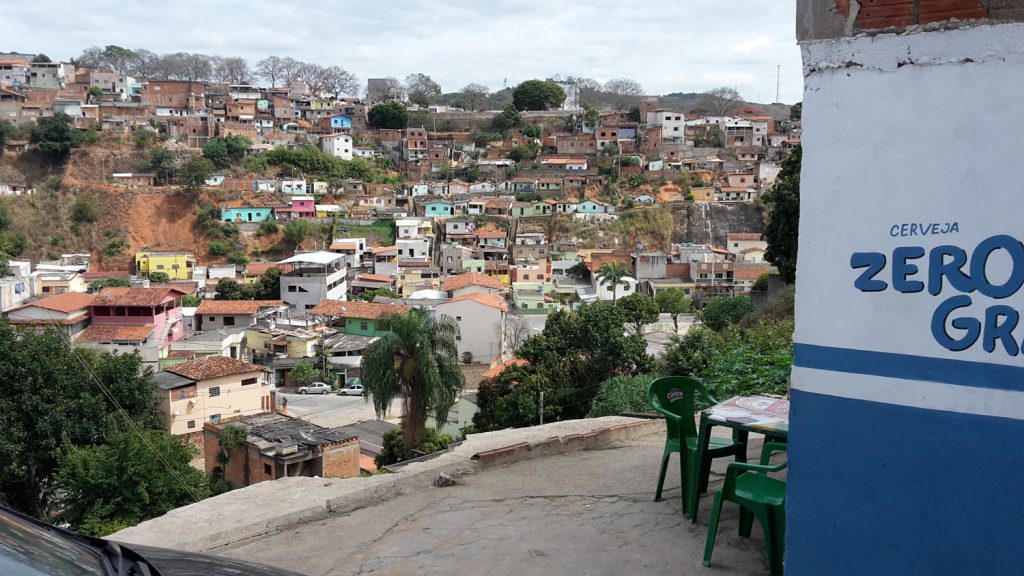
I have been travelling for about 18 hours heading to San Paolo, coming back from Teofilo Otoni after admiring the stones at the Feira Internacional de Pedras Preciosas (FIPP). Me, a notebook, a pen and plenty of passion. I don’t think I need anything else to tell you about this experience. I was invited by Leonardo Silva Souto, President of the association that has been organizing for years the FIPP of Teofilo Otoni (Figure 2), the world capital of precious stones, as well as a lively mining village, a 9 hours’ journey by coach from Belo Horizonte (capital of the state of Minas Gerais) and a 20 hours’ one from San Paolo.
I was invited to give a series of lectures on the importance of opening a gemmological laboratory in Teofilo and to establish a gemmology course. However, I don’t think this is of a great interest for you. Maybe a reportage on the FIPP, the trade show dedicated to precious stones brought directly from the source (this is the slogan) could be more appealing. Being able to properly explain what the precious stone exhibition of Teofilo Otoni is proves to be a difficult task. I will try using as comparison the Fiera di Vicenza certainly known by many. Take Fiera di Vicenza, make it smaller, remove all the assembled objects, switch all the dichroic shining spotlights off and get rid of all rotating display units, make any kind of jacket and tie disappear, along with any hostess holding her nice pack of flyers. What would be left? Only gems and people in their underwear (Figure 3).
Now, making a small effort, try to imagine that half of those gems is still in its raw form. Welcome to the Feira Internacional de Pedras Preciosas of Teofilo Otoni, where once a year, nice “garimpeiros” (miners) and local traders sell all the raw items that were extracted and all the gems that were cut.
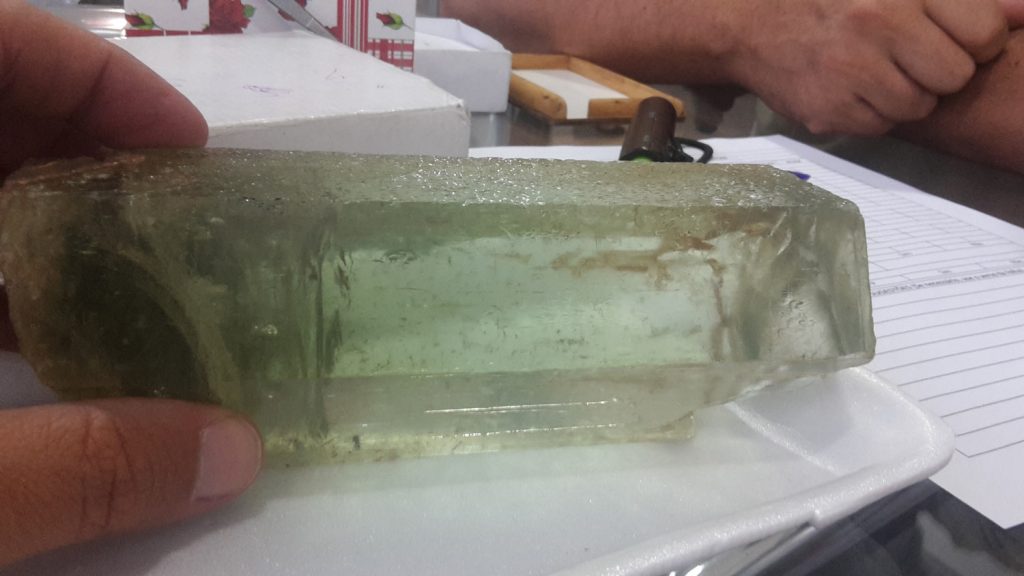
You walk around metal Spartan tables and some better organized stands, immersed amid a huge quantity of gems, raw cutting items and collection minerals, displayed in basins full of water, polystyrene trays, plastic glasses and finished rolls of toilet paper. Great! Just for a moment, I plunge back into the past and I am once again the child who went around the small mineral shops to look for the precious stones I read about in the stories of Uncle Scrooge. Having the chance of holding in your hand a rubellite instead of seeing it turn in a window shop hit by thousands of lights. I am just speaking for myself and with no intention to generalize, I am simply expressing a feeling, may be due to the moment, but seeing a crystal of green aquamarine (not yet heated) weighing over two kilos, perfectly clear (Figure 4) and listening to the account of the garimpeiro that had extracted it – he told me that it was the most beautiful crystal he had ever been able to extract in his whole life, speaking about the emotions he felt on the day of the finding – well, all this is not by far comparable to listening to an Indian in his tie at an exhibition showing you his batch of even calibrated aquamarines, whose only words to describe his gems are “good price for you my friend”.
At the trade show of Teofilo Otoni you are once again a happy child fond of stones. It is an exhibition of gems and not of the world revolving around them. It is also a place where the gemmological novelties from Brazil arrive first. What did I see this year?
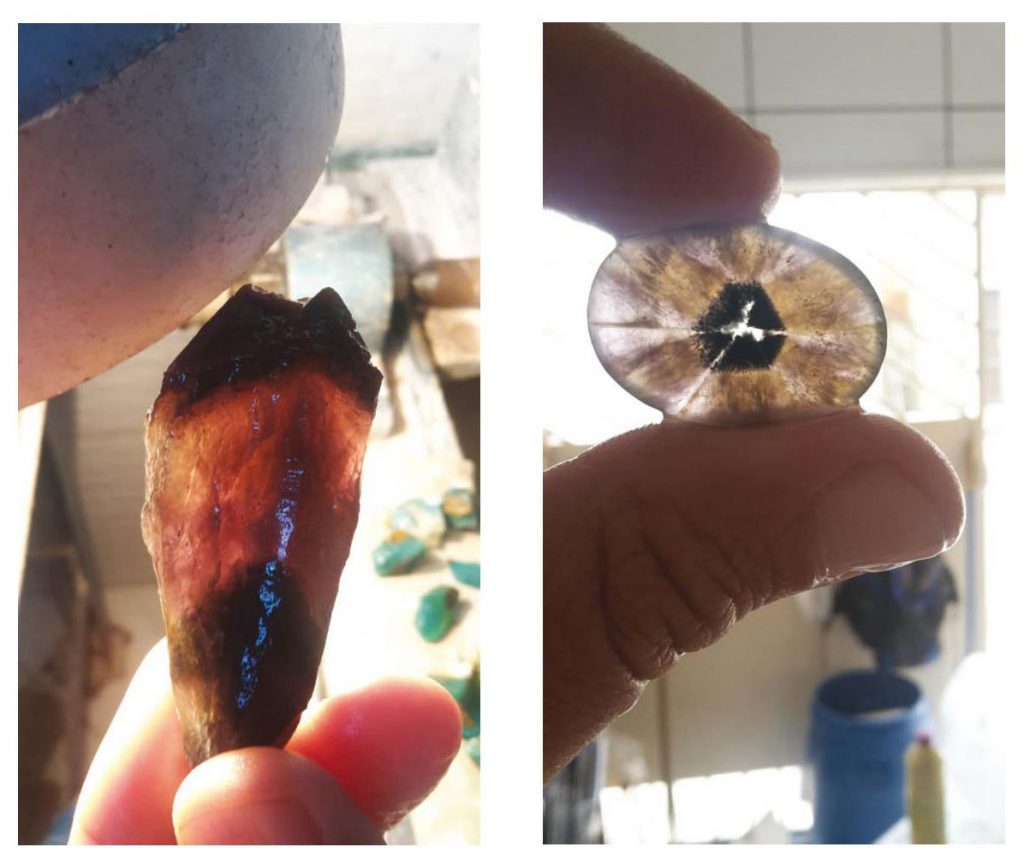
I saw a new type of trapiche ametrine coming (perhaps) from Parà (Figure 5), extremely dark in its raw form, though able to show against the light the yellow and purple shades of the ametrine and an inner dark green phantom (probably chlorite). Crystals are not attractive, but once cut perpendicularly to the elongation direction, outstanding gems appear with a dark green trapiche hexagon from which purple and yellow rays radiates (Figure 6). I would like to tell you the name with which it was marketed, but the owner hadn’t decided how to call this new quartz yet.
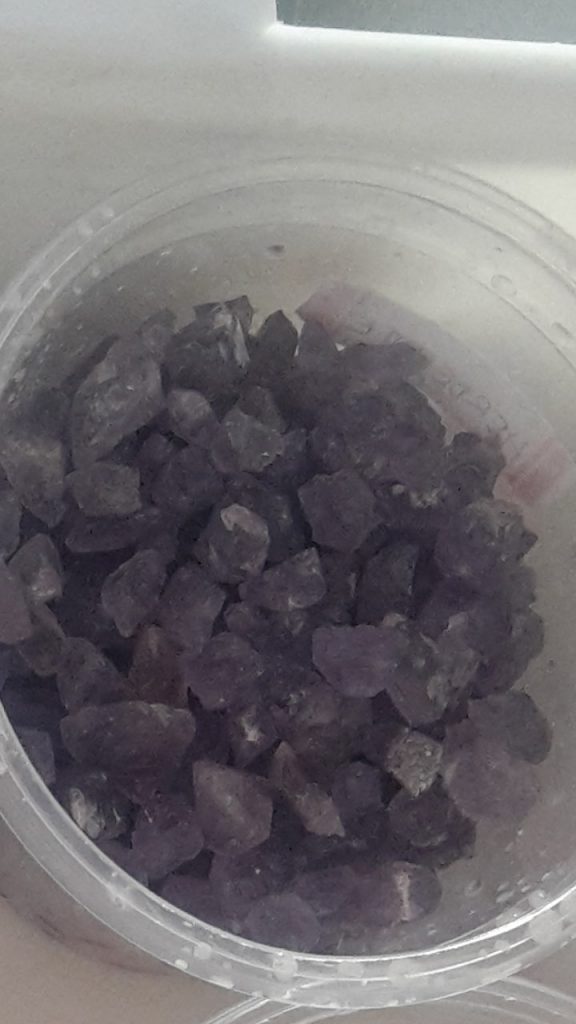
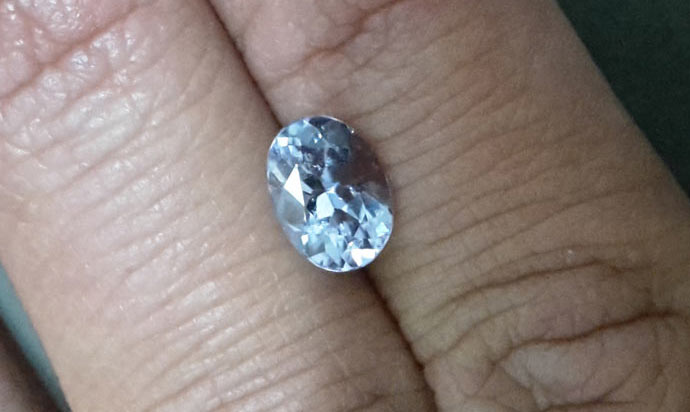
Then I came across a garimpeiro from Aracuai (a mining area in the state of Minas Gerais) who had found in his fazenda raw items of a blue-greyish mineral ranging from transparent to translucid to opaque (Figure 7); from one of these he had cut a 1.63 ct gem. (Figure 8). Out of curiosity I had this gem tested in a gemmological laboratory prepared on purpose for the FIPP and we discovered that the above mentioned mineral was herderite. As far as I can personally remember, it is the first finding in history of a gem quality herderite having such a colour.
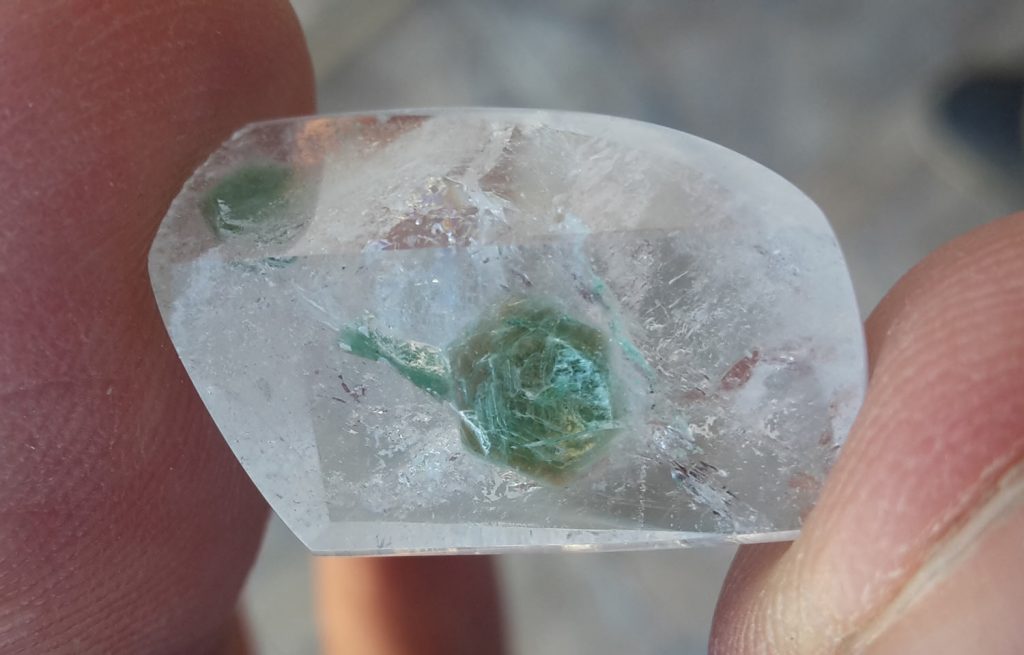
Again in Aracuai another seller displayed gems of transparent rock-crystal with spectacular green lamellar inclusions of fuchsite (Figure 9). Another trader had brought some quartzes found in Galileia (Minas Gerais) containing blue crystals of apatite. Never seen before. And then the exhibition hosted the great novelty of the year: the sensational crystals of amethyst discovered in a new mine opened in the North of Bahia, in the village of Sento Sé, near the banks of the river Sao Francisco, in Serra da Quixaba. Until few months ago the economy of this town was based on fishing and the growing of onions, but the discovery of this amethyst mine, about 50 km from the town, changed the habits of local people. In a very short time, they have all become garimpeiros (they estimate about 8000 people currently involved in the extraction of this amethyst).
The material on display at the exhibition (mostly raw crystals) by various traders was extremely beautiful: crystals as big as a fist, even free from inclusions visible by the naked eye, of an intense purple shade. I had the feeling that it was the most beautiful cutting amethyst ever extracted in Brazil (I am talking about the material destined to jewellery, from the point of view of a mineralogical collector, the geodes of Rio Grande do Sul are still beyond compare).
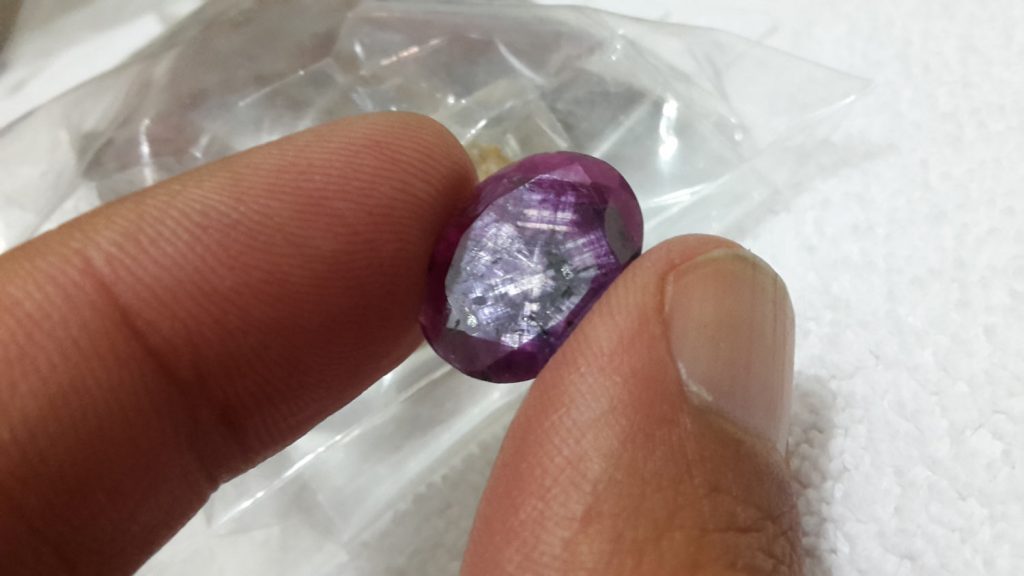
And then plenty of stones, tourmalines, beryls of any colour, imperial topazes, quartzes, paraiba tourmalines (but only the African ones, I didn’t see any Brazilian paraiba), collection minerals, cutting raw items, there was everything! As a good gemmologist I also had to notice how the exhibition had hosted some less fascinating novelties: a new treated green quartzite used to imitate jade; a use of faceted synthetic products sold like gems coming from new findings (a very beautiful lot of linobate is worth mentioning) a confusion of gems of a dubious origin such as a new trapiche ruby (Figure 10): a ruby field in Brazil would be a sensational novelty, but it seems to me that these rubies come from Madagascar…even if a toothless guy wearing the shirt of Flamengo swore that a friend of his had found these rubies east of Teofilo Otoni (well, if you think, Madagascar is east of Teofilo Otoni!).
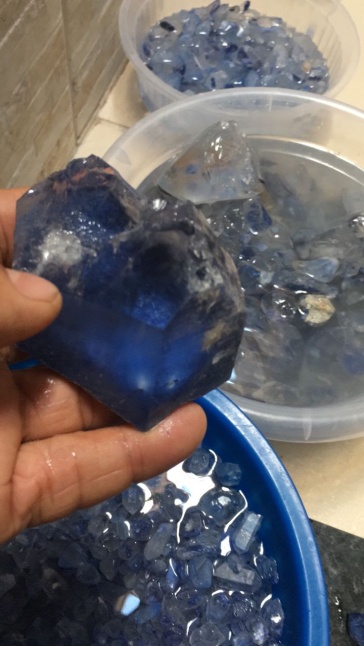
And finally, let me make a special praise to a material already present on the market for a couple of years that this year has shown all its splendour with exceptional quality specimens: the quartz with inclusions of blue dumortierite coming from Bahia (Figure 11), certainly the most important recent finding of quartz with inclusions.
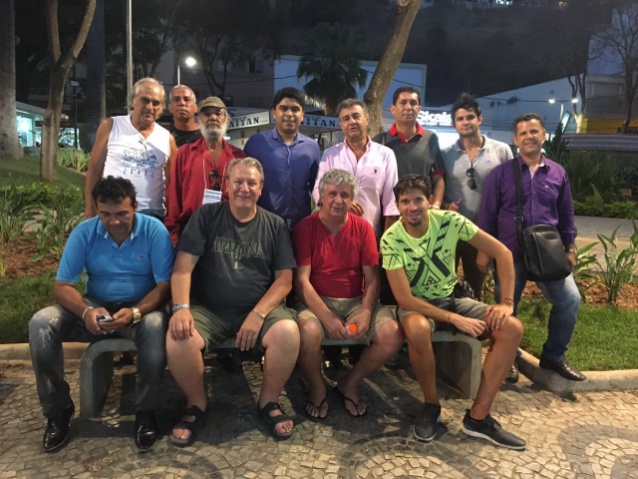
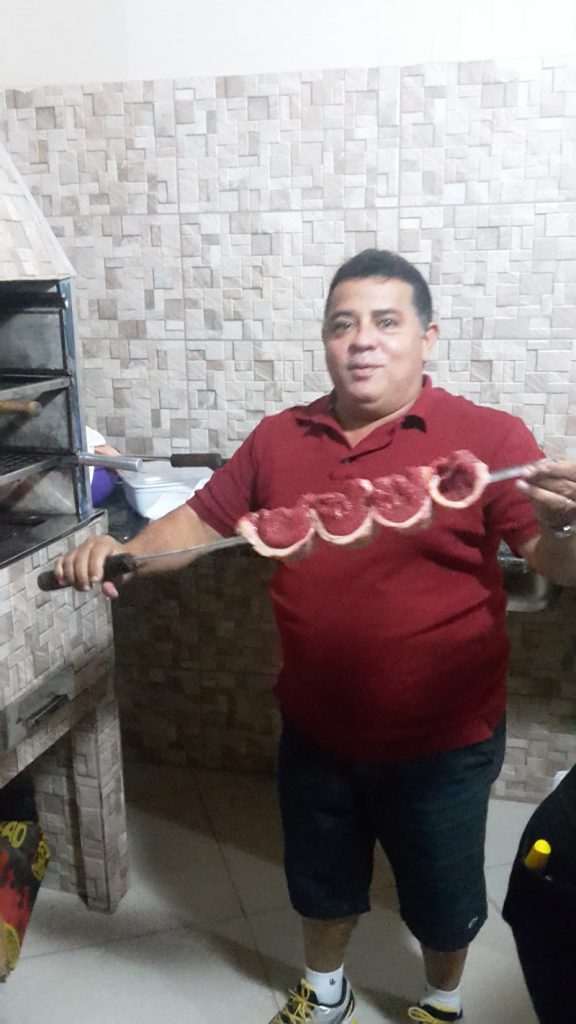
The days at the exhibition passed fast and when the night came, no luxury restaurants or bejewelled aperitifs with sushi, the most hated Japanese food! Before the closing time we went to Sandro and Gera’s stand to drink a couple of glasses of Tesourinha (an excellent Mineiran cachaca) and then to some friends’ to eat a traditional meat churrasco (the chance to find a vegan in Teofilo are the same of extracting a 100 ct diamond on the Alban Hills) (Figure 12).
In just a few lines I have not the pretence and presumption to describe Brazil and its gems, but may be if you read until this point, you got curious and these few lines will be the appetizer of a fascinating journey into the stones that you could start in the future!
It would be a utopian idea thinking that in a world dedicated to luxury, all the gem exhibitions were like FIPP in Teofilo, where the seller is the same person who extracted or worked the stone, where money is only a way to keep playing with stones and not the engine that drives everything, where, for a moment, the garimpeiro sits at the same table with the trader of stones. It would be a utopian idea thinking that the spirit of FIPP could spread over the whole sector and that, may be, the wealth connected to stones could be distributed in a more democratic way and that the differences in salary between a garimpeiro and a jeweller could decrease. It would be a utopian idea, but as Galeano said: “Utopia is like the horizon: I walk two steps and it moves two steps further away. I walk ten steps and it moves ten steps further away. The horizon cannot be reached. And so what is the purpose of utopia? This: it makes you keep walking”.
Atè mais…
Request your copy of Rivista Italiana di Gemmologia or buy a yearly subscription
Article by Michele Macrì, published on Rivista Italiana di Gemmologia – Italian Gemological Review #2, September 2017.