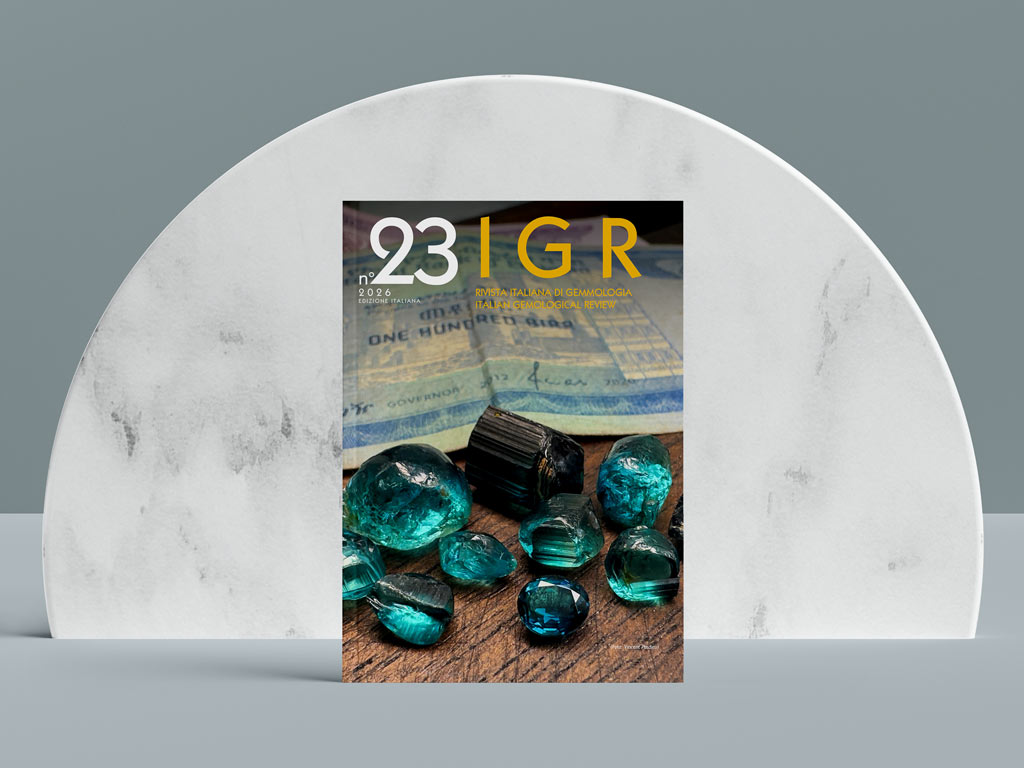
This content was first published on IGR – Italian Gemological Review no. 2 in 2017. The information provided here is therefore current as of the original publication date.

Those who have experience with gems going up from Bangkok know it. The Burmese system is closed and, unlike what happens in Thailand, it did not spread on the territory creating small extraction, production or commercial companies characterised by their being dynamic and coordinated. Is the wind changing in Myanmar? As far as the economic management is concerned, the country has adopted a relative policy of liberalization that triggered a long stagnating development. Over the last four years, the GDP has increased, on average, by 7.5% and the negative days of the forced planning, isolationism and brutal repression seem to be far. However, such development is associated to a political stalemate that, not unlike the neighbouring countries of Vietnam, Thailand and Laos, prevents a full democratic transition. The mining scenario of gems is no exception and the situation appears to be contradictory.
Myanmar proposes to implement the adhesion to EITI (The Extractive Industries Transparency Initiatives) and this will increase the management transparency. However, the court is held by the usual group of companies controlled by the state along with others that are formally private, though in the hands of people connected to the military (Myanmar Imperial Jade Company and Myanmar Ruby Enterprise). In June 2017, the Parliament approved in the first instance a new legislation demanded to replace that of 1994 that had practically put jade and rubies under the strict control of the state elites. However, this new bill does not meet the conditions to attract foreign capitals and it is rather discriminatory for the small artisan companies replaced by big extraction ones already established and mostly appreciated by Yangon establishment. The criterion is based on the value of the previous production and on the years of presence, factors that exclude small enterprises. Such a situation has a great impact on the operations in the area of the Mogok Valley where a committee was formed that proposes to have the Law modified. One of its members, the congressman U Ye Aung has reported that 500 companies, whose permits have expired, have closed in Mogok.
Gem News by Trasparenze News, published on Rivista Italiana di Gemmologia #2, September 2017.