Perhaps too little has been said on the success of the exhibition “L’oro si è fermato ad Eboli” (Gold stopped at Eboli). It can be placed among the most interesting and successful events concerning gold jewelry crafts in Italy in 2019. Why? The reason lies in an ingenious common thread, staged in the premises of a museum in a serene atmosphere of understatement. The environment itself induces visitors to inner thoughts and to a kind of captivating estrangement.
What’s the feeling at the entrance? Exactly this: “how strange”. Jewelry stars are not here, one is not overwhelmed by the glamor of the designers’ brand names, by the intrusive seduction of luxury, by the dazzling charm of masterpieces, by the inexorable and severe aesthetic of completed stylistic trends. Yet you will probably come out inspired.
Rosmundo Giarletta, artistic director, is one of the greatest international masters of gold carving. He could have put it on the level of virtuosity. A beautiful gallery of memorable pieces signed by attractive global names and you’re done. We are standing here shining, you stay there and look at us.
Instead he preferred local people from small workshops as well as young people selected from training courses, proposing artifacts not necessarily elaborated, yet capable of provoking, having their say. In collaboration with the director of the Archeological Museum of Eboli, Giovanna Scarano jewels are presented in unusual and intriguing blend, the way professional staff sets up a museum hall, recovering cultures. The manufacts are all findings of a creative process focused on ingenuity and dexterity.
In this scenario we recognize a basic order, the completeness of a logical plan, a vision and a deposit of emotions. Does it seem a trivial concept? No, it is not at all.
In Eboli, through the exhibited jewelry pieces, visitors are given the opportunity to ideally meet goldsmiths while they are working on themselves to reach the jewel they have in mind. We catch a glimpse of them while they are disciplining their own know-how and their own creativity, while handling symbols, while navigating between icons and signs that are sedimented or contemporary to them in the styles of other ages or cultural seasons, while choosing their tools, be they an old hacksaw or a brand new 3D printer.
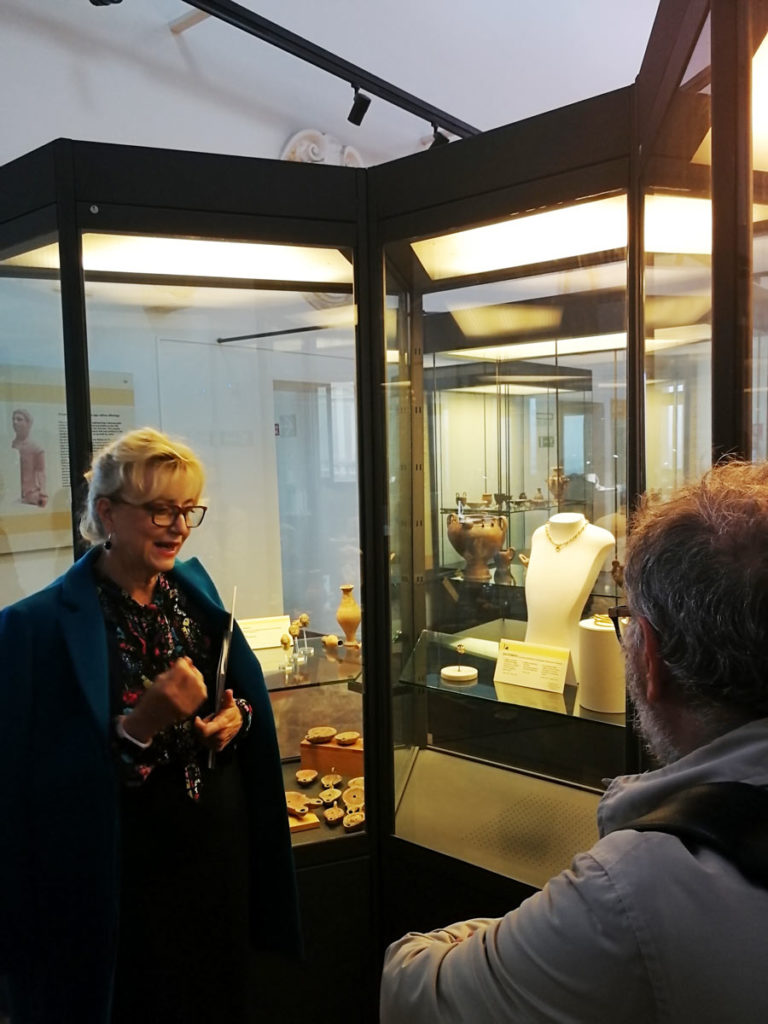
Like a short circuit, in this natural and relaxed promiscuity, suddenly, an engraved garnet ring and a snake-shaped bracelet materialize in a showcase. They are beautiful, modern and consistent. But just two thousand years old. Is the museum not the most prolific evocative place of forms and experiences? Does an archeological find cease to be a jewel? Does a goldsmith buried in the ashes in 79 AD share with us the same biology? Did Catullo and Bob Dylan have the same age while singing love poems/songs?
If ingenuity transcends the ages, it also inevitably transcends the sizes and ambitions of companies, the availability of technological instruments and the unreachably costly raw materials. A goldsmith, in this basic creative path, is an architect, a sculptor, an art historian and a naturalist. An archaeologist too. He feels free to accept challenges, to draw on his experience.
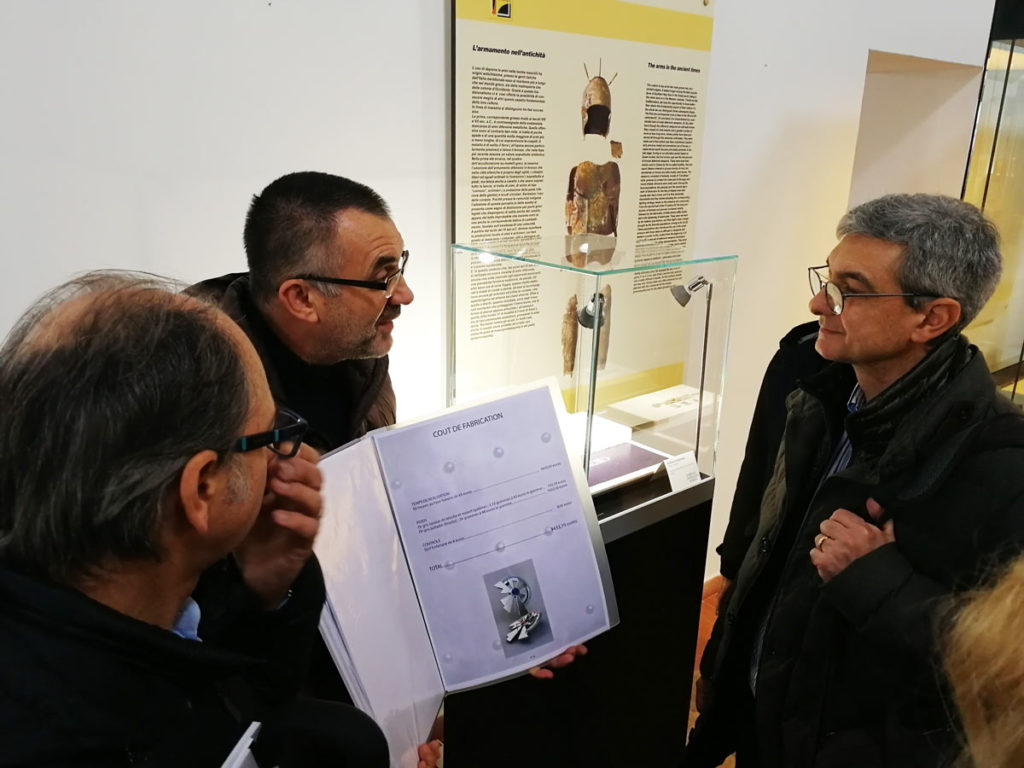
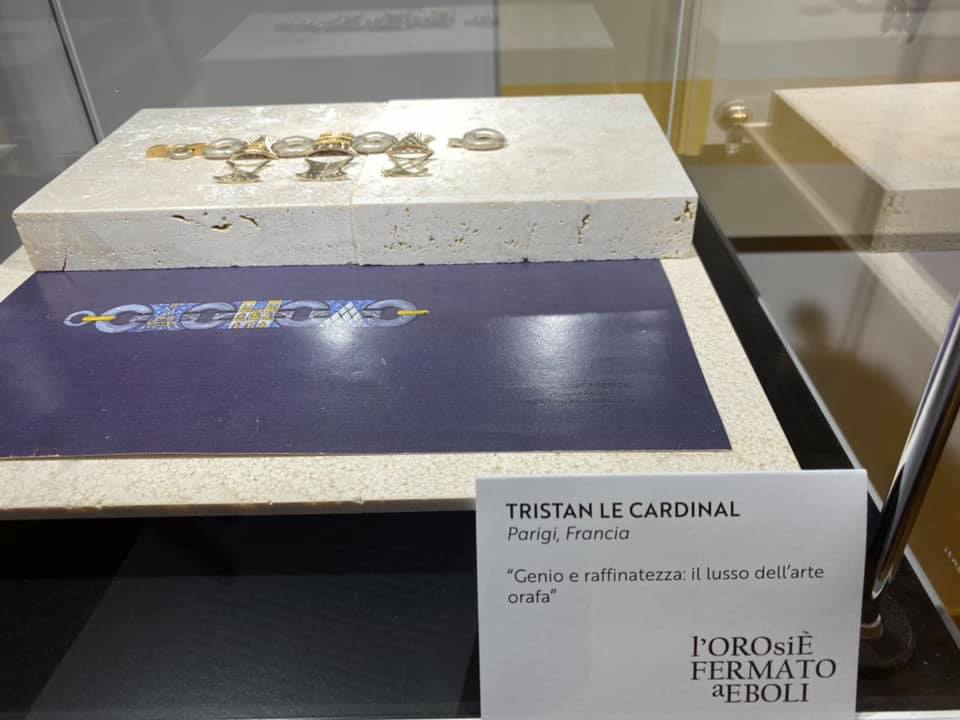
The showcase of a brilliant French goldsmith, Tristan de Le Cardinal, a young talent who currently works for Cartier is exemplary. Notes, memos and sketches are attached by Le Cardinal to his object on display in order to express, in a sort of diary, the development of a work in progress including the sources of inspiration and the consequent forms and volumes.
Seen in this perspective, the goldsmith artifact is the natural result of a conceptual exercise made possible by a humanistic education rather than a rigid, scholastic technique. Perhaps it is worth remembering here that Benvenuto Cellini was an excellent writer as well as a goldsmith and sculptor. He’s not far away, his pages of his Vita, read again today, seem to be taken from the subject of an action movie.
If Cellini’s Renaissance eclecticism and pride were not enough to justify a wider cultural approach to jewelry making and these concepts sounded groundless or based on mere conventional formulas, it could be the case to read again Richard Sennett’s wonderful essay, “The Artisan Man“. Sennett considers the craftsman of this new millennium, thanks to his skills and “know how“, a rebellious figure, a kind of hero capable of regaining – the only one who can still do it – his own identity and human entirety. A man apt to make things is able to think. He is a precious resource in a world that, while dividing knowledge into merely technical skills, trivializes and fragments.
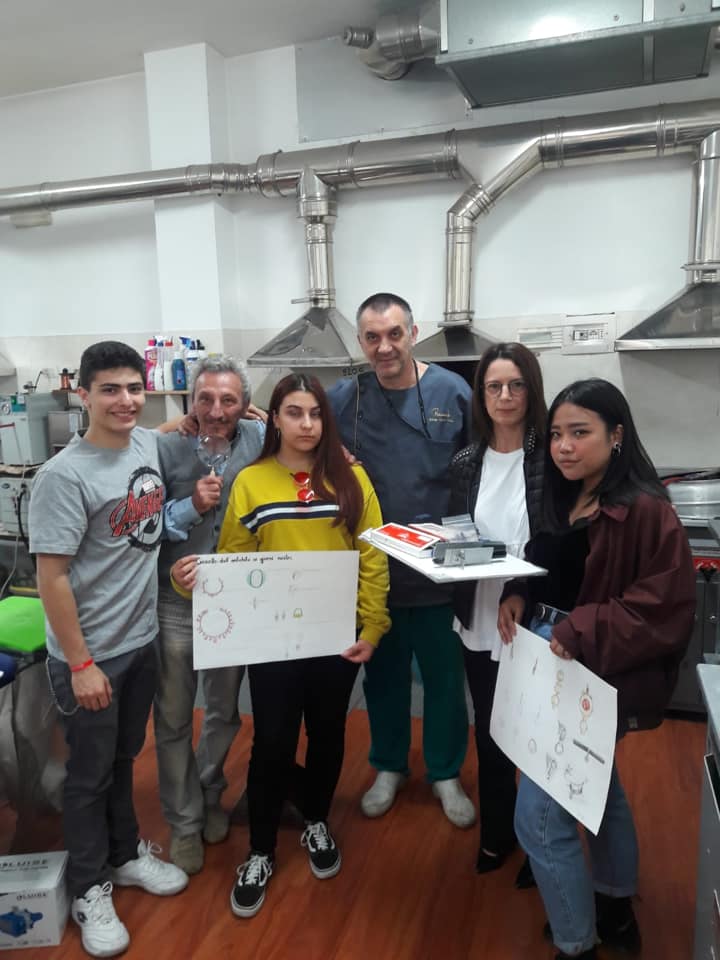
Modern society rejects the deep thought that on the contrary is necessary, intrinsic to the vision of even the less gifted artisans. The lesson of Eboli‘s exhibition is in the invitation to get back to a practice based on the knowledge, on how to get a work well done. This is just what Italian goldsmiths in the past times proudly called “art“ (ancient Indo-European root referring to ingenuity, hands, arts, craftsmanship, practice). This goal is also an opportunity to change men for the better, helping them achieve what the new order of this millennium is denying them, that is the ability to develop a critical thinking and, by handling the process of artisanal manufacture, the ability to govern themselves.