This content was first published on IGR – Italian Gemological Review no. 15 in 2022. The information provided here is therefore current as of the original publication date.

The “IV National Conference Diamond and Coloured Gems: Identification, Tracing and Ethic Aspects” was held in Ferrara, Italy, on July 7-8, 2022 at Palazzo Tassoni Estense. As was the case for last edition in 2021 held in Bari, IGR promoted the event, which was well attended, contributing as Media Partner to its dissemination, at both national and international level.
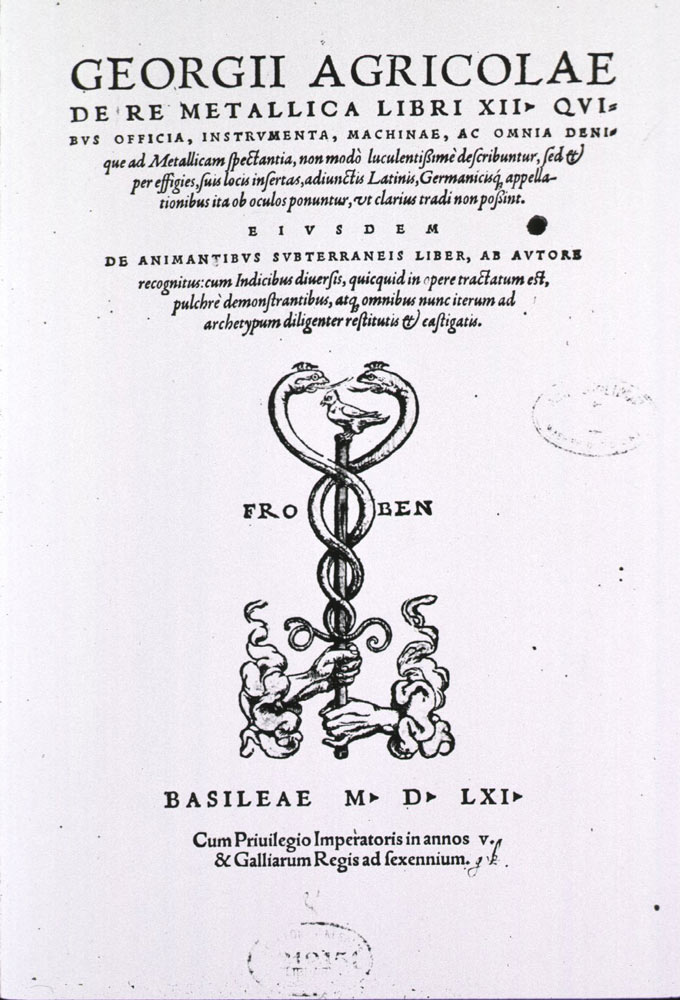
Michele Macrì (Sapienza University of Rome) discussed the boundaries between the work of mineralists and the work of gemologists, their peculiar methodological approach and their possible future convergences. The distinction of domains is an unbroken thread that has animated scientific debate ever since modern gemmology came into being (conventionally in 1908 in Britain), grafting on a science already founded five centuries earlier (“de Re metallica” by Georg Agricola is the text that consolidated mineralogy as a science).
While the study of gemstones is based on absolutely non-destructive techniques being limited to materials commonly used in jewelry and dominated by large private institutes, mineralogical studies are rooted in academia, are quite broad and encompass the vast area of materials sciences and their industrial applications. While gemologists can rely on a steady stream of materials brought to light by the mining industry, they often lack the sophisticated and expensive scientific instrumentation that is within the reach of university research. So there are advantages and weaknesses that can generate “mutual synergistic enrichment”.
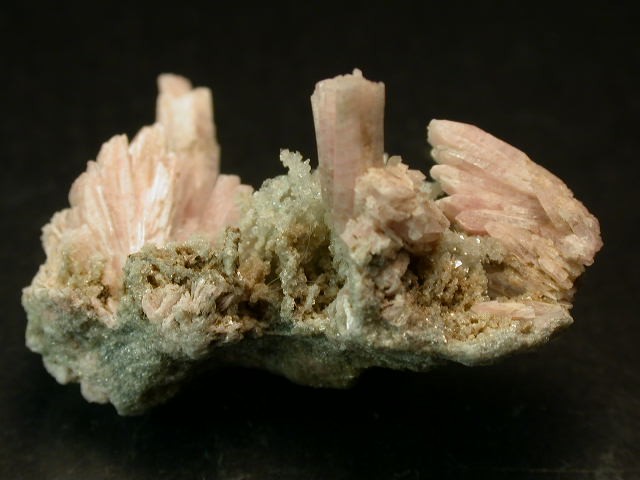
There are – and they must be considered – differences in terminology. For example, gemologists use to refer to tourmalines as a species, whereas more properly they are a supergroup of minerals. The need for immediate and effective placement of gemological products in the marketplace profoundly affects gemmological nomenclature: species of zoisite, variety of tanzanite is a correct definition in mineralogy, while obviously in mineralogy there is no such thing as what is sometimes described in reports as pink tanzanite, since that variety already has an assigned name, that is thulite.
According to Macrì, opportunity and criticality analysis (SWOT) is a model used by economists that can help lead the way to fruitful collaboration between gemologists and mineralogists. One example is the current agreement between La Sapienza University and the Gem-Tech Gemological Institute, publisher of IGR ,for the possible development of complementary studies and a potential opportunity outlet for those who have acquired university skills and are willing to apply them in gemological investigation. Moreover, this is in line with the objectives of the third mission, the process of interaction between the university and civil society.
Paolo Minieri (IGR Italian Gemological Review / Gem-Tech Gemological Institute) outlined the scientific context where the question of ethics and responsibility should be grounded in gemology. These terms are often used inappropriately as they are not anchored in the right perspective which is provided by the CSR, that is the social responsibility understood as part of the strategic vision of a company.
This approach offers a correct reference and prevents companies from pursuing – as often happens – self-referencial initiatives. Starting from the mining activity up to the final marketing stages the CSR initiatives must be measurable and monitored by independent third parties witnessing the effective quality of the responsible intervention.
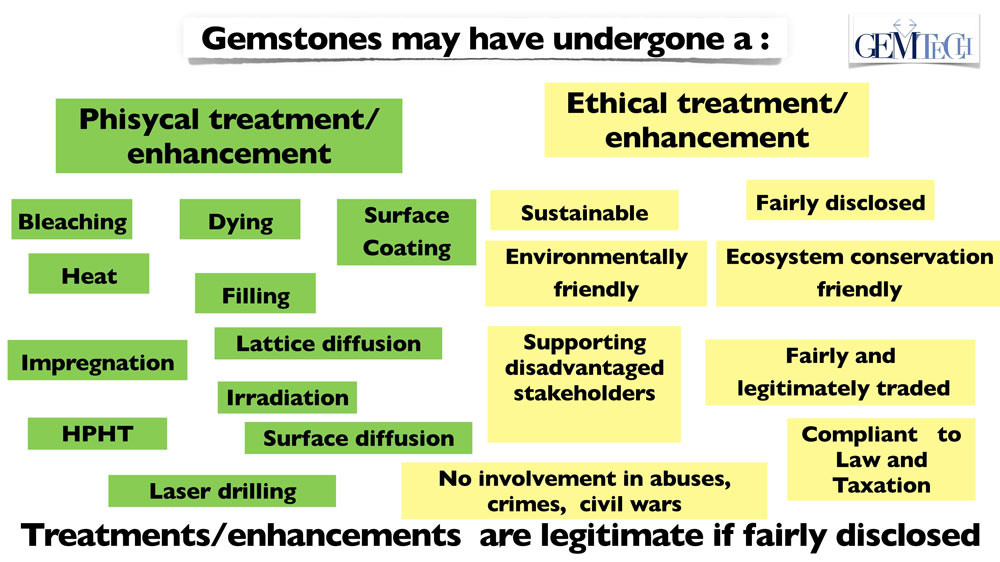
Among the stakeholders are to be taken into consideration: customers, supply chain and policy makers. The correct disclosure of the properties of gems (an area often neglected by the industry) and the gemstone traceability process are the main areas where social responsibility policies can be implemented in the gemstone and jewelry fields. For this purpose, the chain encrypted registers (blockchain) put in place by the companies of the new economy (Everledger, Tracr and others) have recently come to the rescue. However, the implementation of these new techniques cannot be carried on without the physical tracers (laser inscriptions, nanopartels, laser pulses) necessary to establish a unique link between the gems and the information they must convey.
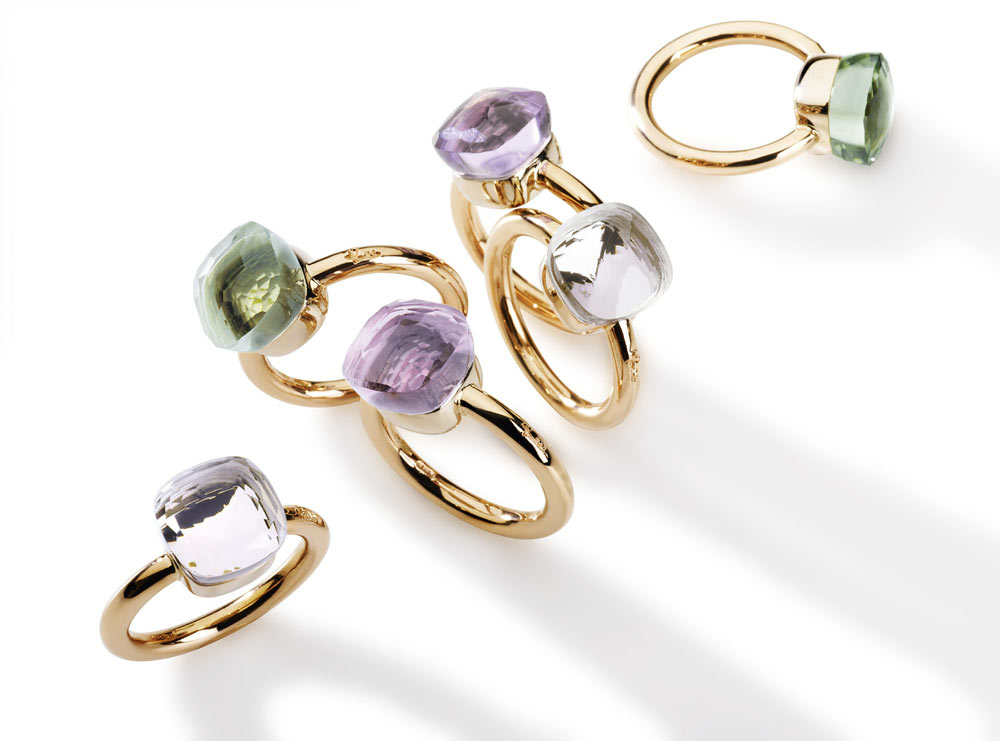
The presentation by Rocco Gay (Petramundi, ICA Ambassador), which was in line with last year’s presentation offered in Bari, opened a window into the very heart of the gem-cutting and jewelry manufacturing industry with a focus on the Valenza district. Kering (Gucci, Boucheron, Pomellato, Queelin), Richemont (Cartier, Piaget, Van Cleef, Buccellati, Giampiero Bodino) LVMH (Tiffany, Bulgari, Chaumet, Fred, Dior) are the three large global fast growing luxury-dominant global big groups. Each of them has at least one production unit in the Piedmont town. They are imposing on the local gem-cutters the gems that will be introduced into the market, mainly mother-of-pearl, onyx, carnelian, tiger’s eye, lapis, and pink opal (deleted from orders recently due to loss of color over time). The brands do invest in the cutting styles getting iconic and distinctive (see Pomellato’s world famous “Nudo”) and so they are not only interested in precious and exclusive materials: their turnover is basically determined by inexpensive and readily available stones as long as they produced under some precise conditions and terms. The first of these is the extreme precision of measurements and color parameters, a performance that the modern cutting industry can meet thanks to technology (preforming machines, numerical control up to 5 axes, lasers, ultrasonic drills) along with punctuality in the delivery of very large orders (in 2020 Van Cleef used 100,000 pieces, Bulgari 40,000).
The other discriminating factor for entering the supply chain of the big brands is the ability to ensure the provenance of the gems used, therefore RJC membership is recommended. Tiffany does not use malachite because it is associated with the Democratic Republic of Congo, a country under the spotlight because there is latent armed conflict in its eastern territories over the appropriation of raw materials. Tiffany has banned Afghan lapis, which can be replaced with Chilean lapis but only upon proof of legitimacy of supply. Many countries have excluded Myanmar (former Burma) from their suppliers because of the well-known military coup in 2021.
Affide is a company specializing in jewelry appraisal and pawn credit, operating 37 offices in Italy. It collaborated as a sponsor for the organization of the Ferrara Convention. Clarisse Poloni, (Affide – Credit on Appraisal, Rome) highlighted in her presentation the aspects related to the circular economy and the social responsibility credentials that a company engaged in pawn credit is required to comply with were emphasized.
Article by Paolo Minieri and Stefania Coppola, published on IGR – Italian Gemological Review #15, Autumn 2022.