




This content was first published on IGR – Italian Gemological Review no. 3 in 2018. The information provided here is therefore current as of the original publication date.

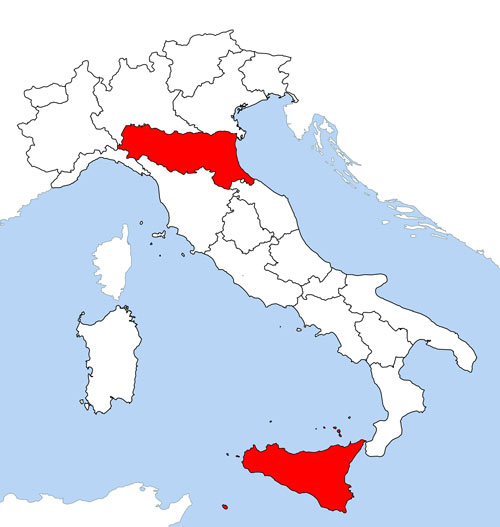
Sicilian amber or simetite is one of the best in the world as for its appearance. The first reports are relatively recent dating back to the beginning of the XVIIth century. Its outstanding fluorescence was exalted by the mastery of artisans from Catania and Trapani from half of the XVIIth century to the ‘70s (XXth century). Then, this amber has become almost impossible to find. The name “simetite” comes from the river Simeto, the most important in Sicily, flowing to the east into the South area of Catania. Currently no known field of simetite exists.
The only historical sources are collected in a brochure (C.E. Fiore, 1996, Dell’ambra siciliana. Testi di antichi autori siciliani 1639-1805. Quaderni di Biblioteca, I. Boemi Ed., Catania) listing in chronological order all the researches, starting from the early XVIIth to the XIXth century, carried out by ancient authors on the geographical location of the assumed simentite fields in Sicily, along with the description of this gemmological material and its origin. Between 1639 and 1641 in his work “Delle memorie historiche della città di Catania” Pietro Carrera writes: “in our seas in Catania, they found a good quantity”. P.S. Boccone (1697) indicates more precisely the toponyms: “I am a direct witness as I found it on the beach between the city of Agrigento, Leocata and Terranova off the island of Malta: in those lands children collect it among algae […] this finding of succinum is actually in the proximity of the cities of Agrigento, Catanea, Leocata and the like […] then storms and waves detached it from its sources dragging it on the shore amidst algae“ (C. E. Fiore, 1996).
Starting from the main fields located in the Sicilian hinterland, amber was dragged away by the intense rains causing landslides and geological instabilities; in such occasions the erosive action of water detached pieces of a different size from their natural seat that were then scattered in the nearby countryside or in streams and from there to the sea where they were found on the shores surrounding Catania and on the southern coast of Sicily (C. Zilli, 1996-97).
Abbot Francesco Ferrara (1805) writes: “the abundant collections after heavy rains that had the strength to extract and sweep away pieces of amber from their seats, and after the storms during which the flowing of the impetuous waves threw over the shores with algae and sand the amber that rivers had carried with them”. E. Fiore, 1996), making reference to Simeto and Salso. After a minute description of the location of the sources and the talweg of these two rivers, he limits an area for the findings of simetite: “amber can then be found in the countryside near the central locations of the island and in those in the proximity of where all these waters flow. You can found big pieces in the countryside of Centorbi, Asaro, Leonforte, S. Filippo d’Argirò, etc”. On the coasts, always according to abbot Ferrara, simetite would be collected on the shores of “Sicili, Spaccaforno, Ragusa, Terranova, Licata and others in the countryside around Modica and then at Girgenti, Siculiana and other places of those southern beaches” (C. E. Fiore, 1996). Beside these toponyms, other authors of the past make also reference to Caltanissetta, Calascibetta and Castrogiovanni (EN) (H.R. Fraquet, 1987).
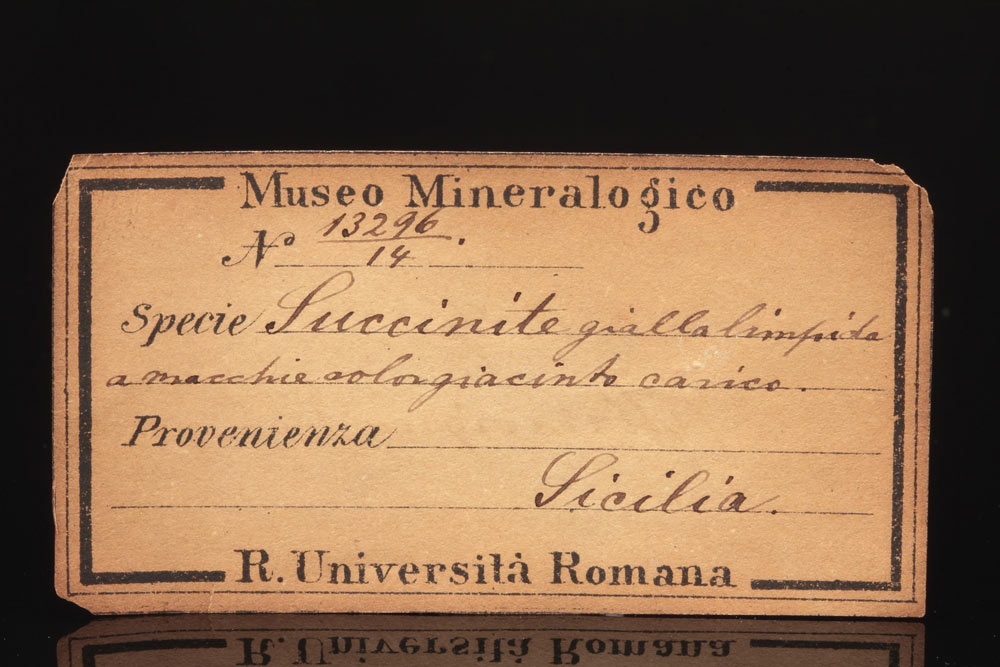
After a verbal communication of G.L. Cattaneo, the unwritten sources on the subject dated back to the activity of “cuzzulari”, south of Catania (this is how the collectors of amber were called in Sicily) in 1970.
The reason why there is no longer news on the findings of samples of amber after the ‘70s is still obscure, but it may be due to the anthropic impact on the territory that altered the talweg of rivers regulating the transport of this material, because of the construction of dams and barrages; however, so far no scientific researchers have been carried out to detect the precise geographical position both of the main and the secondary fields regulated by the river transportation.
The working of amber in Sicily dates back to the early XIXth century. The pieces were worked with a lathe or cut to create such items as necklaces, pendants, rings, trinkets or boxes, even 4-5 cm cameos (Ferrara, 1805). Today artisans polish the raw pieces with an increasingly small grain abrasive paper, amber is observed at the microscope by the jeweller who detects the most interesting part of the sample on a commercial level, defining the type of the most suitable cut to evidence the aesthetic features of the item. Finally, they proceed with its polishing using some abrasive paste (C. Zilli, 1997).
The botanical studies performed on samples of simetite are extremely rare as it is very difficult to find fragments of leaves and flowers of such sizes as to allow to trace back the species of the original tree. C. Zilli (1996-97) presents the studies carried out by Goeppert (1879) published in the Acts of the R. Accademia dei Lincei on a vegetal inclusion (a fragment of leaf) of a sample of simetite currently kept at the Museum of Geology in Palermo.
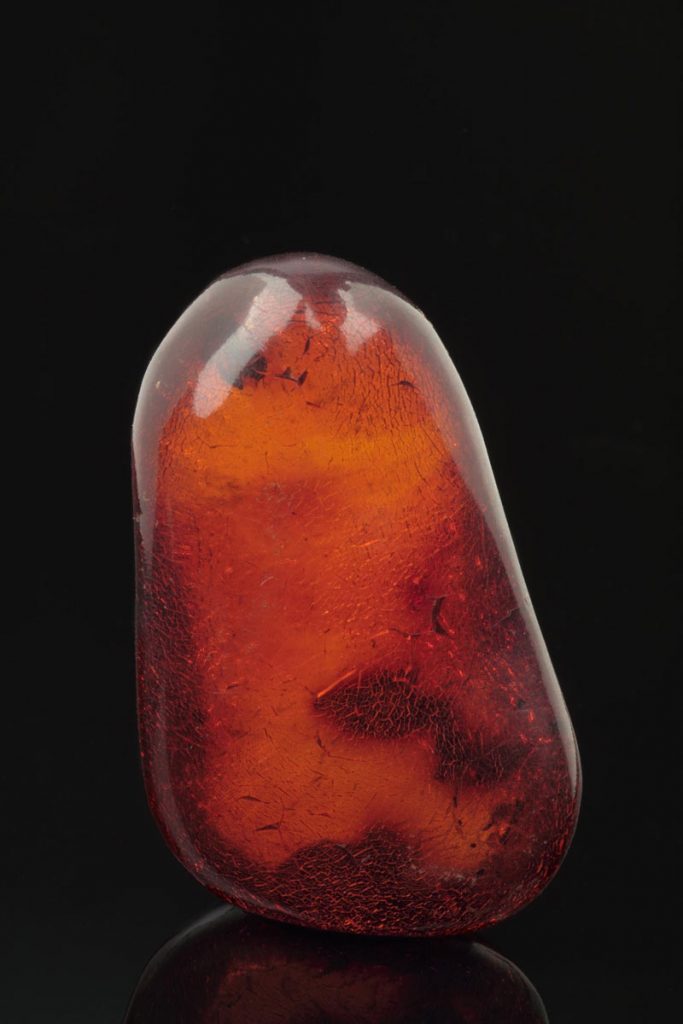
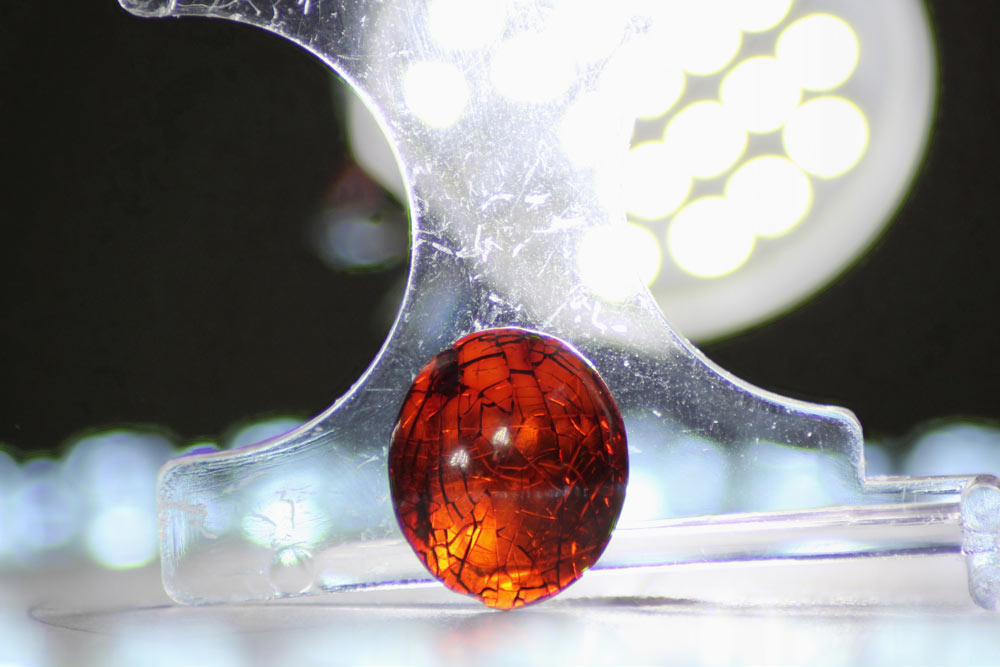
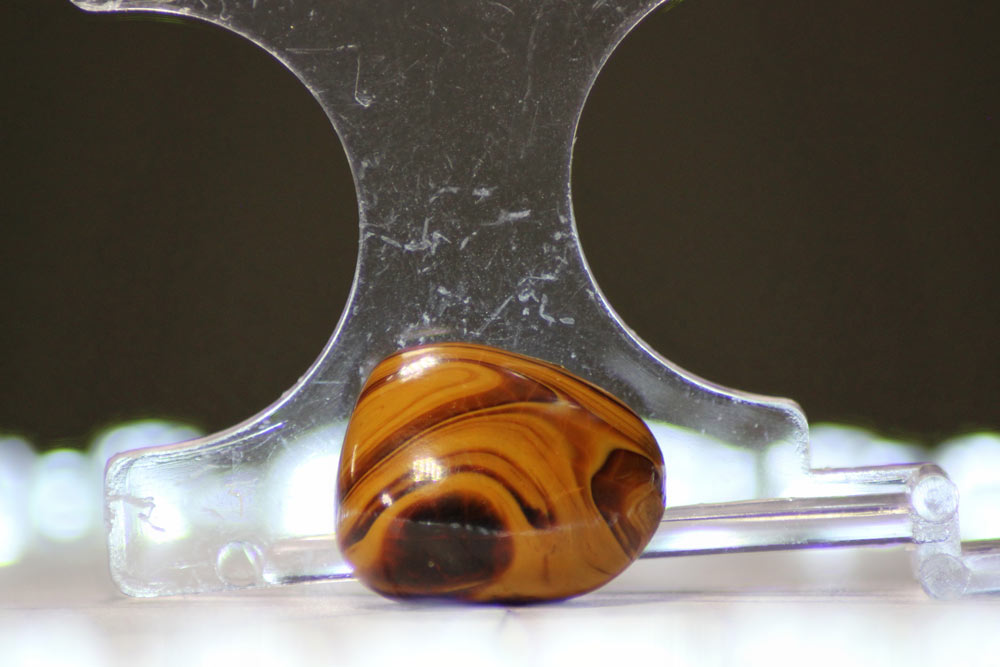
He managed to identify this inclusion recognising its belonging to the Laurus genre, namely the Laurus Gemellariana species. As for the age D. Schelee (1990) attributes to Sicilian amber an age ranging from 20 to 10 M.A. (Aquitaniano-Burdigaliano and Tortoniano). Simetite can be found in a variety of colours, from clear yellow, to orange, to such a dark red that seems almost black (Figures 9-12).
According to Helm (1866), sulphur is the feature that would condition the different hues in ambers; they postulated that this element is not to be looked for inside the sample, but on its surface as it probably comes from absorption (secondary to the formation of amber itself) of solutions rich in sulphates.
As a confirmation, many samples studied by C. Zilli (1996-97) have a superficial sulphurous film. Helm (1866) compared the concentrations of various components (C,H,O,S) measured on samples of Baltic amber, dark red and black Sicilian amber, paying attention to the percentage of sulphur. In the black variety, he observed that the quantity of oxygen was exactly half while sulphur was double when compared to the quantity of oxygen and sulphur in the dark red Sicilian and Baltic ambers. This data could confirm the fact that, based on the different level of exposure of the sample to oxidising weather conditions, it appears more or less dark. As a consequence, greater the quantity of sulphur in the sample, darker the piece of amber (C. Zilli, 1996-97).
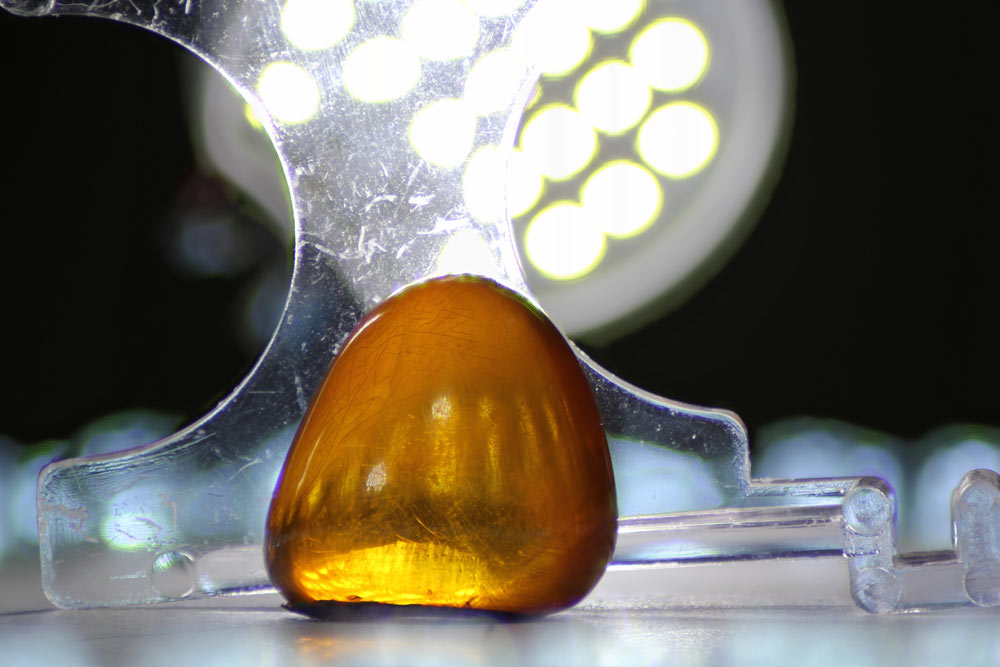
The fluorescence of the simetite varies from light blue, to green and violet (C. Zilli, 1996-97) and the specific weight, based on the measures performed by Helm (1866), is about 1.125 g/cm3 for the black varieties, while for the orange or red ones this value is slightly lower, around 1.056-1.068 g/cm3. As for the melting temperature, Sicilian amber burns at around 300-350°C.
Another type of amber can be found in the Emilia Romagna section of the Apennines, between Modena and Forli. This amber is usually very dark, almost black with a foul smell, set in Oligocene grey clays. At the end of the nineteenth century good quality amber could be found near Bologna at Monte Paderno. Numerous samples of this amber are included in the Bombicci collection of the Museum of Mineralogy of the University of Bologna. Today the field of Paderno is extinguished, but you can still find nodes of ambers of some centimetres in the Apennine of the Modena region and in the province of Forli at the Mercato Saraceno.
Visit the Gems of Italy section!
Curated by the qualified group of expert of the section Gems of Italy, published on IGR – Italian Gemological Review #3, January 2018.


