This content was first published on IGR – Italian Gemological Review no. 3 in 2018. The information provided here is therefore current as of the original publication date.

Discovered in 1801 at Acitrezza (Catania), the analcime is a mineral belonging to zeolites, a group including about 40 minerals that can be cut for a gemmological use.
This zeolite is widespread on a global scale, but crystals of analcime with such size and quality as to be faceted are decidedly rare.
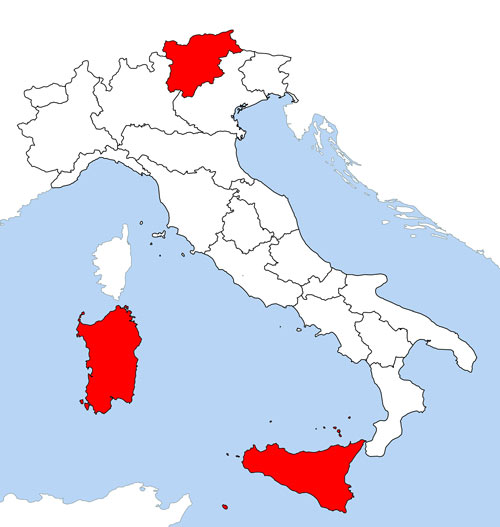
The analcime in Italy is common in many locations, though clear enough crystals of a gem quality can be only found in some locations in Sardinia, Sicily and Trentino Alto Adige.
Sardinian analcime can be found in cutting colourless crystals. The most famous locations are Monte Iscoba, near Osilo, in the province of Sassari and the mine of Monte Oladri, near Monastir, in the province of Cagliari (Figure 13). Analcime covers the holes of lava, in crystals that do not even reach 2 cm resting on the matrix.


Some cutting quality analcimes were also found in the lava of Etna at the Isola dei Ciclopi, but they were historical samples that are now impossible to find.
Finally, marvellous pieces are found in Val di Fassa (Trentino Alto Adige) often destined to the market of mineral collectors.
Visit the Gems of Italy section!
Curated by the qualified group of expert of the section Gems of Italy, published on IGR – Italian Gemological Review #3, January 2018.