This content was first published on IGR – Italian Gemological Review no. 15 in 2022. The information provided here is therefore current as of the original publication date.

The “IV National Conference Diamond and Coloured Gems: Identification, Tracing and Ethic Aspects” was held in Ferrara, Italy, on July 7-8, 2022 at Palazzo Tassoni Estense. As was the case for last edition in 2021 held in Bari, IGR promoted the event, which was well attended, contributing as Media Partner to its dissemination, at both national and international level.
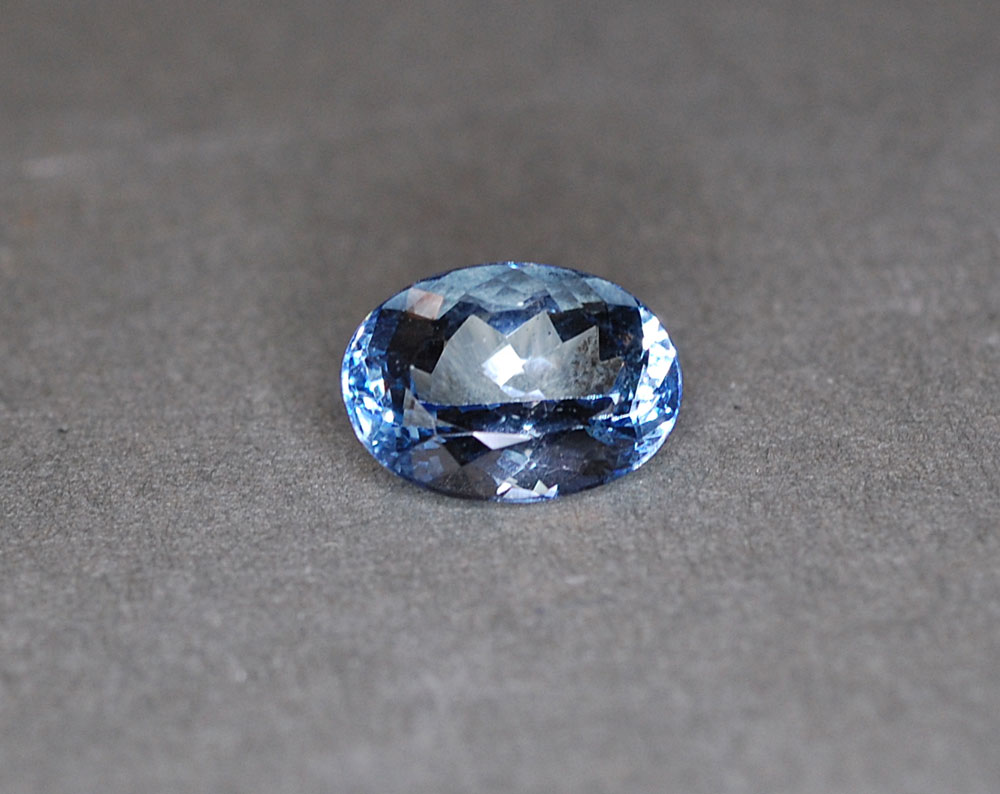
A number of presentations focused on the identification of treatments. Raffaella Navone (R.A.G., Turin) gave an account on a rather anomalous case: a pale blue faceted aquamarine of 2.18 ct, with a refractive index of 1.568-1.571 and specific gravity 2.73, described as “coated”. Resorting to microRaman and IR spectroscopy, among others, it was determined that no coating process could be assumed, however, since EDS (Energy Dispersive X-ray Spectroscopy) did not find fluorides, the agents most frequently used for the purpose. Laboratory tests, carried out in collaboration with the University of Turin, did not reveal any elements other than those of natural beryl, low iron content and the chromophores Fe, Cr and Co. The presence of cobalt is very unusual in a natural aquamarine, but in synthetic beryl the use of Co is well known.
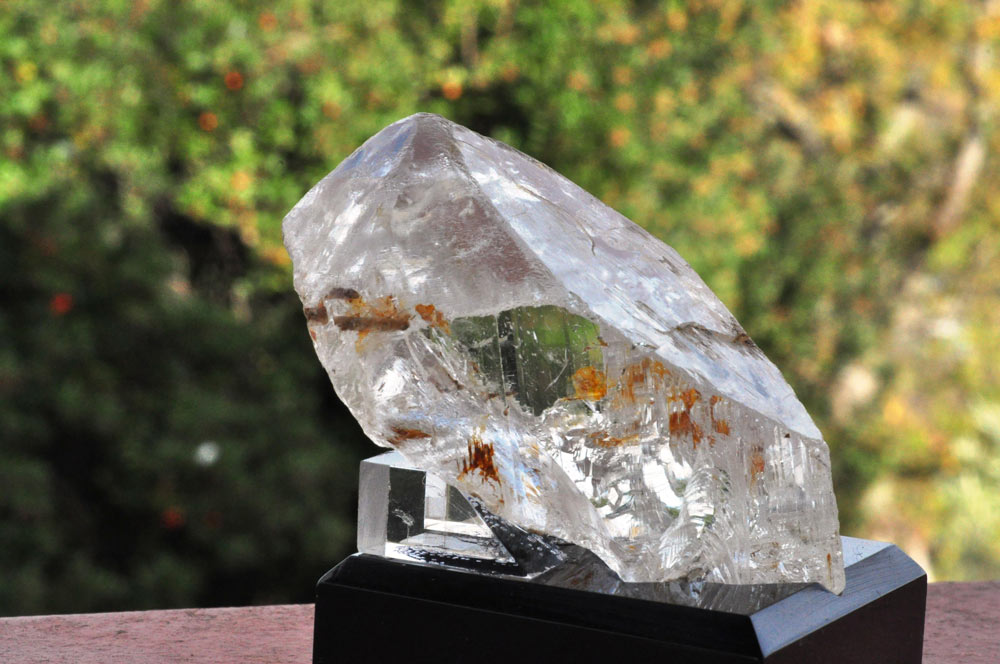
Giuseppe Elettivo (University of Bari) outlined the preliminary results of a research on the treatment of topaz, a frequently used gemstone, popular in the market. The study confirms some aspects highlighted in the gemmological literature: in some cases the color change is given by some chromophore elements present (Cr3 and Fe3), in others to the formation of defects related to the OH group. Topazes, mostly colorless, were sampled from Tanzania (secondary alluvial deposits) and from Mozambique (pegmatitic deposits). They were characterized for their mineralogical and chemical properties by means of EPMA (Electron Probe Microanalyzer), XRPD and UV-VIS.
The industry uses three types of irradiation: gamma ray (γ), neutron and electron beams. The work focused on this last type of irradiation. Finally, the material was heated at growing temperatures and again analyzed by UV-VIS spectrometry. It was observed that all samples changed color due to electron treatment, turning brown from colorless; subsequent heating eliminated the brown dominant, and some samples returned colorless, while others turned light blue. This was also confirmed by UV-VIS spectroscopy, which recorded an absorption band formed at about 600 nm.
Floriana Rizzo (University of Bari) focused her investigation and on the irradiation of tourmalines, a supergroup featuring 38 species of highly complex chemistry and structure. The causes of their color were examined. Like many other gem quality minerals, tourmalines can undergo treatments to intensify their color in order to increase their value in the marketplace. At its preliminary stage, this study involved tourmalines from different deposits treated by electron irradiation. All samples were mounted on an aluminum plate equipped with a cooling system and irradiated with doses of 5.1x 10 -4 Gy at 20 °C. Some samples after treatment were showing an intensification of their original color, while different colorations were obtained from the colorless samples. UV-VIS spectra acquired before and after irradiation provide preliminary indications of the causes of treatment-induced color change.
Article by Paolo Minieri and Stefania Coppola, published on IGR – Italian Gemological Review #15 – Autumn 2022.