This content was first published on IGR – Italian Gemological Review no. 23 in 2026. The information provided here is therefore current as of the original publication date.
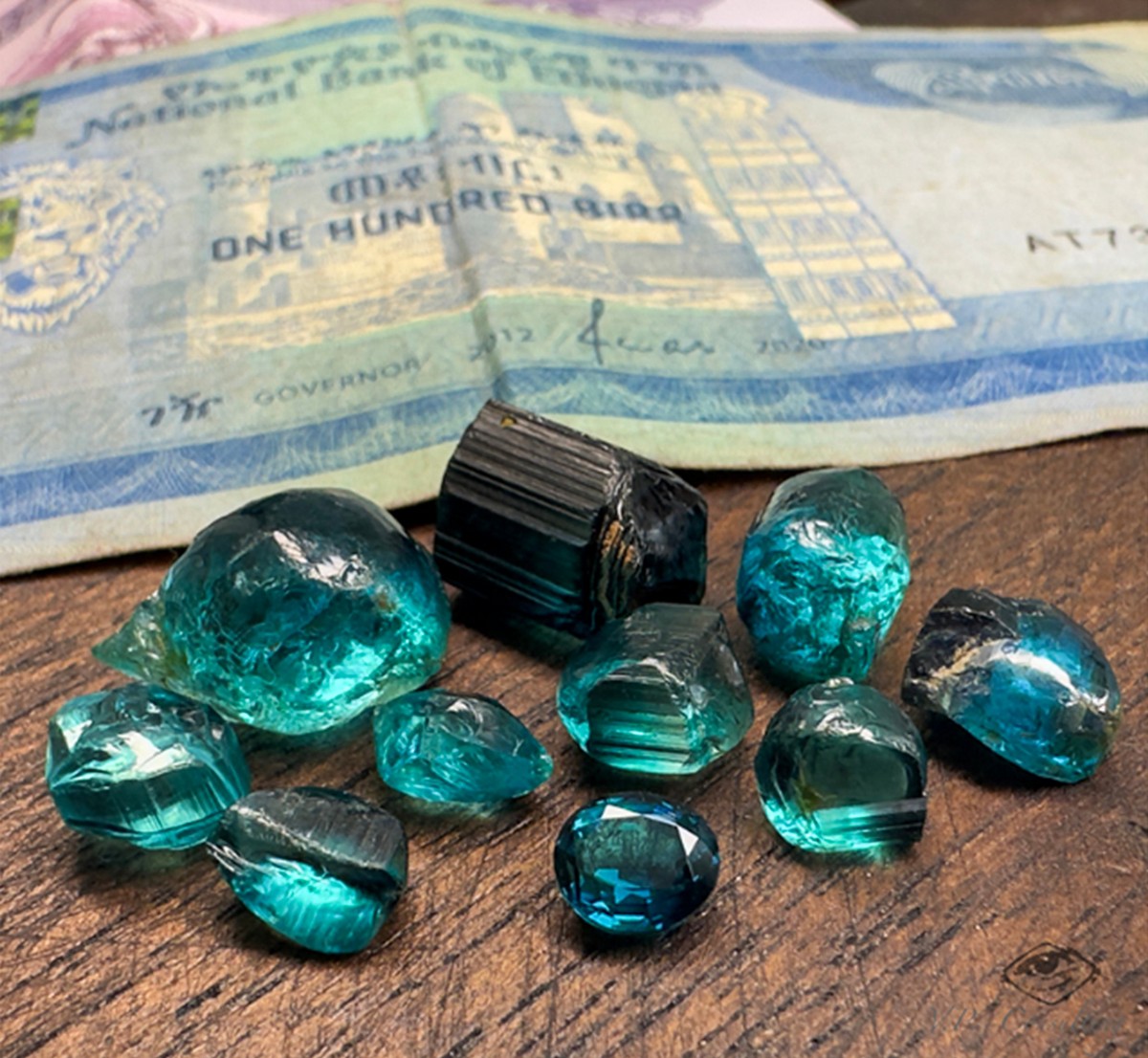
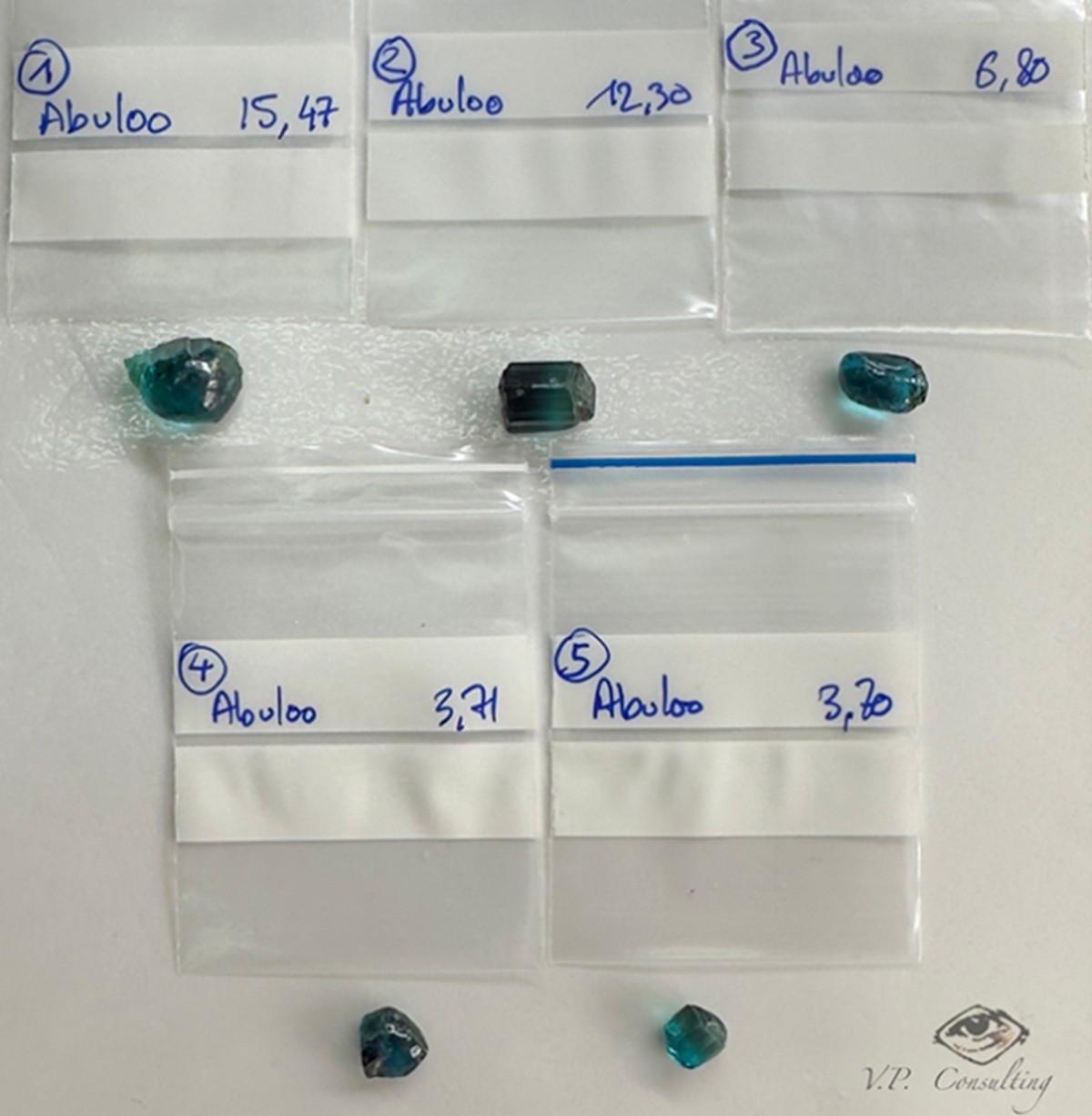
From June 24 to June 26, 2026, a preliminary study was conducted on twenty-one rough tourmalines freshly arrived in Bangkok from the new discovery reported a few weeks earlier near Abuloo village, in the Oromia Region of Ethiopia. The study was carried out by VP Consulting WLL, in collaboration with C. Dunaigre Gem Lab (Bangkok) and the Laboratoire Français de Gemmologie (LFG). This preliminary study was first published on Vincent Pardieu’s social media (Instagram, Facebook & LinkedIn) on June 27th, 2026.
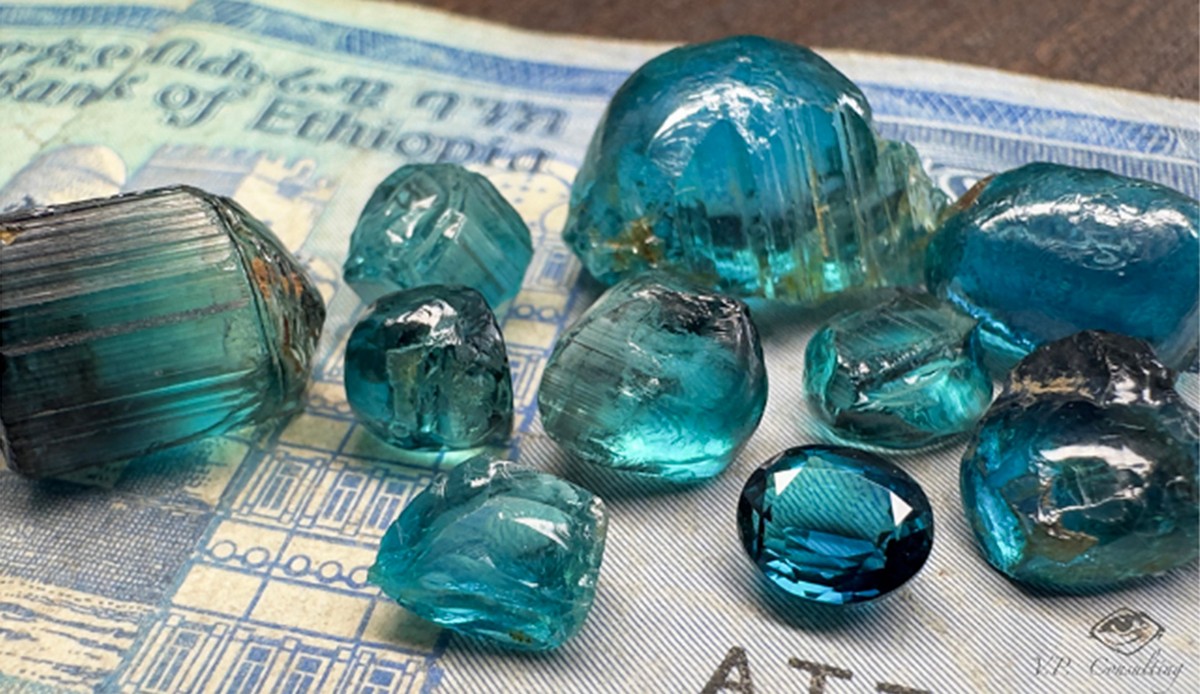
Among these twenty-one pieces, ten were very fine-quality, high-value gems. One stone was immediately faceted by the owner to check the transparency of the material (see Figure 1).
Chemical and spectroscopic analyses, using EDXRF and UV-Vis spectroscopy, were conducted to investigate the origin of their striking blue-to-green colours. Most of these elbaite tourmalines do indeed contain significant concentrations of copper, which contribute to their coloration. Unlike the classic copper-bearing tourmalines from Brazil, however, many also contain moderate to high concentrations of iron, which also contributes strongly to colour. Finally, variable amounts of manganese were detected.
These preliminary results are interesting for several reasons. The most significant finding of this preliminary study is the remarkable chemical variability in copper, iron and manganese concentrations, which differ substantially from one specimen to another. This suggests that the Abuloo deposit produces a chemically diverse population of tourmalines rather than a uniform material. In addition, all analysed samples contain relatively elevated concentrations of gallium, zinc, lead, and bismuth. These trace elements may become useful indicators for distinguishing Abuloo tourmalines from copper-bearing material originating elsewhere.
This chemical and spectroscopic diversity has important implications for gem classification. Gemstones in which copper is the dominant chromophore would likely qualify as Paraíba tourmalines, following the terminology of the LMHC Information Sheet 6. In that sense, these preliminary results support the idea that a new deposit of Paraíba tourmaline has indeed been discovered in Ethiopia. Specimens containing high concentrations of iron derive much of their colour from iron rather than copper and therefore would not normally be considered Paraíba tourmalines, but rather indicolites, comparable to those from Namibia or Afghanistan, often referred to as “lagoon” tourmaline in the trade. Other samples occupy an intermediate compositional range where classification may remain open to interpretation.
The preliminary data obtained on those samples do not seem to corroborate the hypothesis of the SSEF in their recent press release that the material from this deposit shows similarities with Paraíba tourmalines from the Brazilian deposit. In fact, the chemistry of most of the samples studied seems more consistent with Fe-Cu type tourmalines reportedly from Nigeria, as described by Krzemnicki et al. (2022), and with some of the stones presented in other articles, such as https://www.mdpi.com/2075-163X/14/1/44.
These observations demonstrate that visual appearance alone is not sufficient for classification. Reliable identification between Paraíba tourmaline and indicolite requires quantitative chemical analyses, together with UV-Vis-NIR spectroscopy (as explained in LMHC sheet 6), to determine the relative contributions of copper and iron to colour. The wide variation in manganese concentrations observed among the analysed samples also suggests that their response to heat treatment may vary. Samples with relatively low manganese contents may show little or no improvement following conventional heating, whereas those containing higher manganese concentrations could prove more responsive and undergo more significant colour modification. Because the chemistry varies considerably from one specimen to another, no single heat-treatment behaviour should be expected for all Abuloo tourmalines. Controlled experimental studies on a representative range of samples is required to establish the relationship between chemical composition and treatment response.
Conclusion
The discovery of copper-bearing elbaite tourmalines at Abuloo represents an important addition to the growing number of known copper-bearing tourmaline deposits worldwide. The first analytical results indicate that the Abuloo deposit appears to produce a chemically heterogeneous population of copper-bearing tourmalines. Consequently, not every stone recovered from this deposit should automatically be described as Paraíba tourmaline. Some specimens clearly meet this designation, as copper is the dominant chromophore. Others fall within a more transitional compositional range, where classification may remain open to debate, while iron-rich stones derive much of their colour from iron and are therefore better described as indicolites.
Visual separation is extremely challenging, and UV-Vis-NIR spectroscopy remains the key instrument for separating these different varieties, following LMHC Information Sheet No. 6. This chemical diversity is also likely to influence the response of individual stones to heat treatment, with manganese-poor specimens expected to show less improvement than those containing higher manganese concentrations. Further mineralogical, spectroscopic, and geochemical investigations, involving site visits and a substantially larger, statistically representative sample set, are required to establish reliable geographic origin criteria, improve our understanding of the compositional variability of the deposit, and assess its significance among the world’s copper-bearing tourmaline occurrences.
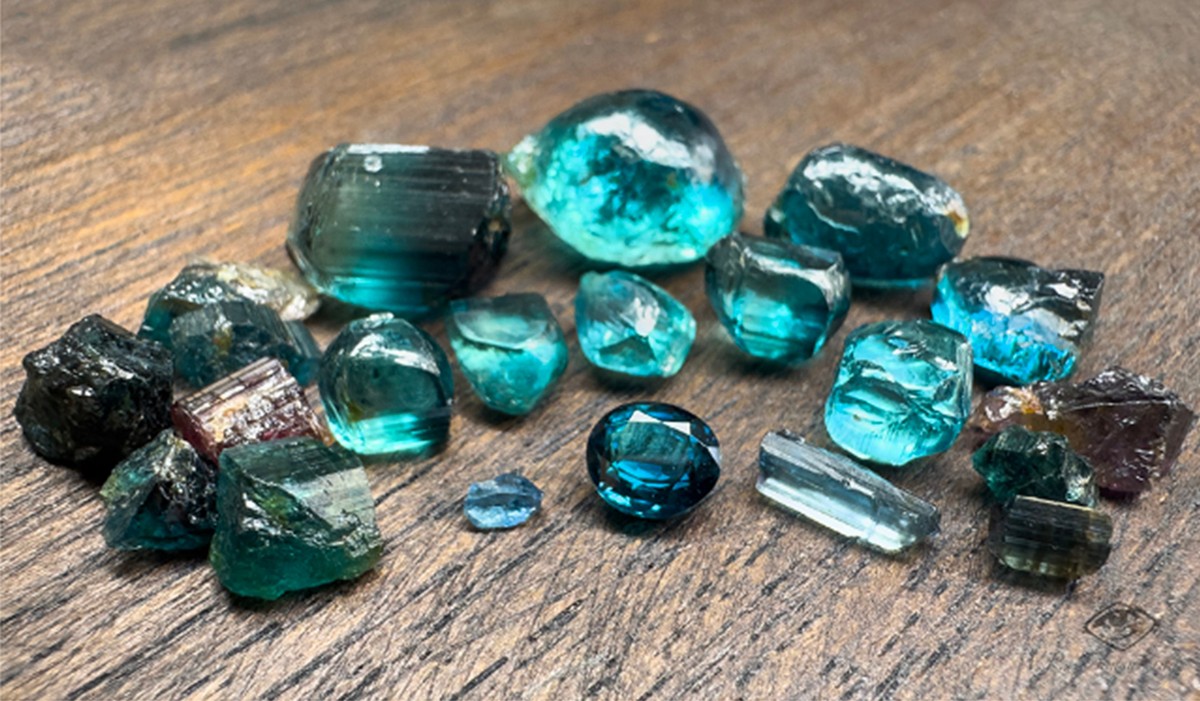
Figure 4: Group photo of the twenty-one tourmalines reportedly from Abuloo in Ethiopia studied in Bangkok on June 26th 2026 for this preliminary study. (Photo: Vincent Pardieu)
Article by Vincent Pardieu (VP Consulting WLL; consultant for the LFG – Laboratoire Français de Gemmologie and the author of a book about “Rubies from Greenland”), Christian Dunaigre (C. Dunaigre Gem Lab, Bangkok), Aurélien Delaunay (LFG – Laboratoire Français de Gemmologie) and Dr. Stefanos Karampelas (LFG and University of Thessaloniki, Greece), published on IGR – Italian Gemological Review #23 – Autumn 2026.