This content was first published on IGR – Italian Gemological Review no. 16 in 2023. The information provided here is therefore current as of the original publication date.

When identifying the “pigeon blood” type, the major international gemological institutes may have discrepant standards. The reason for this is explained by the very simple reason that this quality property by itself is merely a name. It is indeed just a historical qualification based on the literary suggestion of a term that has been seducing consumers for decades as it evokes a high level of beauty. For a very long time, gemologists have been reluctant to use this term. An SSEF report still in 2013 pointed out that “pigeon blood” is a poetic term and was included in the notes rather than in the main corpus of the data.
Can a “pigeon blood” ruby have a wide variety of geographic origins? Yes, although the term was originally coined only for rubies with strong fluorescence due to high chromium content from Burma. More recently, the term is applied extensively to rubies exhibiting the color and spectral characteristics required by laboratories (which may have different identification criteria) regardless of the sources. Pigeon blood rubies can be found in Tajikistan, Afghanistan, Madagascar, Mozambique, and Vietnam. In the latter country, the mineralized marble belt in which rubies are found has geological conditions identical to those in which rubies are mined in the Mogok area of Burma (Myanmar).
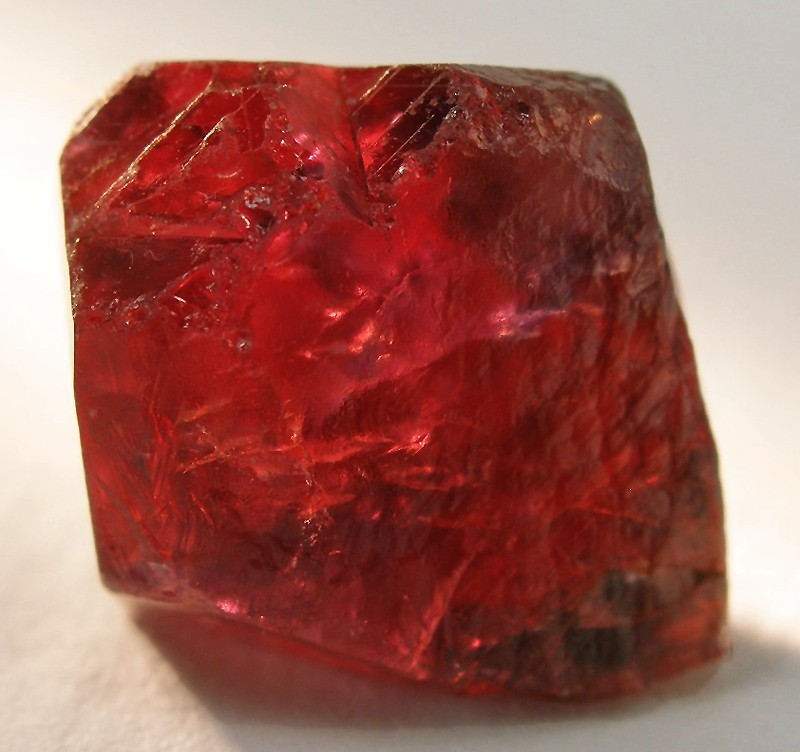
Jeffery Bergman reports on an originally 10.87-ct rough from the Billion Hill mine in the Nghe An province, a few hundred kilometers southwest of Hanoi, that resulted after cutting in an exceptional 6.91-carat unheated pigeon blood ruby named “Red Treasure” of Vietnam. Mogok ruby dealer Miemie Tin Htut, of Silken East Co., Ltd. in Bangkok, commented on this 6.91-carat Vietnamese ruby that was submitted to Gübelin for certification: «it is very reminiscent of the highly fluorescent vivid pigeon blood red colors produced from the renowned Baw Lone Gyi mine in Mogok, Burma».
Not surprisingly, even the most internationally respected gem labs – J. Bergman reports – may occasionally misidentify Vietnamese rubies as coming from Burma, considering their genetic similarity.
This geological kinship, however, is not reflected in commercial quotations. «The exceptional natural “pigeon blood” rubies», notes Jeffery Bergman, who combines recognized gemological expertise with extensive commercial experience with his 8th Dimension Gems, «fetch the very highest prices of any of the colored gemstones other than natural fancy vivid color diamonds. A 6.04-ct Burmese pigeon blood ruby set a new world auction record in 2012 fetching $551,000 per carat. A mere three years later this record was shattered when a 15.04-ct Burmese ruby sold for a stunning $1.22 Million per carat. In spite of their growing popularity – and comparable quality – Vietnamese rubies remain a relative bargain with wholesale prices far less than their equal Burmese counterparts».
Gem News published on IGR – Italian Gemological Review #16, Summer 2023