



This content was first published on IGR – Italian Gemological Review no. 3 in 2018. The information provided here is therefore current as of the original publication date.

Michele Macrì, in issue #1 of the year 2017 of this magazine, asked this question: “What is a gem?”. The question, at first, appears to be a simple one, but it is anything but. And if one, thinking of legal implications wishes to try and answer the question: “What legally constitutes a gem?”, then it becomes even more complex.
Reformulating the question in these terms does not mean wanting to stonewall or shift the focus of the discussion. On the contrary, it is an invitation to an increase in the knowledge of the fact that working in gemmology also has legal implications, which cannot be simply set aside, nor improvised, or even worse done with approximation, which has often been encountered in the experiences of those working in the industry. Once in a while, here and there, cases are brought to court regarding the true value of a precious gem in addition to its “authenticity” which often, in order to be resolved, require complex preparation. Oftentimes, in Italy at least, the judge overcomes the problem by calling in an expert who is to answer one or more of these questions, but at the end of everything the reply to the question will become diriment on the final outcome of the case, because it is difficult that the judge will distance himself from the answers given by the expert he himself has called in. Consequently, one cannot entrench oneself behind words, but must instead agree upon them.
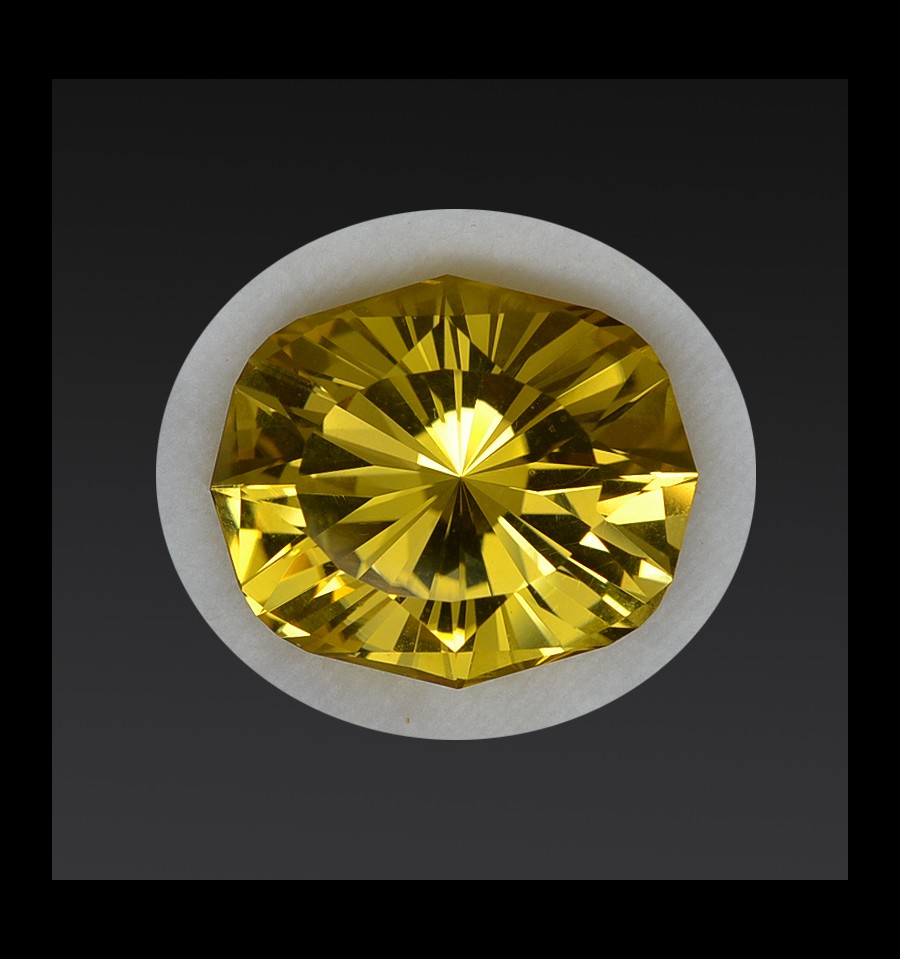
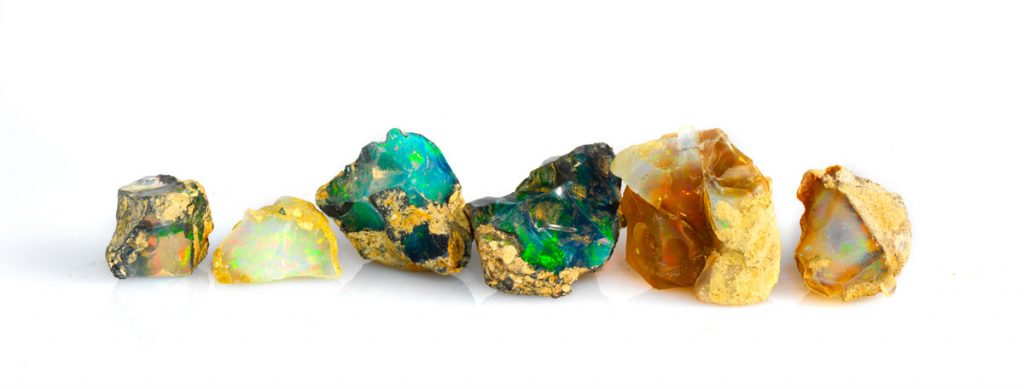
Picture by Mauro Pantò, www.thebeautyintherocks.com
The system must define things well. You cannot simply just say that a gem is a gem
It is the case to note, at this point, that Italy has, over the last few years, tried multiple times to implement a new (and organic, at least in intentions), discipline regarding the sale of precious stones. But even this last legislature missed the mark, and the draft laws which were proposed one after the other never reached completion, always missing the final step of being transformed into a law, sometimes just by a hair’s breadth. The consequence of all of this is that the wished for discipline is still missing, even though the work done, albeit interrupted, was of great interest.
Notwithstanding all of this, there is no doubt that, returning to the topic of what (legally) constitutes a gem, a future organic law on the sales of precious stones should, firstly, contain an acceptable definition in answer to this question. The risk remains, however, that if such a definition comes from the parliament, this could turn into a remedy that is actually worse than the original illness. Any future definition, defined by law, if not adequate could define little, or worse, not at all!
In the face of a possible inappropriate legal provision of the concept of gem there is a grave risk of falling into the well-known ills of the Italian reform system, meaning a legal intervention which, instead of highlighting the existing problems, and those uncovered through the experience of the users, simply creates new ones. In other words, we could find ourselves in front of an even worse draft reform.
As well noted by Michele Macrì in his article, the biggest danger to this topic of the definition of what constitutes a gem, is that of falling into the deceptiveness of tautology which is always around the corner even, in systems different from the Italian ones.
Repeating the same term is a common expedient when trying to define the term gem. For example, point 23.25 of the American FTC guidelines, one of the authoritative references in the case of jewellery fraud, states: “It is unfair or deceptive to use the word “gem” to describe, identify, or refer to a ruby, sapphire, emerald, topaz, or other industry product that does not possess the beauty, symmetry, rarity, and value necessary for qualification as a gem”.
It is one thing to have a tautological definition of gem in the common practice of the workers in the industry, but another is having that same tautology “crystallised” (forgive the play on words) in a legal definition, to be used, by its very nature as a parameter fort the decisions that courts will need to make in civil and, most especially, in criminal disputes.
At this point, it is therefore important to remember that in Italy the Draft Law which came closest to becoming converted into a law, that of “Mazzocchi più altri” approved by the Chamber of Deputies in the now distant November 2011, contained, at the very least, the definition of gem material. In Article 2 of this draft law the following description can be found: a “gem”, is a natural, synthetic, cultivated, or artificial material, which is used for personal decoration or ornamentation.
A definition is absent in the French system which, is traditionally known to be similar to that of Italy, and which has created a provision in regards to gemmology. In this system, there is a provision expressly dedicated to the sales of stones and pearls, which could be interested from a comparative law point of view. The French law does not distance itself much from that proposed in Italy in the specific cases of the correct denomination of the characteristics of the stones and the treatments they undergo. It must be said, however, that the French, on this crucial topic of definition, use terminology that cannot always be translated into Italian, notwithstanding the closeness of the two languages. The French legal document uses, for example, the expression “pierres gemmes” (perhaps taken from the English, gemstones) which, for an Italian reader, once translated as “pietre gemme”, would cause some confusion.
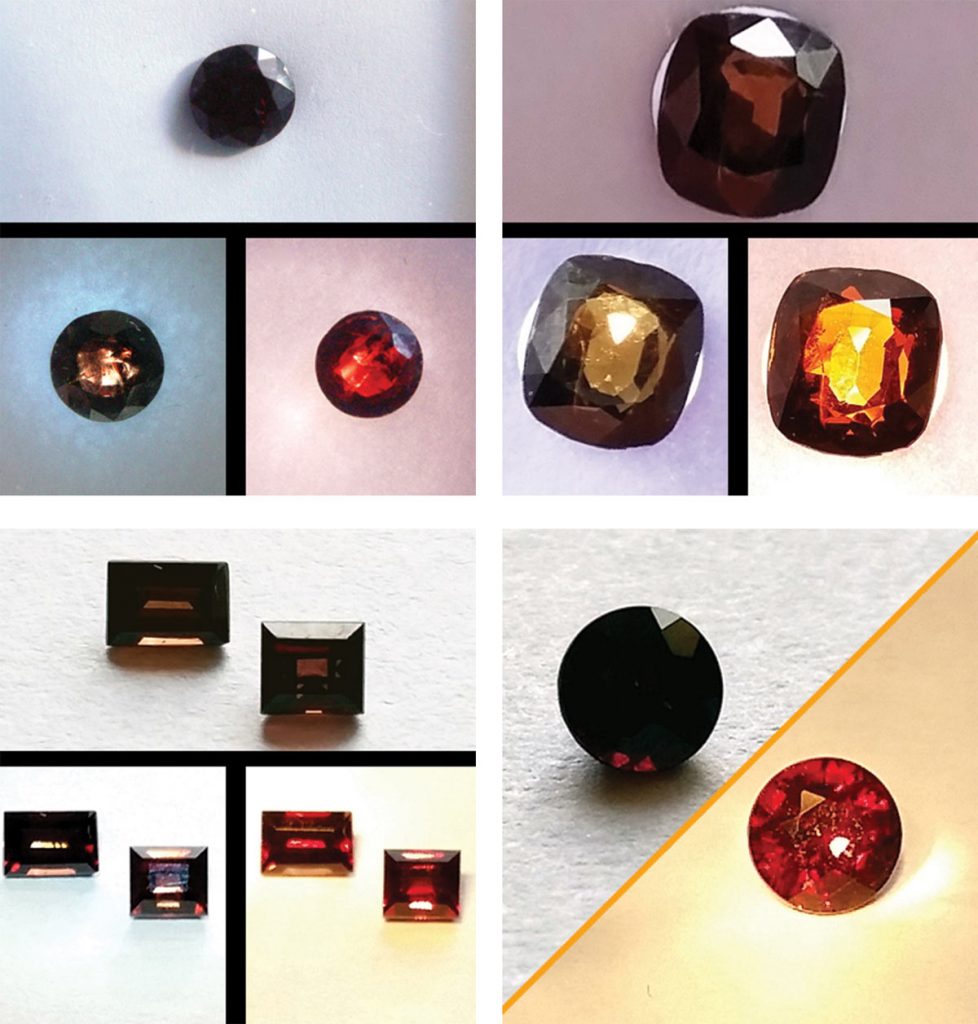
Gem, gem material, precious stones. Three questions regarding the best legal definition
Carefully rereading the text defining gem material in the Italian Draft Law cited above, one could ask three questions:
- Is this definition satisfactory from a scientific or technical point of view?
- If so, is it useful from a practical sales point of view?
- And if the first two answers are positive, will it decisively resolve a legal dispute?
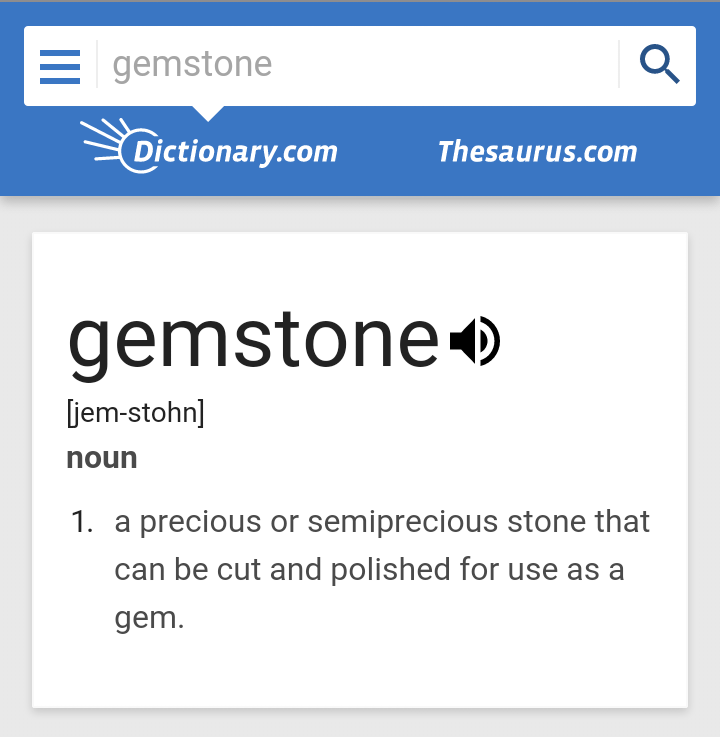
The answers we give are full of consequences especially if they lead us to believe that it is simply far from the tautological definition currently in use, according to which a gem is “a precious or semi-precious stone that when it is (eventually) cut and polished can be used as a gem”.
As one can see, the question is complex and even dangerously insidious, especially if one needs to dispute this whilst deciding on a solution for non-fulfilment of a contract for a monetary sum, as, considering the material in discussion, must be high, or even more importantly, when talking about fraud!
Right after these questions, comes the problem regarding the concept of a semi-precious stone. The latest draft law currently underway focuses on the idea of forbidding the use of the term “semi-precious”. This question is disputable under a double profile: is it worth banning an expression which is centuries old and so well used in conversations that it is also used by those not working in the industry with a certain frequency? Or, alternatively, the benefits of the traditional use of this term are fewer than the hidden dangers that the legislator wants to avoid? We will have to revisit this question in the future.
Obviously, the question regarding what legally constitutes a gem also contains others within it, as the detailed questions require increasing terminological precision in the first place.
It is indeed evident that the next step to take is the following, which is responding to this further question: “What is a natural gem?” or alternatively; is a gem by definition a natural thing?
Precious stone and/or natural gem?
With the above question we enter into the very dangerous field of discussing the concept of naturalness, which has always led to discussion amongst scholars of various disciplines, from linguists through to ethology, philosophy and psychologists form different schools and orientations.
Even in this regard, the Mazzocchi Draft Law can be taken as a point of reference inasmuch as it contained a provisional definition of natural gem material. Also, in the previously cited Article 2 of this Draft Law, we can find: “natural gem material” is a substance of inorganic or organic origin existing in nature.
It is evident, even at first glance, that this definition is also open to many of the critiques just made regarding the definition of a gem in general.
Are we, perhaps, in the presence of a modern Sphynx enigma? In the face of which only a nouveau Oedipus can hope to find the answer?
No matter how enigmatic the question may be, and, as the law is, above all things, based on interpretation, even in the presence of the difficulties that any possible definition of gem may have, the judge cannot, nor must he, give up, abdicating his role. In other words, the judge, in front of the question, “What is a gem?” cannot reply “I’m sorry, but there is no concise definition which covers all the materials that have been considered to be gems over the centuries”.
What is even more true, in consideration of the fact that in most cases, therefore, not only in Italy (where neither the Draft Law mentioned multiple times, nor any other initiatives which came after, were ever approved) we are faced with a legislative vacuum, which needs to be filled, either in an analogical manner, or by using a case by case solution.
The absence of organic discipline in the fields of the sales of gems is beginning to be seen increasingly as a problem, not only by those working in the industry, but also by civilian buyers. The latter often finds himself in the middle of unfair trading practices or brash initiatives. Just an example to stay on Italian soil, one needs only to remember the uproar caused by the “diamond offered by the bank”. The deceptive offer of the diamond as a financial investment which throws even more ambiguity on the term gem which is, in this case, surreptitiously loaded with the connotations of being a financial product. But in this regard, and in that of others, if possible, this must be dealt with in an appropriate setting.
Doctrine and the law are wary of the term “gem”. A stone is already precious before being cut
Here, instead, we will try to give an answer to the question which opened this article; beginning with a fact that may appear to be a paradox. Doctrine (the set of the opinions of the judges) and the law (the set of the verdicts of the Judicial Authority) up until now, in Italy, refuse to use the term “gem”, which appears very rarely in forensic practice.
It must be said that, maybe without doing it proper justice, legal experts tend to shy away from using this term, whose meaning, as we have seen, in full of uncertainty. Doctrine, and even more so, the Italian legal system, remains anchored to the more reassuring set of words “precious stones” (maybe because the concept of a stone, in our subconscious, seems more stable than others).
Surrounding the concept of a precious stone there has been a certain stability in meaning of which two strong points can be highlighted:
- In Italian legal practice, the term gem is a “near synonym” of the expression “precious stone” which can be used as an alternative only for exhibition purposes, but without the term having any reliability;
- The legal definition of precious stone which is widely accepted, except for some negligible divergence, is the following: a precious stone is a material whose intrinsic characteristics and rarity, keeping qualities and aesthetic pleasures gives it the double quality of being desired as an ornament, as well as being considered to have an alternative monetary value, displaying a financial value which can be passed down over time.
In light of this definition, barite, which is used as an example in the article by Macrì, in turn inspiring this article, currently can and cannot be described as a gem, but it can certainly be affirmed that, at least in Italy, it is not legally a precious stone.
As a consequence, the opposite of barite, painite, of which possibly the majority of clients shopping in a jewellery store have probably never heard of, is certainly a precious stone, actually it has every right to be, considering its extreme rarity, listed among the top stones in an ideal list.
It can also be said that a precious stone is precious even before being cut. Regarding a gem, instead, whether the fact that it is cut or not makes it a gem is still open to discussion (and something we can get back to, in the future).
In the Italian legal definition of precious stones, the cut is not a determining aspect, but the cut itself only represents an added value to an item which in itself is already considered to have an economic value. In other terms, a raw emerald is already a precious stone even if it were never cut. Differently, the American FTC guidelines, in a commentary note regarding the definition quoted above, seems to exclude raw material in the semantic term of gem: “Not all diamonds or natural stones, including those classified as precious stones, possess the necessary qualifications to be properly termed ‘gems’”.
On one point the legal definition of precious stone coincides with that of gem coming from the discussion we are having, certainly a hydrothermal emerald, or a sapphire made using the Verneuil method, are neither gems (at most they are gem material) nor precious stones. For the latter, the Italian legal system (not differently from the French system) continues to use an expression that, may seem excessive to some. This expression, a bit harsh, perhaps, is the following: “false stones”! It is certainly a sign of the conservationism expressed by legal counsel, but it does demonstrate a foundation which is reflected in the trading market. How often have synthetic stones, like cubic zirconium, moissanite, or hydrothermal emeralds seen a decrease in their value after the extraordinary promises made upon their launch? Less succinct are the FTC guidelines: “In general, use of the word “gem” with respect to laboratory-created stones should be avoided since few laboratory-created stones possess the necessary qualifications to properly be termed “gems”. Imitation diamonds and other imitation stones should not be described as “gems”. But this problem could maybe form the subject of another “moment of reflection” in this magazine, which has given me such a warm welcome.
Request your copy of Rivista Italiana di Gemmologia or buy a yearly subscription
Article by Marco Calabrò, published on Rivista Italiana di Gemmologia #3, January 2018.


