This content was first published on IGR – Italian Gemological Review no. 3 in 2018. The information provided here is therefore current as of the original publication date.

During an excursion on the Alps in 1797, the French mineralogist R.J. Hauy discovered some piezoelectric crystals with a glassy brightness that were mistaken for tourmalines. After performing accurate analyses R. Flatly realised that he had discovered a new mineralogical species he called axinite.
From a mineralogical point of view, axinite is, though, a group of minerals including ferrous axinite (the most used in the gemmological field), magnesium axinite, blue manganaxinite and orange tinzenite; such mineralogical species differentiate for their content of Fe, Mg, Mn and Ca. On the gemmological point of view, axinite is a calcium borosilicate with variations in its composition that can not be analysed with standard gemmological tests.
Axinite is a metasomatic mineral present in areas characterised by a contact metamorphism in basic rocks and veins. Gem quality axinites are quite rare and the most interesting fields from a gemmological point of view are located in: Tanzania (in 2007 raw samples of cutting ferrous and magnesium axinite were discovered)), Sri Lanka, France (Isère), Brazil (Bahia), Pakistan (gem quality raw items have been recently discovered in Khapalu), Russia (Ural), Mexico (Baja California, big crystals found in the ‘60s), United States (New Jersey and California) and Italy.
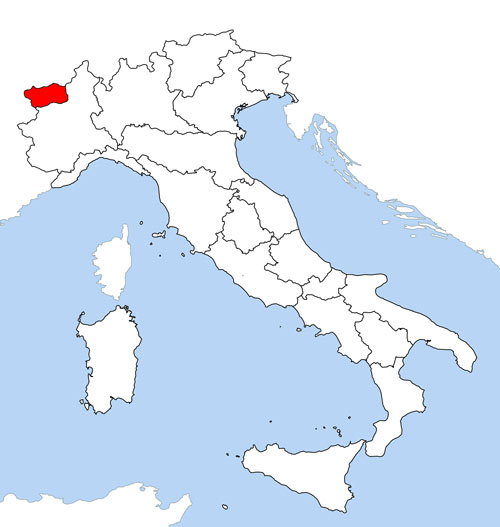
The stones coming from Italy are usually small, dark and of little value. Despite this, some remarkable gems of axinite were cut from crystals found on Monte Bianco, among the debris of the Miage glacier, Valle d’Aosta (Figures 19 and 20).
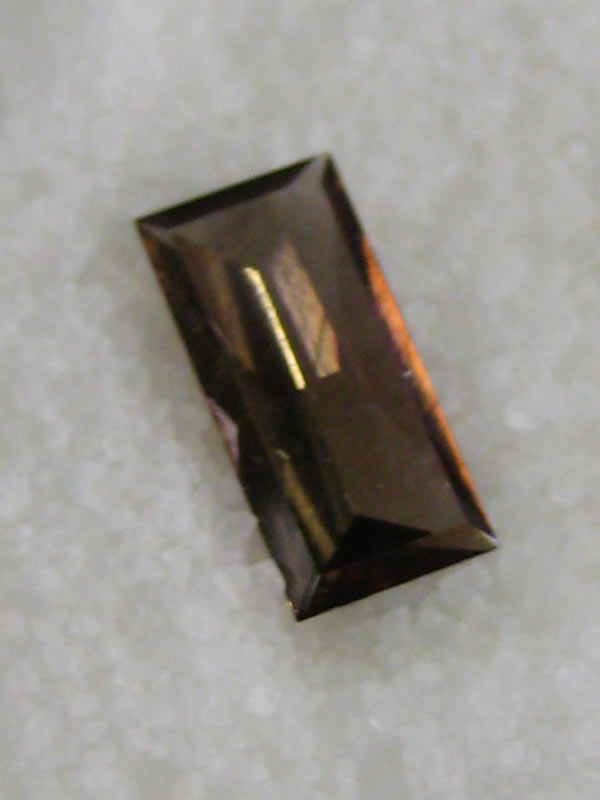
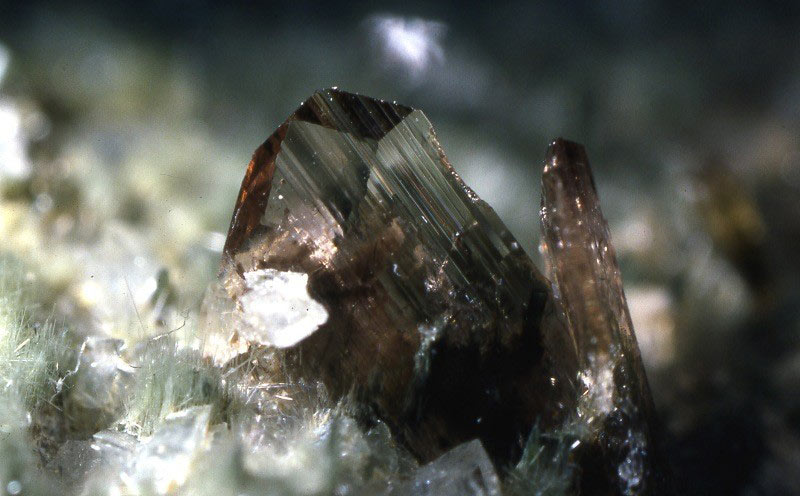
The faceted stones are usually of a limited size (besides inclusions and cracks) due to the very thin thickness of many raw items preventing the cutting of big carat stones with suitable proportions.
Axinite can be mistaken with andalusite for its strong pleochroism and with smokey quartzes as for colour. Stone collectors are the reference market for this gem.
Visit the Gems of Italy section!
Curated by the qualified group of expert of the section Gems of Italy, published on IGR – Italian Gemological Review #3, January 2018.