This content was first published on IGR – Italian Gemological Review no. 5 in 2018. The information provided here is therefore current as of the original publication date.

Fluorite (CaF2) is a calcium fluoride crystallizing in the mono-metric (cubic) system. Its name derives from the Latin verb “fluere” related to the fusibility of the mineral, which is used to facilitate the melting of minerals in the transformation processes. Another interpretation of the name etymology is connected to the Latin word “fluor”, meaning “to be dyed”. In fact fluorite can be found in all colors of the spectrum, often showing vivid shades such as purple, blue, green, yellow, pink or no color at all, in this case it presents its proper color, that is colorless. Thus it is an allochromatic mineral since the acquired colors often originate from chromophore agents.
The crystal shapes most commonly encountered are cubic and octahedral and other combinations of these, as well icositetrahedral and hexakis octahedroal in combination. Rarely it presents a dodekahedral habit but can exhibit a massive and fibrous appearance. It can be often found in geminated interpenetrations. It is possible to obtain an octahedron after cleavage, whatever shape the crystal is, being easy and perfect cleavage in four directions, according to the faces of the octahedron, another peculiarity of fluorite.
It is a quite common mineral that industry exploits to extract fluorine. However it is part of several specialized mineralogical and Gemological collection for its beauty and easy availability.
As for the formation environments fluorite is a ubiquitous mineral of gangues of hydrothermal veins also available in pneumautolithic deposits, in pegmatites and in sedimentary rocks; fluorite deposits in large veins are often associated with metallic deposits. A rather apparent property of fluorite samples is the strong fluorescence to UV light, a feature just named after this mineral. Among the most interesting inclusions the microscopic observation reveals octahedrons of pyrite, tetrahedral negative crystals, liquid inclusions, two phase and three phase inclusions. Typical characteristics include also color zoning.
Fluorite was well known in ancient times for ornamental usage including cut gemstones, the famous Roman Vasi (Vases) Murrini seem to originate from fluorite coming from the East.
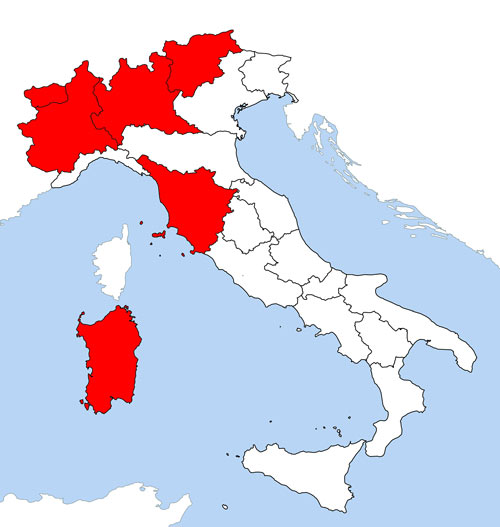
In Italy fluorite can be found in various locations (Figure 51). Perhaps the most famous samples are the pink octahedral fluorites encountered lying on smoky quartz and coming from the Miage glacier, along the Italian side of Monte Bianco. Its pink, nearly red color, is due to the presence of rare earths, namely yttrium. The samples are not fluorescent.
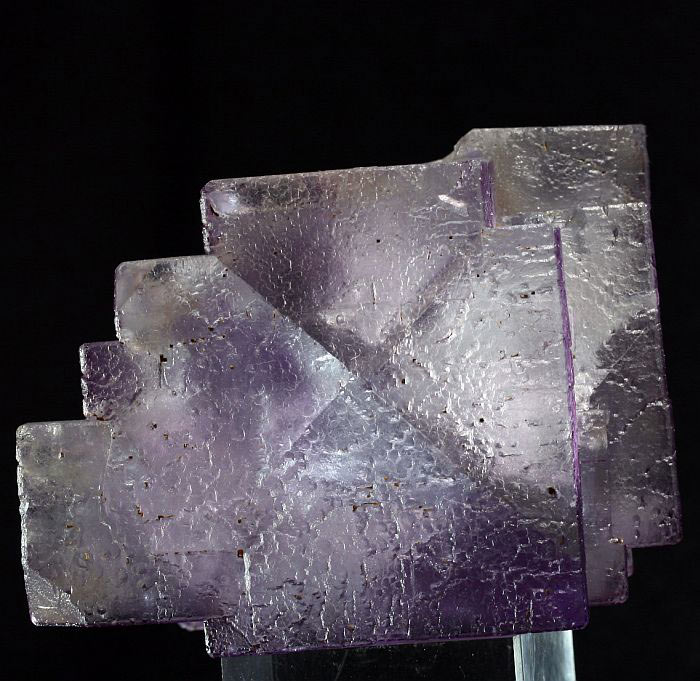
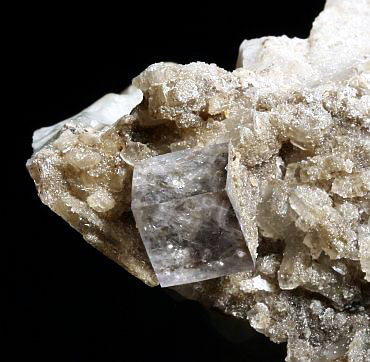
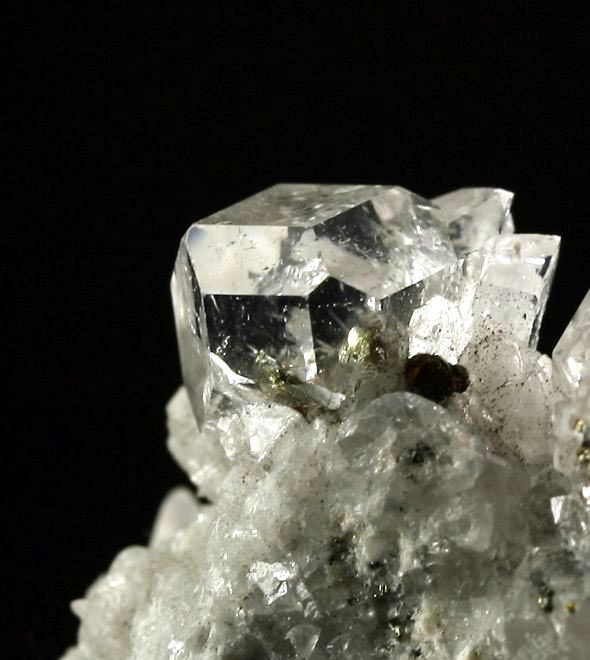
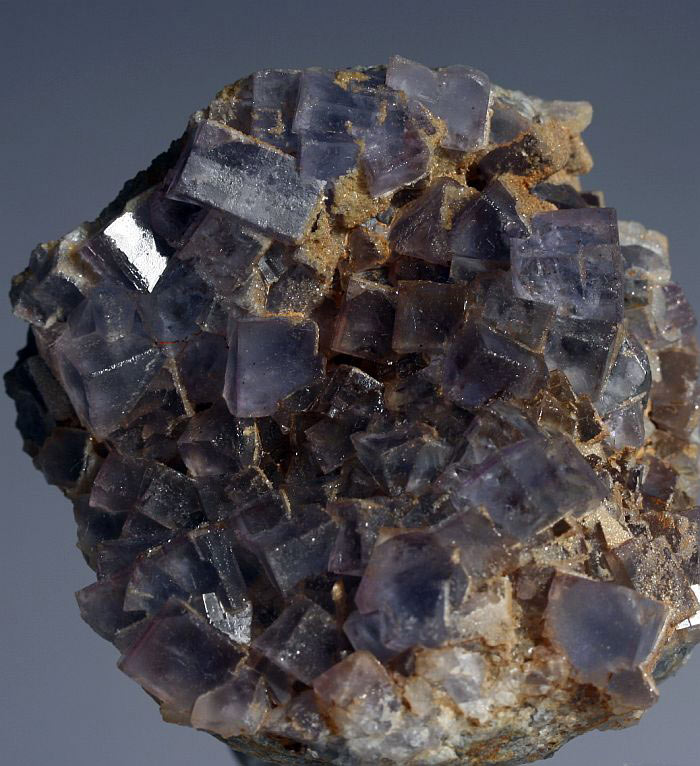
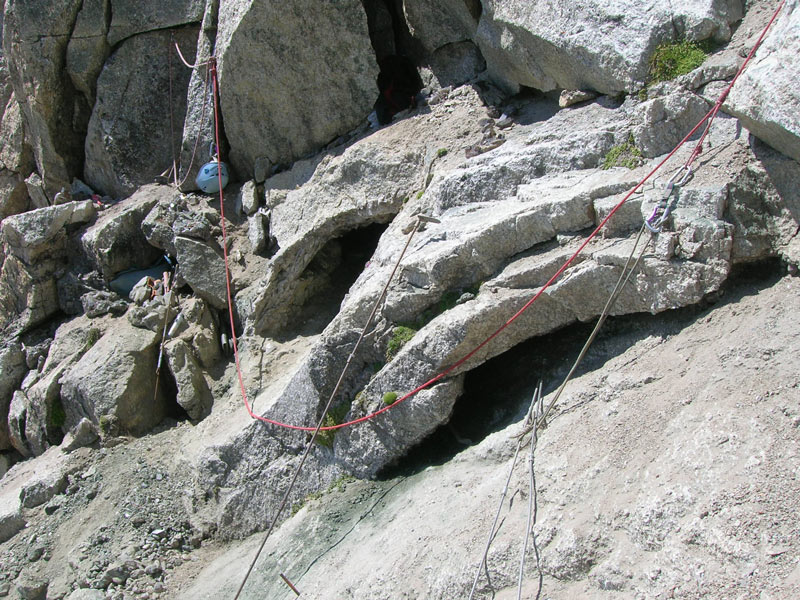
Monte Bianco samples of smoky quartz with pink fluorite are mined from hydrothermal cracks frequently encountered in extremely inaccessible areas, often along the mountain walls. To unearth these treasures advanced skills and sophisticated mountaineering techniques are required. Certainly searching may be worth trying, being fluorite a must-have and a pride of many museums all over the world.
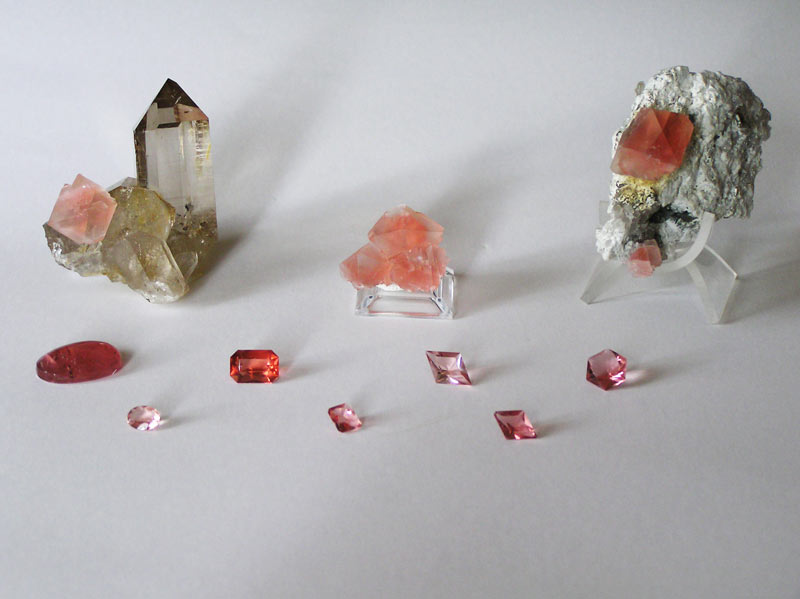
The samples found on Monte Bianco in the last thirty years outdid by far the famous Swiss samples of Gotthard. The fluorite crystals detached from the quartz matrix after cutting turn in gorgeous gemstones ranging from intense pink to red (Figure 52). Similar samples are found in the quarries of Beira and Villadossola in Ossola Valley, Piedmont.
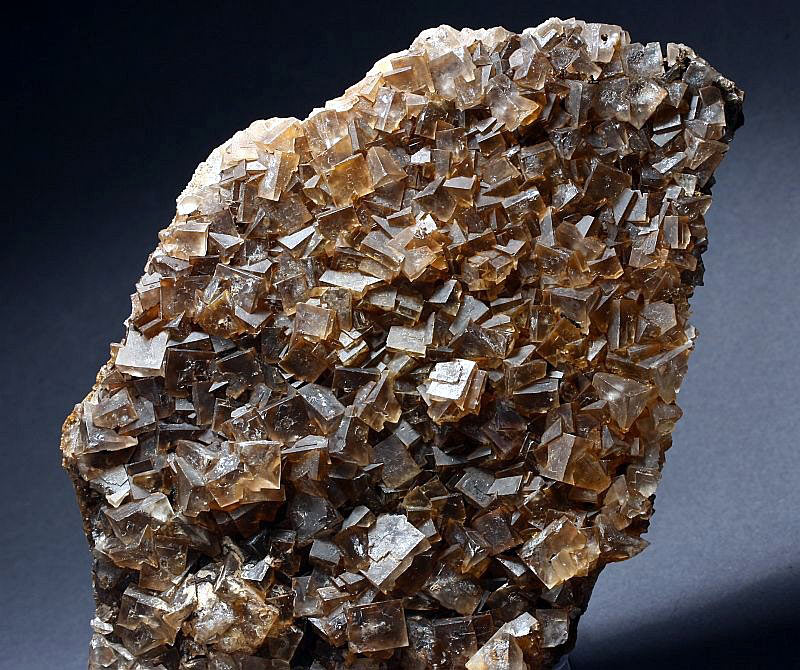
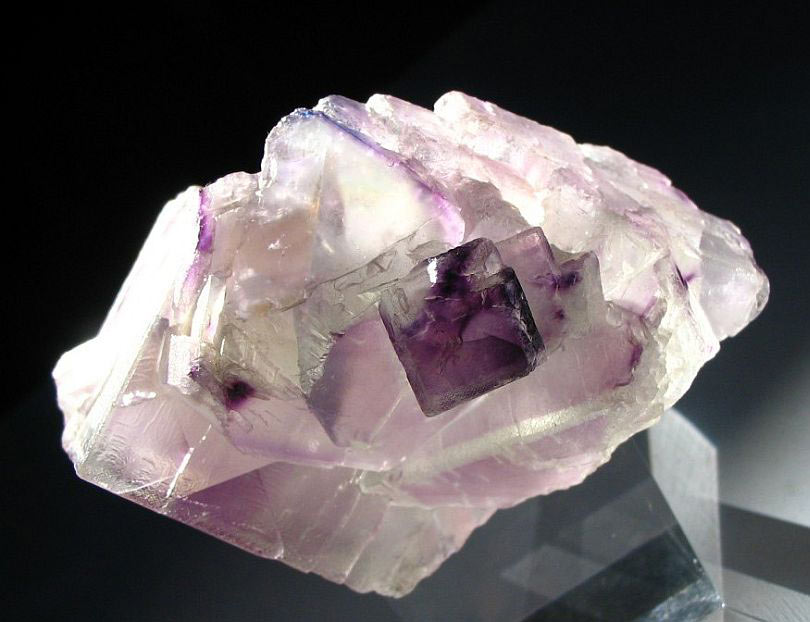
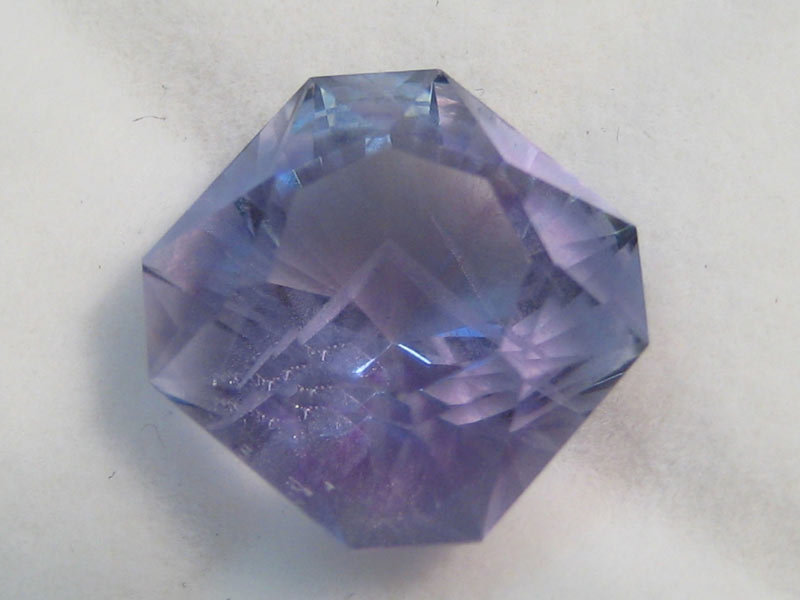
The Zogno mine in the Brembana Valley, Bergamo Province, supplied very fine purple samples (Figure 53a) and therefore is well known by collectors. After cutting these stones may result in both purple and colorless gems, being typically purple concentrated on the outer parts of the crystals while the core is colorless.
Other important veins of fluorite are found in the mines of Vignola and Cinquevalli, Trento province; in the Corvara mine (green, light blue or colorless fluorite) in Val Passiria and in Sarentina Valley, Bolzano province, on Fronte and Vetriolo Mounts in Valsugana, in Trompia Valley, Brescia province, in Ganna Valley, Varese province, in Silius, Is Murvonis, Su Zurfuru and Santa Lucia and many others mines in Sardinia. From all these locations fine and big sized purple, green, yellow and white samples have been sourced. Even though gemstones can be produced in all these locations, they are hardly clean materials and not suitable for the production of precious gemstones.
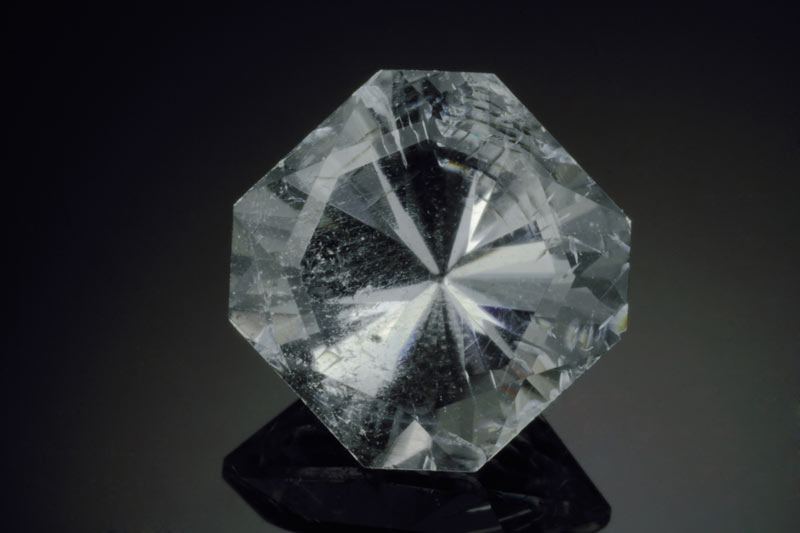
Fluorite can be found in colorless crystals in Carrara marble also, in centimetric crystals scattered on hematite in Elba island and in octahedral light bluish and polychrome crystals in the granite of Baveno and Cuasso al Monte. In these cases also, cutting is possible mostly for systematic purpose (Figure 53b).
The pink fluorite of Monte Bianco
Pink fluorite is among those materials collectors are seeking after for a number of reasons, either because of its rarity combined to the difficulties of extraction, deriving from uneasy availability along inaccessible alpine fractures (Figure 54), or for the beauty of its wonderful octahedrons often associated with transparent or slightly opaque quartz crystals. When it comes to pink or red fluorites of Monte Bianco, beauty and rarity reach the top grade.
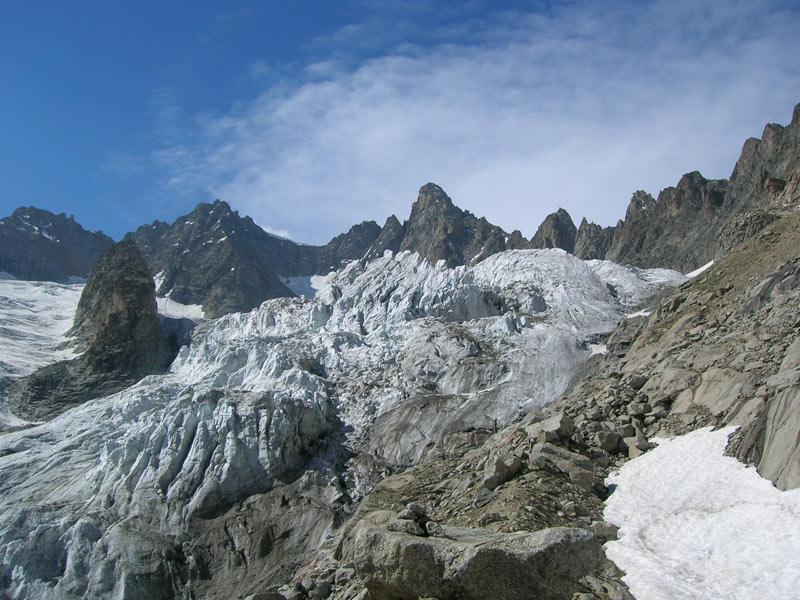
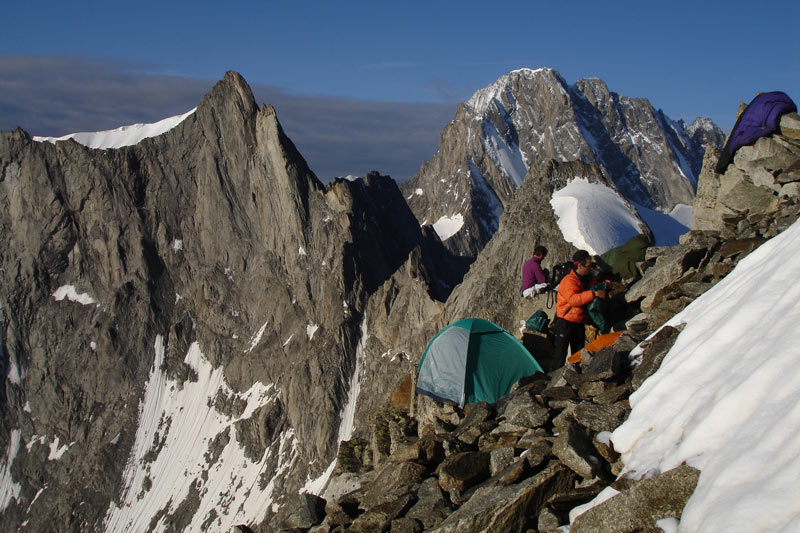
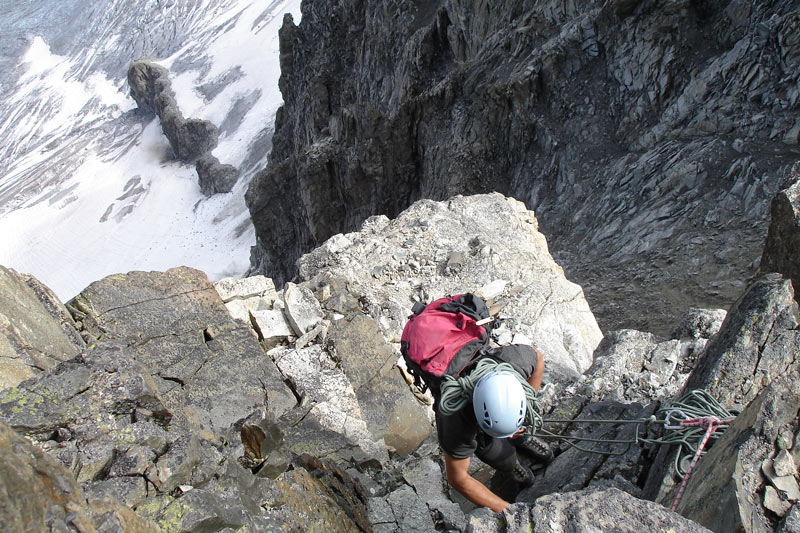
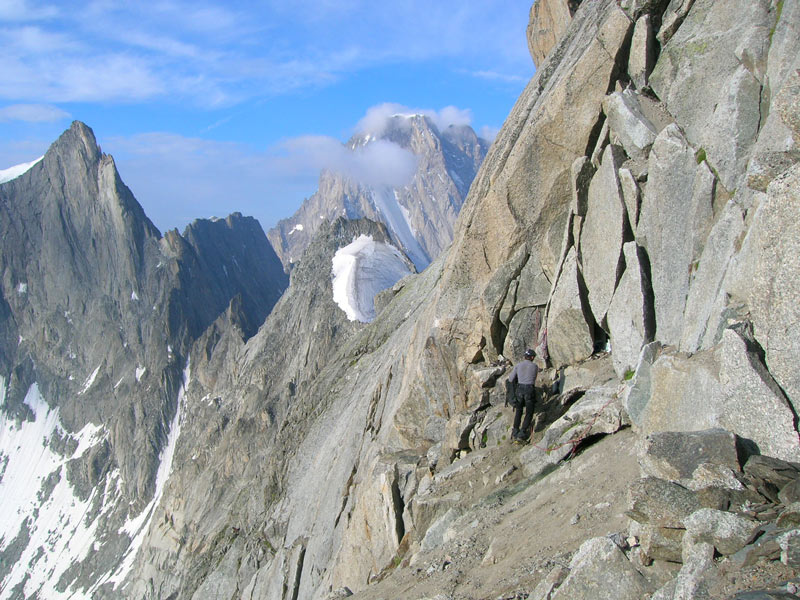
Finding fine crystals of fluorite in the fissures of this alpine massif has been a hard work, and still it is, and when they are found frequently are so brittle and soft that get fractured and altered after millenniums of thermal instability caused by ice and other natural agents.
The classical crystalline habit of fluorite from Monte Bianco is the octahedron, dodecahedron and tetrahedron are more uncommon.
The most noticeable and nicest samples are those associated with white calcite laminae or with smoky quartz crystals. The latter is definitely the perfect match for crystal hunters and collectors although it is quite uncommon to find fluorite stuck to quartz samples while it is easier to find it detached in the alpine fissures where it is located.
Smoky quartz crystals are often encountered with their faces still presenting small octahedral shapes where certainly fluorite was once com-penetrated to be detached during millions of years. In fact the pink fluorite of Monte Bianco seems to originate in the oldest alpine fissures, about 20-15 millions years ago, as accessory mineral of smoky quartz or morion.
Its colors vary from a pale pink to a very intense red (the light green variety is very rare). The best samples come from the Central Massif on the French side in the glacial basins of Argentière and Talèfre, where large and fine samples have been collected over the years (crystals as large as 18 cm) and from where the best gemstones have been faceted (Figure 55).
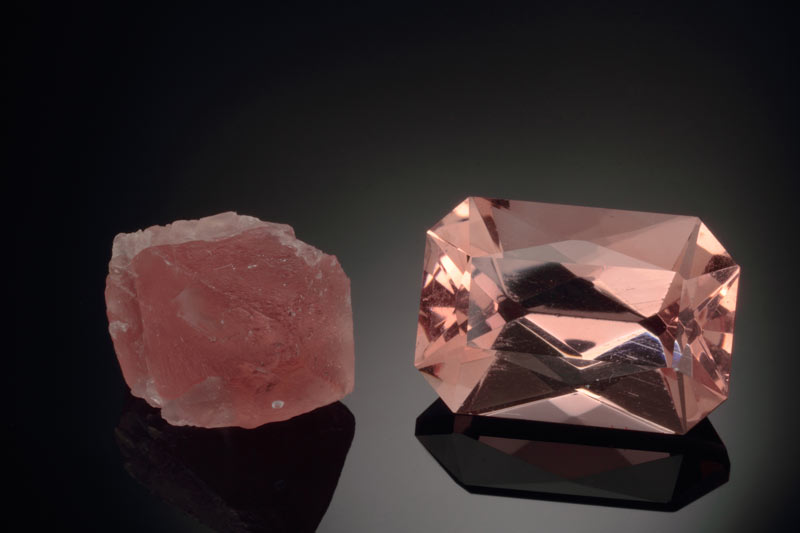
Cut by Merlo Pich Luciano, photo by Roberto Appiani.
On the Italian side of the massif, fissures containing fluorite crystals are extremely rare and samples present lighter colors and smaller sizes when compared with those from the French side. Their sides’ length hardly exceed 25-30 cm. Two sites in which interesting samples have been collected can be mentioned, the Miage Glacier in Aosta Valley, where crystals associated with quartz and bissolite were unearthed on granite blocks, and Triolet basin (Aosta Valley) in a ridge of the Aiguille de Talèfre where pink fluorite occurs in association with slightly smoky quartz and calcite. Among the Italian sources of pink fluorite Beura, Novara province, must be mentioned as well, a location providing crystals in the presence of laumonite.
It’s difficult to find not included gem grade crystals to be cut, not being definitely fluorite suitable for gem faceting and jewelry. In fact its low hardness (4 on Mohs Scale) makes it easy to chip and brittle due to its perfect cleavage across the directions of the octahedron.
Before proceeding to faceting, gem cutters should pay attention to all these physical peculiarities of the rough. Polishing is also a delicate operation because the facets of the gemstones could be damaged by overheating. Then the gem setter should make sure the stone is well protected, being it easy to break because of its typical cleavage; therefore a closed back mounting is to preferred to simple claws. A good advice for those wanting to buy fluorite jewelry is to prefer shock resistent pendants and earrings instead of bracelets and rings.
Among fluorites the best faceted gems are the pink ones, the most expensive and highly demanded by the market.
Visit the Gems of Italy section!
Curated by the qualified group of expert of the section Gems of Italy, published on IGR – Italian Gemological Review #5, Autumn 2018.