This content was first published on IGR – Italian Gemological Review no. 1 in 2017. The information provided here is therefore current as of the original publication date.

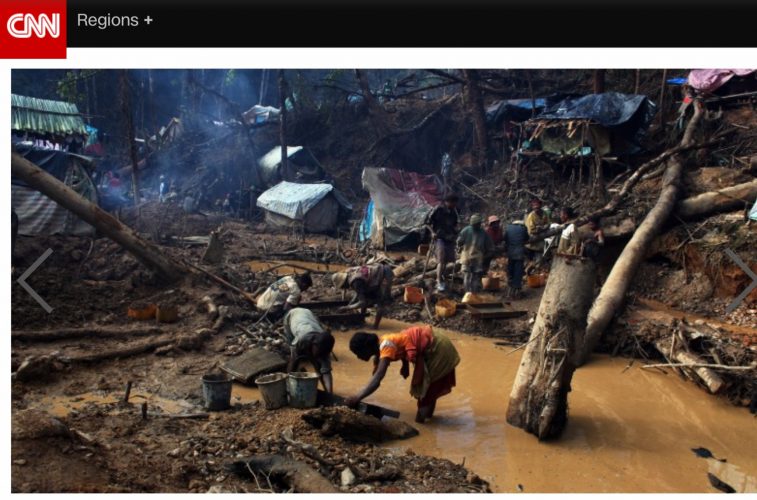
After Didy in 2012, a new rush for sapphires is currently ongoing in Madagascar, starting last October, covering a region the local government has been protecting since 2015 in the Ankeniheny-Zahamena (CAZ) corridor, Bemainty area, 35 km east of Ambatondrazaka. As usual, Vincent Pardieu, the reputed gemmologist and conservationist, wrote a report, one of the last for GIA: A small army of 50,000 miners is digging about two metres deep in the bed of a stream, equipped with primitive tools. The material they found, mainly of an often milky and silky light, dark, greenish blue, responds well to the thermal treatment. Many stones are already attractive and they don’t need to be heated. Michael O’Brien-Onyeka Senior Vice President of Africa Field Division (Conservation International) said that the improvised mining migration is causing a deforestation in an area extremely rich in endemic species. However, Pardieu himself, testifies that he expected a far worse situation: in any case, many areas had long been destined to agriculture and the impact would be softened by artisan techniques that prove to be less invasive than the industrial operations (see jadeite in Myanmar). The illegal and improvised character of such activities is tolerated by authorities leading to linked industries of buyers, among whom many come from Sri Lanka and the neighbouring villages. Beside the controversies on the extent of the environmental damages, the fragmentation of the mining exploitation on the big island did not favour any compensatory initiative able to give back to the preservation of ecosystem a share of the revenues, as happened, for example, in Mozambique (Niassa Lion Project, Niassa National Reserve) thanks to Gemfields.
Gem News by Trasparenze News, published on Rivista Italiana di Gemmologia #1, May 2017.