First documented by the GIA in the early 1990s, colorless to near-colorless faceted transparent natural sapphire subjected to high-temperature (1800 °C+) chromium ion surface diffusion to induce a ruby red color has been virtually absent from the Bangkok market for decades.

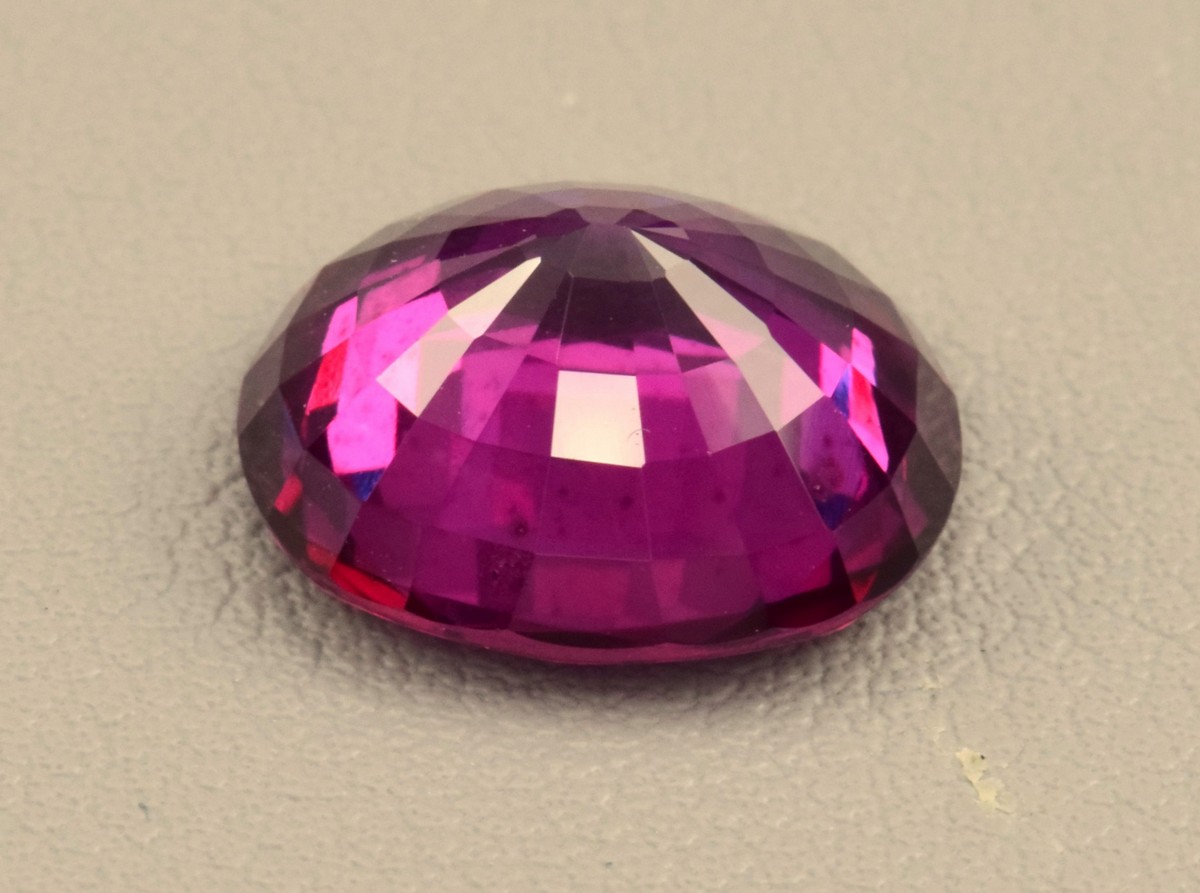
This exceptional 7+ carat example represented as new production was recently purchased from a broker in Bangkok who properly disclosed its treatment. However, we have issued a TRADE ALERT due to the high potential of misrepresentation.
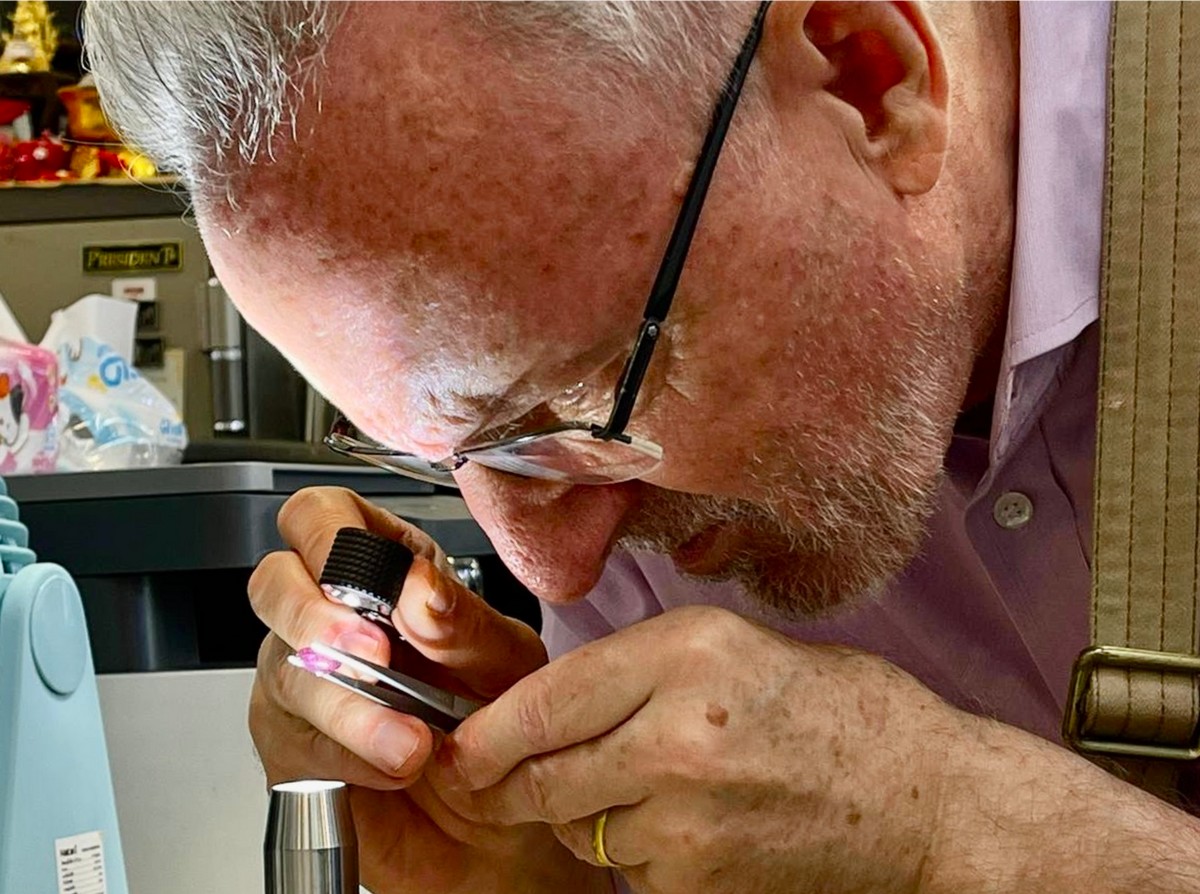
Upon initial inspection, this gemstone was reminiscent of extra-fine purplish-red rhodolite garnet. However, cursory inspection under a 10X loupe revealed inclusions typical of natural corundum subjected to high-temperature heat treatment.
Standard gemological observations are as follows:
Refractive Index: this sample exhibited an abnormally high refractive index of 1.772 –1.778.
Chelsea Filter: weak to moderate red reaction similar to what one would expect of untreated natural or synthetic corundums of comparable body color.
Absorption Spectra: desk-model spectroscope absorption features were similar to those of both natural and synthetic corundum in the pink/red/purple color range, though somewhat weaker than would be expected in natural or synthetic stones with similar depths of color.
Ultraviolet Luminescence: short wave; inert. Long wave; faint red.
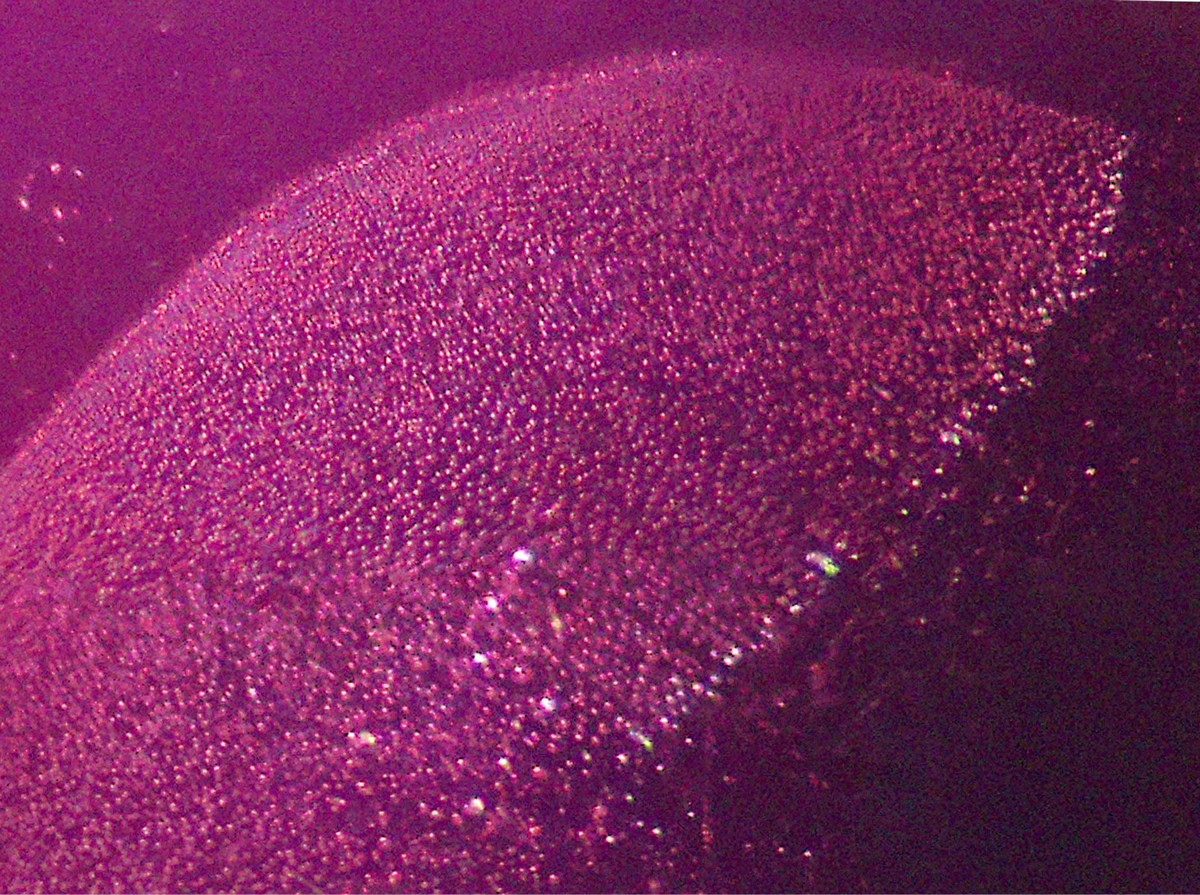
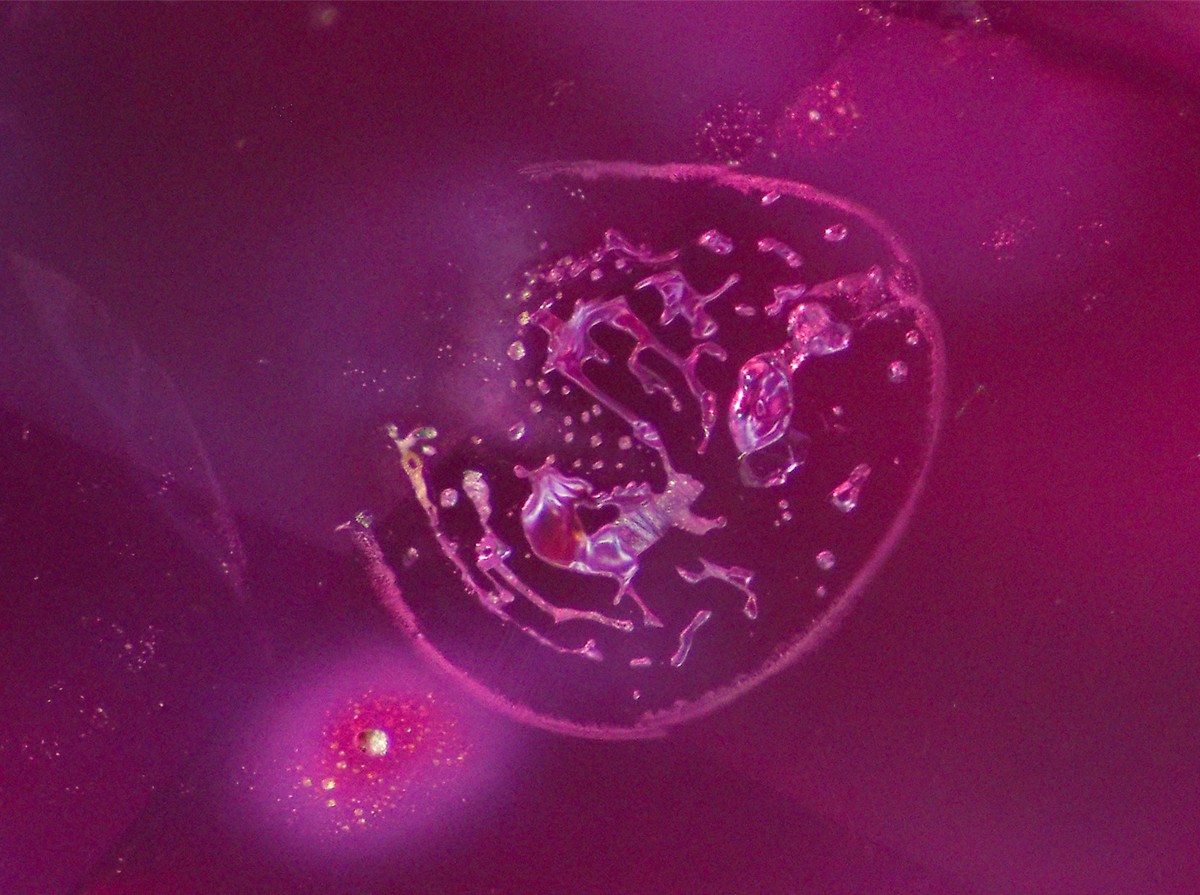
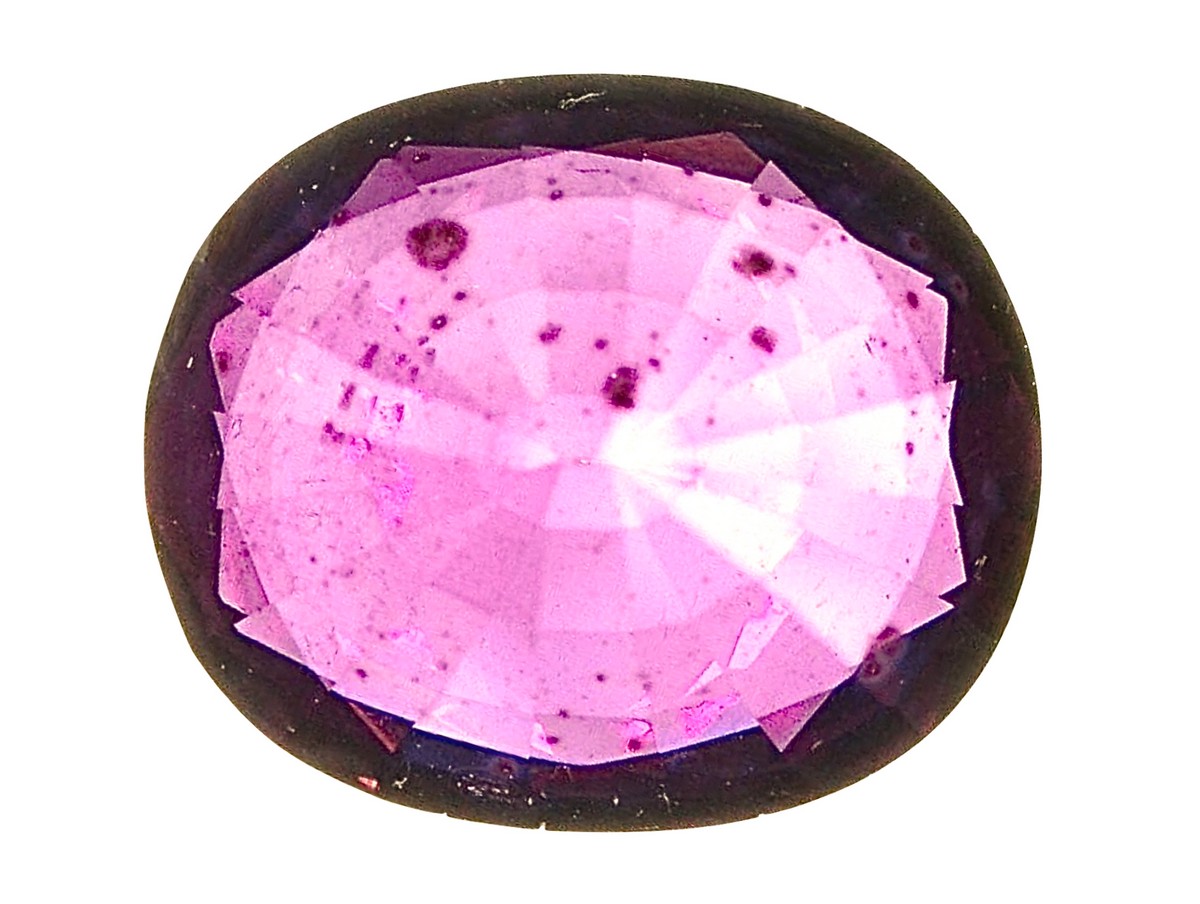
Microscopic Observations: features typical of heat treatment such as melted crystal inclusions, melted fingerprint inclusions appearing as clusters of many small bubbles, and melted discoid features. Concentrations of diffused color surrounded small pits and spherical voids in the diffused layer, unusual sub-surface heat-induced damage generating a snakeskin-like pattern, most prevalent was uneven surface coloration from one facet to another.

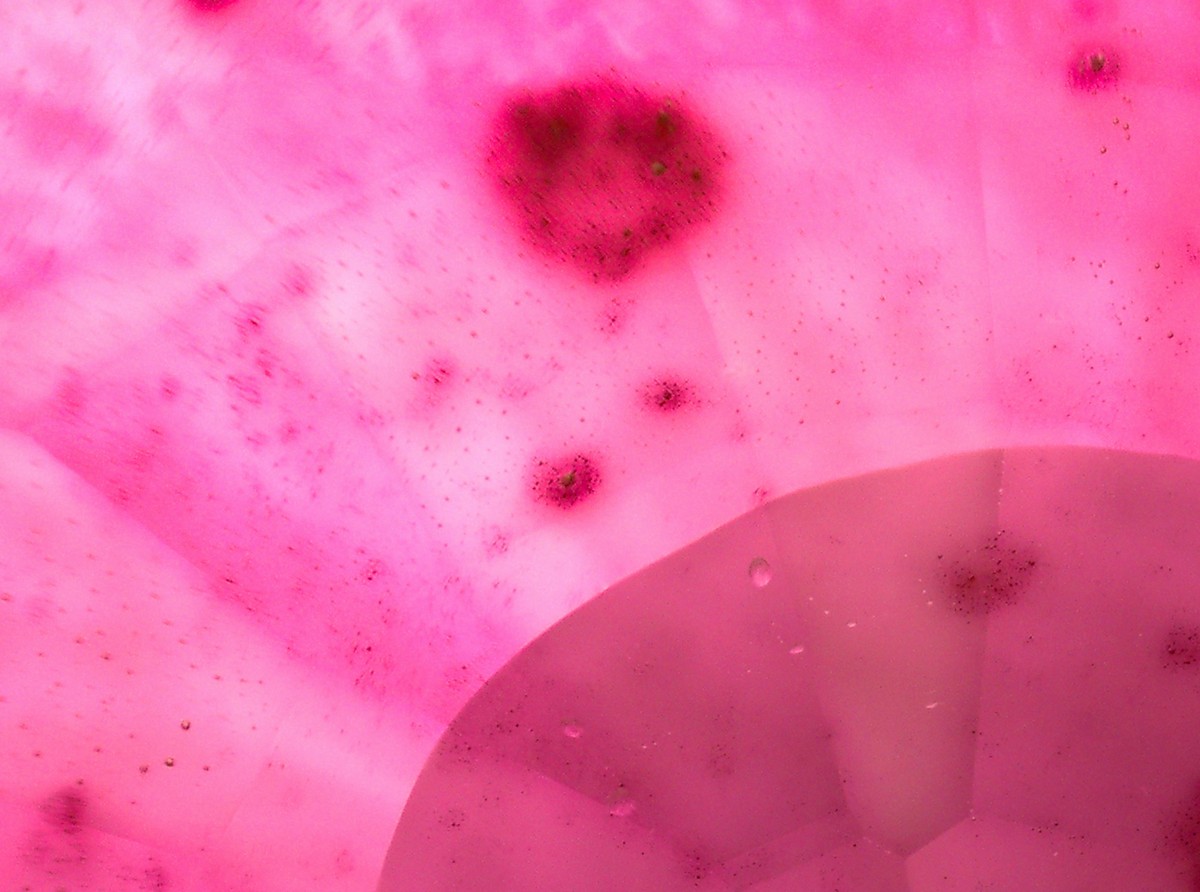
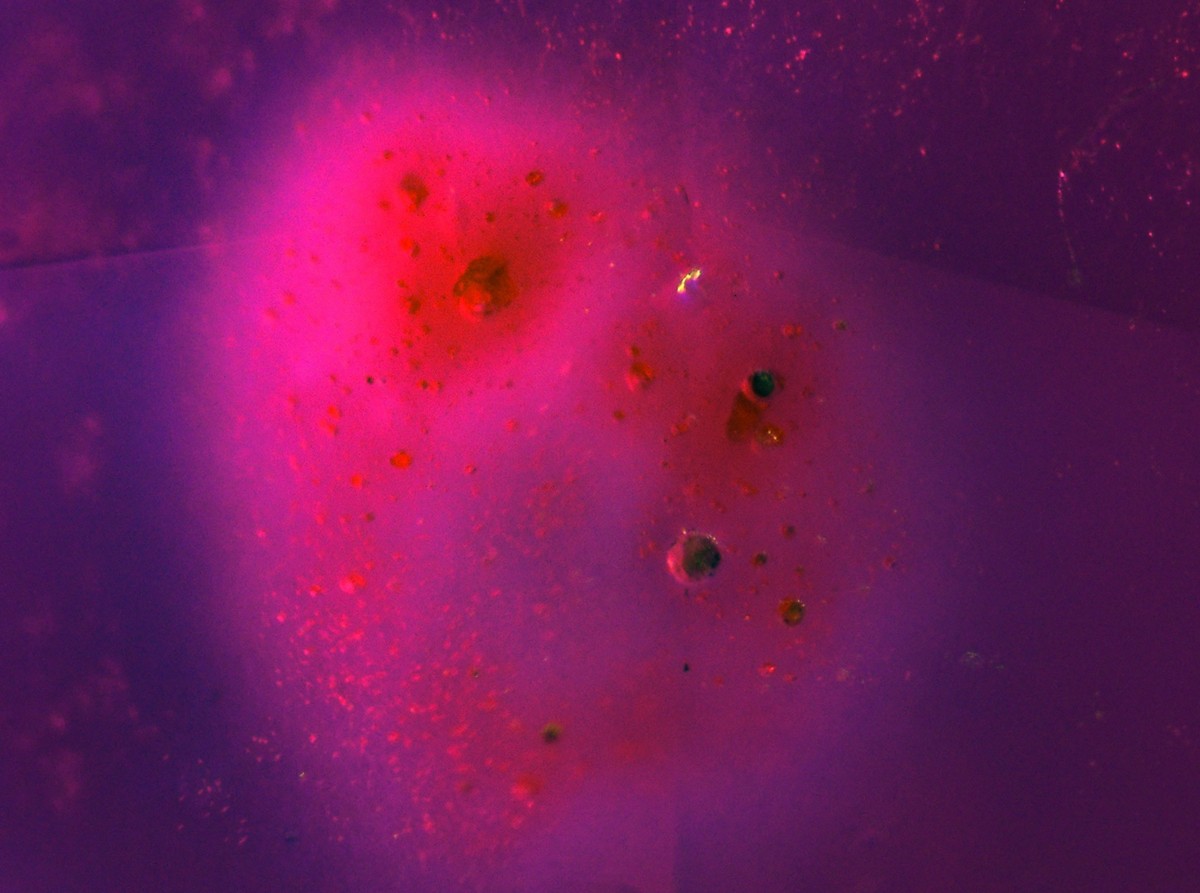
Note: this treatment is not to be confused with synthetic ruby overgrowth on natural corundum. See below.
Proper Disclosure: “Diffusion-Treated Natural Sapphire”. Note: the color of this stone is confined to a shallow surface layer that has been artificially induced by high-temperature diffusion of chromium into the surface of the gem. This color is considered stable in normal jewelry use. However, recutting or polishing may result in a loss of color.
References and Further Reading
Kane, R. et al. (1990) The Identification of Blue Diffusion-Treated Sapphires – https://www.gia.edu/gems-gemology/summer-1990-diffusion-treated-sapphire-kane
McClure, S. et al. (1993) Update on Diffusion-Treated Corundum: Red and Other Colors – https://www.gia.edu/doc/Update-on-Diffusion-Treated-Corundum-Red-and-Other-Colors.pdf
Saeseaw, S. et al. (2015) Analysis of Synthetic Ruby Overgrowth on Corundum – https://www.gia.edu/gia-news-research/synthetic-ruby-overgrowth-corundum-analysis
Smith, T., McBride, H. (2017) Two Unusual Natural Sapphires with Synthetic Ruby Overgrowth – https://www.gia.edu/gems-gemology/winter-2017-labnotes-two-unusual-natural-sapphires-synthetic-ruby-overgrowth
Trade Alert by Jeffery Bergman – ASG SGC of EighthDimensionGems, Bangkok