This content was first published on IGR – Italian Gemological Review no. 1 in 2017. The information provided here is therefore current as of the original publication date.

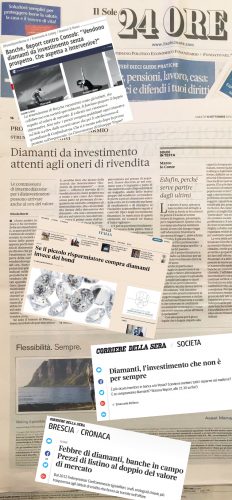 In 2012 CONSOB, the public authority responsible for the regulation of the Italian financial markets, made clear that diamonds cannot be considered as financial products such as investment funds. Therefore the thousands of bank branches operating in Italy should not mislead investors into buy diamonds, since these are not commodities like gold or coffee. Yet in 2015 a total of €300 million worth of diamonds have been sold, in Italy, through the bank channels. Press inquiries and reports have not changed a thing. As a matter of fact, the mechanism is based on the involvement of brokerage agencies. This enables the banks to sell the gemstones leaving to brokers the legal responsibility of signing contracts. As a result, the Italian consumers applying to banks are not making an investment but just purchasing diamonds at astronomic quotations, sometimes at double the price compared with the main trading lists. This is happening thanks to a gimmick. The agencies periodically publish on prestigious daily newspapers their imaginative, self- made and expensive price lists looking very much alike official commodity trading pages. Really, these reveal themselves to be but deceptive ads. Besides, there is no clear repurchase option or withdrawal right. This is a typical Italian situation. There is no evidence that banks abroad have so blatantly interfered with the traditional trading channels, i.e. the jewellery shops. Banks can claim the right of selling diamonds up to two times the Rapaport, but why then is lending money at loan shark rates considered to be an offense? What are the jewelers and the gem dealers supposed to do, then? Some Trade Associations raised the issue. But the reaction must be adequate. We, normal people, are leaving bonds and investment funds to authorized professionals, but you, bank people, should let the consumers purchase diamonds from qualified traders and gemologists.
By Sergio Sorrentino, published on Rivista Italiana di Gemmologia #1, May 2017.