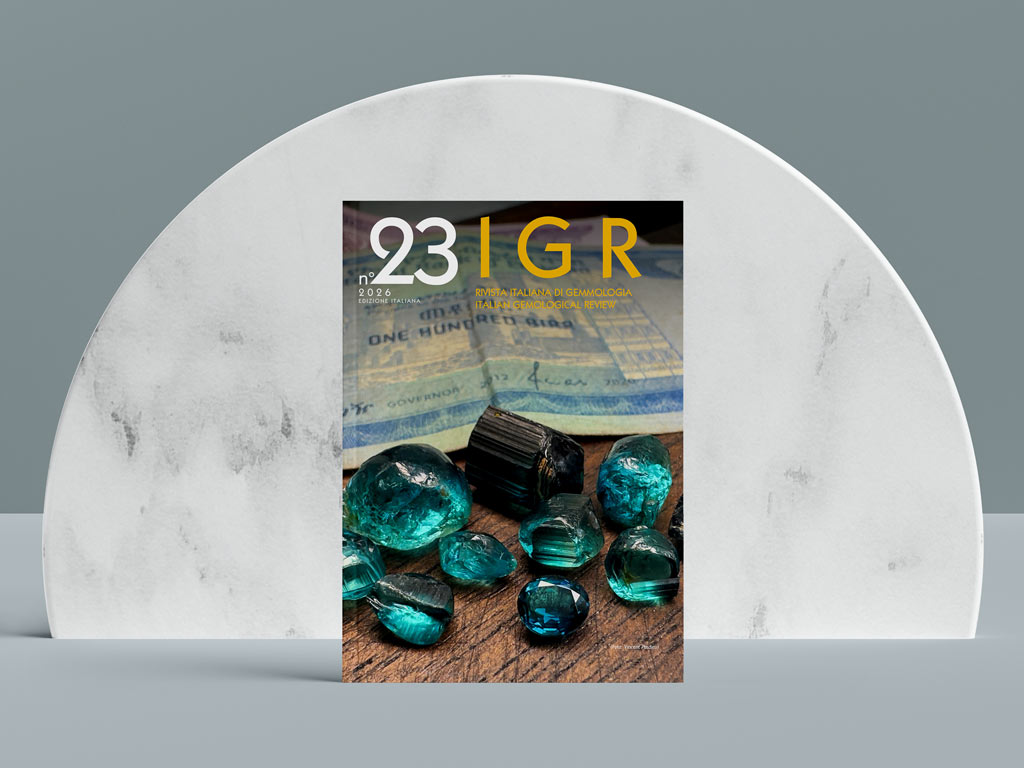
Ethical issues are persistently raised across all sectors of the economy. The jewelry industry is no exception. Encouraging reflection on these topics is undoubtedly positive. But we must have the courage to take concrete action, moving beyond the persistent media hype.
Social responsibility is not a vague declaration of principle. It is an approach that must enable methodical action, avoiding inconclusive efforts and generic statements of good intentions.
In its recent press releases dedicated to fair disclosure — that is, the accurate communication of gemstone characteristics — Federpreziosi also returns to the topic of transparency in the trade of gemological materials.
Federpreziosi is Italy’s largest association of jewelry professionals. It states that regaining public trust is one of the decisive challenges that will determine the sector’s future.
On this, we all agree.
For this very reason, however, we must get to the root of the problem.
Trust is earned through effort. It is time to promote impactful actions where professionals commit to a clear pact with their customers: taking true responsibility for what they tell the consumer. What exactly is the jeweler handing over to them?
Therefore, it is not a matter of simplistically urging professionals to stop referring to synthetic diamonds as “lab-grown”. Yet, this is what we read in Federpreziosi’s press release.
We must not confuse a part with the whole. Why focus on just a few terms, one at a time and haphazardly?
Let’s establish a brief premise: the world of mineralogy has always been very clear on this point. Quite simply, if any given mineral (and this applies to all minerals, including diamonds, which are simply one of the 6,239 officially approved and valid mineral species) forms in nature, then it can be called by its name. If the same mineral is produced in a laboratory, the term “synthetic” is added to its name. This applies always, to every mineral!
Do you mine a beryl, variety emerald? On an analysis report, you shall write “beryl, variety emerald”. Do you produce a beryl, variety emerald in a laboratory? On an gemstone identification report, you shall write “synthetic beryl, variety emerald”. It’s a piece of cake.
To make this even clearer, for example, synthetic faujasite is produced for oil refining, and no one calls it lab-grown faujasite!
Let’s move into the specific world of gemology. The requirement to stick to the “synthetic” designation for diamonds is by no means new. It is a well-established principle that has been in place for years and is already outlined in Italian technical standards.
One only needs to look at the UNI 11828:2021 standard, “Synthetic diamond – Terminology, classification, characteristics and test methods”, which is closely linked to the UNI 9758:2021 standard, “Diamond – Terminology, classification, characteristics and test methods”.
It is also true that today this directive is also being reiterated by CIBJO, the leading international benchmark organization for the jewelry industry. However, from the point of view of CIBJO, this clarification fits into the much broader framework of its Blue Books and the numerous standards and recommendations developed for the benefit of the trade. It is an extensive body of work.
But let’s stick to Italy. Here, much more has already been accomplished in terms of proper terminology and transparency. And precisely by framing this necessary terminological accuracy within a broader regulatory framework, with the involvement of a wider, more representative audience.
The work on the rules for the proper trade of all gemstones certainly doesn’t start today, despite what one might infer from one of Federpreziosi’s press releases.
A comprehensive, broad, exhaustive — yet concise and practically applicable — document for the supply chain was drafted in 2023 through collaborative discussions involving universities, gemologists, laboratories, professional associations, businesses, and industry professionals.
Therefore, it is not simply a matter of addressing the improper terminology used in the isolated case of “lab-grown” stones. Nor is it a matter of dreaming up the rules from scratch today. The real question, if anything, is this: why hasn’t a body of work that has already been completed and mutually agreed upon become standard operating practice for the entire supply chain?
Who wrote the 2023 Guidelines?
The answer is telling, as it highlights just how broad the representation was.
The working group included figures from some of the most highly qualified institutions in Italian gemology: Loredana Prosperi of Istituto Gemmologico Italiano and a longtime collaborator of Federpreziosi itself; Antonello Donini of CISGEM; Rocco Gay, in his capacity as Vice President of the ICA; Eugenio Scandale of the Aldo Moro University of Bari; Luigi Costantini, member of the UNI Commission; Michele Macrì of Sapienza University of Rome; Alberto Scarani of Magilabs and winner of the Bonanno Award; Paolo Minieri, editorial director of IGR, Rivista Italiana di Gemmologia (Italian Gemological Review); Rinaldo Cusi, president of AIG, the Italian Gemological Association; alongside other professionals and industry representatives.
One point is worth emphasizing.
This is not the document of a single association.
It is not the document of a single laboratory.
It is not the document of a single magazine.
It stems from a calm and constructive dialogue among diverse areas of expertise and perspectives.
It is the result of fine-tuning, discussions, and rewrites.
It was born from the intersection of scientific rigor and the practical knowledge of those who know the market, all in a spirit of broad representation.
And the very presence, within the same group, of representatives from the academic, laboratory, association, and professional worlds is exactly one of the initiative’s core strengths.
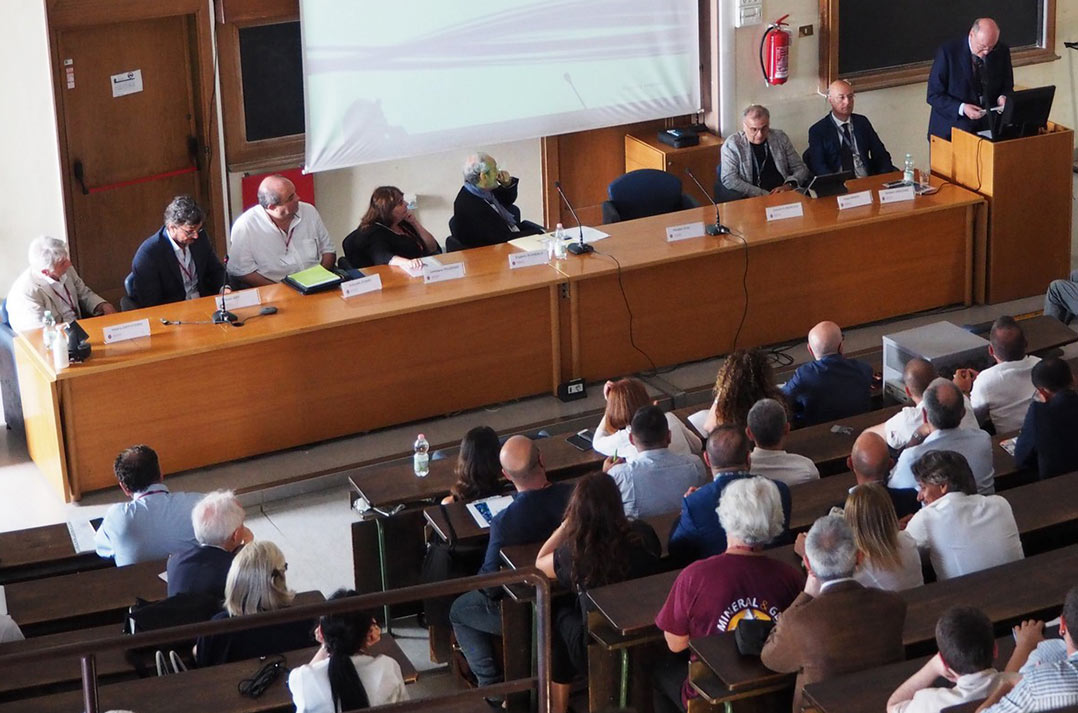
Who coordinated the working group that drafted the Guidelines?
Sapienza University of Rome.
The process took several months.
During the National Conference of Gemmology in June 2023, a roundtable was officially announced where the “Transparency Guidelines for the Commercialization of Gemological Materials” were presented to the public, with the goal of fostering accurate and transparent communication regarding the characteristics of gemstones placed on the market.
It was not, therefore, an improvised initiative.
Guiding principles that bind only those who sign them
The guidelines, therefore, are the result of a process of clarification. And this process inevitably leads to “soft law”.
The rules exist, but they are only effective if they form a framework whose application is actively encouraged.
In relation to standard legislation, soft law refers to acts or guiding principles that lack full binding force but serve to steer the behavior of industry professionals.
The obligation falls solely on those who adopt and sign them. In this context, the Guidelines can yield practical effects and benefits.
We simply need to lead by example and adopt them. Company by company.
Without the courage to sign onto a set of operational standards — whatever they may be — we will get nowhere, and any ethical commitment ends up having the same weight as a letter to Santa Claus filled with vague and confused promises.
But couldn’t a national law have been passed?
This is a question the industry has been asking itself for many years. In fact, the Guidelines were created to find a solution to this political failure.
And the answer must be sought in Italian parliamentary history.
As early as the 16th legislative term, bills A.C. 225 and A.C. 2274 were introduced regarding the regulation of the gemological materials market. The two texts were subsequently merged into a unified bill, which was approved by the Chamber of Deputies on November 30, 2011.
The measure was then sent to the Senate, where it was assigned the number S.3048. In October 2012, the bill was still under review by the relevant Committee, with the deadline for submitting amendments set for October 16.
During the 17th legislative term, bill S.683 was introduced, again concerning the regulation of the gemological materials market. In June 2014, the measure was still under review in a consultative capacity.
Finally, in 2017, bill S.2830 was introduced, titled “Regulation of the gemological materials market and consumer protection rules”.
Parliamentary history therefore reveals a fact that is hard to dispute: for years, lawmakers tackled the issue without ever arriving at a comprehensive regulatory framework.
Absolutely nothing became law. Not a single rule went into effect.
Meanwhile, however, the market did not stand still.
Gemstones continued to be imported, traded, mounted, advertised, and sold.
And, above all, the lack of a clear and mutually agreed-upon regulatory framework left room for scams, fraud, fanciful or inaccurate naming, omissions, and inflated prices well above market value.
Is jewelry fraud prosecuted in Italy?
In most cases, a judge cannot tackle a dispute of this kind by relying solely on the civil code.
Lacking technical expertise, they must therefore rely on a court-appointed expert witness, often in a confusing context and frequently in the absence of sufficiently precise written documentation. Judges cannot always easily find adequate assistance.
The result is that bad actors have plenty of time to muddy the waters. And they get away with it.
As things currently stand, in many cases, fraud committed in the sale of gemstones simply cannot be adequately prosecuted.
Legal experts acknowledge that the Guidelines could offer concrete assistance to the judiciary by providing an immediate technical benchmark to guide judges and help evaluate the accuracy of the information provided during a transaction.
What, then, should be done?
Remain in a situation where the quality and nature of the material can be communicated inconsistently?
Perpetuate scams, opacity, deception, and fraud?
Or set in motion, from the bottom up, a voluntary and mutually agreed-upon tool that establishes an acceptable level of fair practice?
It is this second path that has begun to take shape within the gemological and academic worlds, and which inspired the 2023 Guidelines.
The Role of Universities
It is no coincidence that academia has assumed a growing role in this matter.
For over a decade, Italian universities active in mineralogy and gemology have maintained an increasingly close relationship with the manufacturing and professional sectors.
And they have kept the debate on potential regulations alive.
The trajectory of national conferences began with the scientific gemology meetings in Rome, Bari, Florence, and Naples, and continued with subsequent National Conferences of Gemmology.
Also decisive was the impetus provided by the Rome Conference on June 26 and 27, 2023, hosted by Sapienza’s Department of Earth Sciences.
The point is not to argue that the University should replace businesses or associations.
It is quite the opposite.
In a sector where commercial, professional, and trade association interests coexist, the University can offer that position of neutrality necessary to bring diverse stakeholders around the same table.
Eugenio Scandale, a mineralogist and former full professor of Mineralogy at the University of Bari, was one of the academic figures who helped keep this dialogue open between scientific research and the gem industry since 2011.
The task of listening to stakeholders and coordinating the joint drafting of the text was ultimately carried out by Michele Macrì, one of the best-known figures in Italian academic gemology.
Were the 2023 Guidelines the first?
No.
This too is a point worth noting.
The issue did not simply fall by the wayside after the collapse of the proposed bills.
The document was drafted by Luigi Costantini, Alberto Scarani, and Paolo Minieri.
That work was a precursor, but it did not, however, become a widespread operational tool.
It must be said, though, that while it was never implemented by Assogemme, it formed a technical foundation from which to further develop the issue of transparency in gemstone sales.
The history of the Guidelines, therefore, does not begin in 2023.
Rather, 2023 represents the moment when previous experiences were brought into a much broader discussion.
Nine points for transparent sales
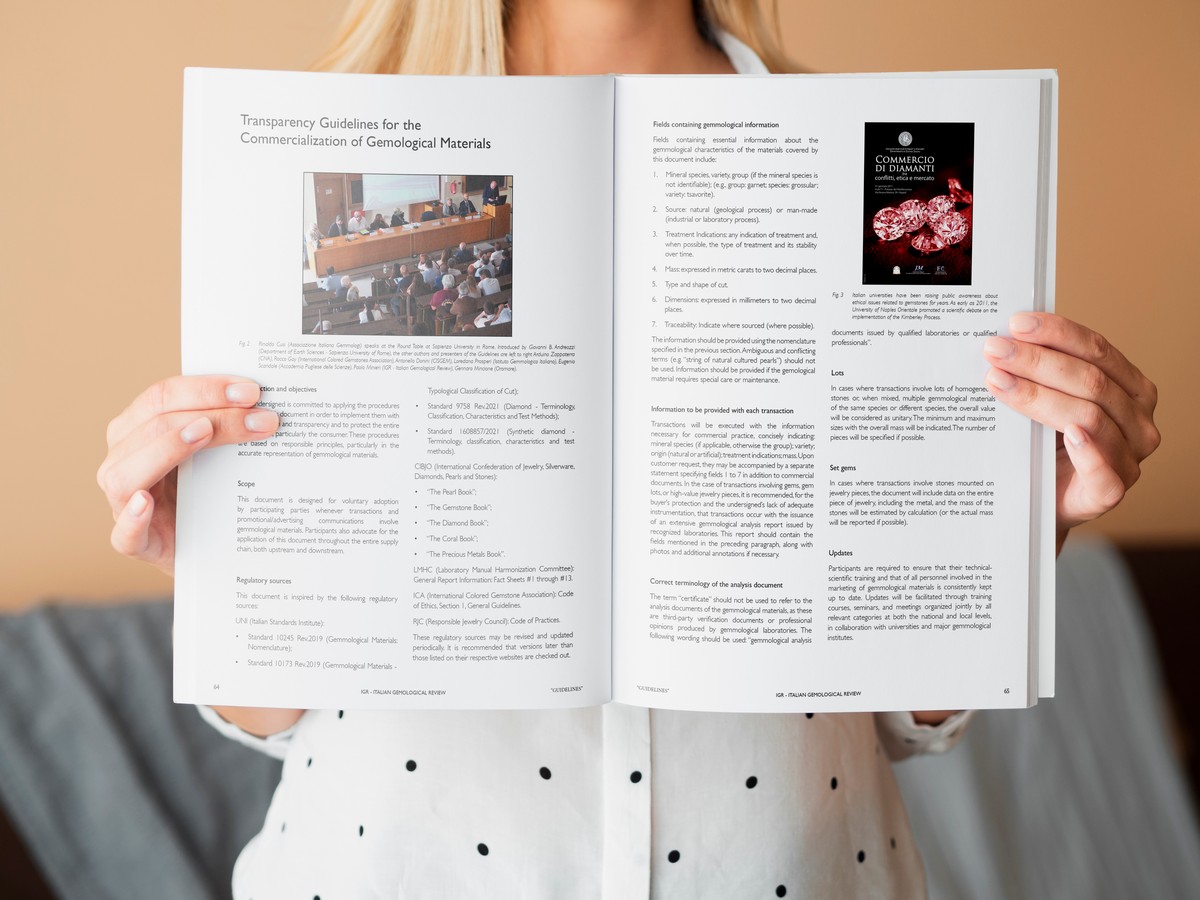
The Guidelines are built around a simple principle: anyone who places a gemstone on the market must take responsibility for accurately describing what they are selling.
The essential information includes:
- Mineral species, variety, and group, when the species is not identifiable. For example: garnet group, grossular species, tsavorite variety.
- Origin, distinguishing between natural material, the result of geological processes, and artificial material, produced through industrial or laboratory processes.
- Any treatments, indicating, whenever possible, the nature of the treatment and its stability over time.
- Weight, expressed in metric carats to the second decimal place.
- Cut type and shape.
- Dimensions, expressed in millimeters to the second decimal place.
- Traceability, indicating the provenance when this is known or documentable.

What are the technical sources?
It is not a matter of inventing a new language for gemology.
On the contrary, to avoid arbitrary interpretations, the document relies on well-established regulatory and technical benchmarks.
The Italian references include the UNI standards dedicated to the nomenclature of gemological materials, the typological classification of cuts, and the terminology and characterization of natural and synthetic diamonds.
On an international level, it draws upon the primary guidelines developed by CIBJO, the Laboratory Manual Harmonisation Committee (LMHC), the International Colored Gemstone Association (ICA), and the Responsible Jewellery Council (RJC).
This is a crucial point.
The UNI standards could already establish legal precedent on their own. Therefore, the Guidelines do not seek to replace existing technical standards.
Instead, they translate and synthesize them into a tool that is easy to understand and practically applicable in commercial transactions.
The difference lies in the harmonization of Italian and international regulatory sources, and in the scientific role of the university system in resolving any potential disputes and inconsistencies.
But above all, the difference lies in the signing of a pact between the industry professional and the market.
After all, in the United States as well, the Federal Trade Commission has for years maintained specific Jewelry Guides that draw upon international technical standards.
It is the industry professionals themselves who advocate for and draft these types of rules.
Sellers are required to truthfully represent characteristics such as type, quality, weight, cut, color, treatment, origin, and other relevant elements of jewelry products.
Fair disclosure, therefore, is not a recent Italian invention. It is an international necessity.
What was the verdict on the Guidelines from the most influential international gemologists?
The Italian Guidelines were not born in self-referential isolation.
Before and after their drafting, IGR discussed the issue of transparency in the gemstone trade with some of the most authoritative international gemologists.
The picture that emerged is anything but ambiguous: fair disclosure is not exclusively an Italian problem, nor is it a theoretical issue. It is one of the major challenges the gemological sector must face on a global scale.
The opinions of experts such as Antoinette Matlins, Ken Scarratt, Gary Roskin, Jeffery Bergman, Teri Brossmer, Almudena Gómez Espada, and many others were gathered.
The overall verdict was positive: the Guidelines were deemed a professional, concrete, and potentially highly useful tool for governing trade communication.
Not a new bureaucratic superstructure, but rather a signal — a model to be emulated that brings credit to our country.
A simple tool for an elementary rule: telling the customer exactly what they are buying.
What did Federpreziosi Campania say to IGR about the Guidelines?
In 2024, IGR also obtained a statement from Raffaella Cancellieri, then provincial president of Federpreziosi for Campania.
Her position was unequivocal: «We are in favor of the introduction of guidelines to guarantee the buyer. This could become a strong point for the dealer who wants to voluntarily comply. Consumers have few guarantees. Sellers have no code of conduct and no clear information from their suppliers, whom they often trust because of long-standing relationships. Often the retailer is not adequately trained. Our association has already taken such an interest in this issue that a training course in gemology for retailers is in the works».
A statement that is well worth rereading today.
Does all this mean more red tape?
No.
And this is perhaps one of the most important points to clarify for industry professionals.
The Guidelines do not require turning every sale into an additional administrative chore.
There are no added bureaucratic burdens.
Standard commercial documentation remains whatever is required by routine practice: invoices, shipping documents, and any other paperwork mandated by law.
The additional element is simple.
There is no blanket, upfront obligation. But if the customer requests it, a declaration detailing the essential characteristics of the gemstone must be provided separately.
It is hard to imagine a simpler measure to increase the transparency of a transaction.
Writing down what is said out loud.
Getting used to writing things up neatly without omitting necessary fields.
Adopting the Guidelines is, and remains, a voluntary action on the part of professionals. We are the ones who, account by account, create a practice that becomes a standard.
And this commitment serves as a guarantee of integrity and fairness in the eyes of the entire supply chain and, above all, the final consumer.
Will it be mandatory to provide full gemological reports?
No.
Here, too, there are no impositions.
However, the use of reports from professional-grade gemological institutes is explicitly recommended for high-value gemstones.
And this is nothing more than the formalization of a practice the market already knows. Furthermore, obtaining gemological reports at the beginning of the distribution process allows gemstones and jewelry to move smoothly through the entire supply chain with proper documentation and without added costs all the way to the final consumer.
Being honest means that those who commit to it must study
Gemological reports support the entire supply chain when operators lack the proper tools to handle more complex cases of gemstone identification and treatment detection.
Does this simply mean telling professionals to rely on others and delegate their expertise?
Not at all.
The Guidelines contain another point that represents perhaps their true hidden treasure: the commitment to professional growth.
The text states: «Participants are required to ensure that their technical-scientific training and that of all personnel involved in the marketing of gemmological materials is consistently kept up to date. Updates will be facilitated through training courses, seminars, and meetings organized jointly by all relevant categories at both the national and local levels, in collaboration with universities and major gemmological institutes».
In practice, those who adopt the Guidelines commit to constantly raising the level of their own knowledge and that of their staff.
Italy offers paths of educational excellence.
It is simply a matter of networking and working together as a system.
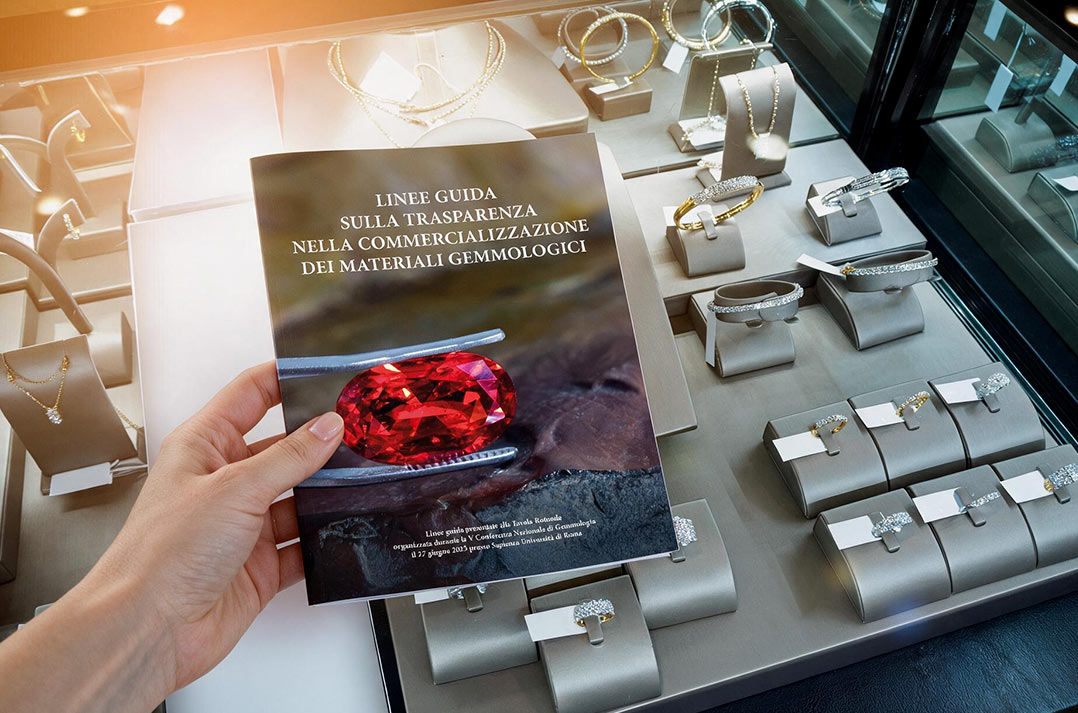
Why should the consumer care about all this?
Because the issue is not just technical.
It is a matter of trust.
An older, yet telling, study conducted in the United States by JCK among jewelry consumers showed that a mere 47% of respondents were confident that the gems and metals they bought actually matched what the store claimed.
Even more significantly, 81% wanted to be informed whenever a gemstone had been treated or modified.
This data is dated and should not be used as a snapshot of today’s Italy.
Yet it illustrates the problem well: when consumers cannot directly verify what they are buying, trust becomes an integral part of the product’s value.
Less trust inevitably means less value.
Transparency, therefore, is not a cost imposed on commerce.
It can be an investment in the credibility of the trade.
The real issue is not rewriting the Guidelines
And this is where the debate should return.
If the industry feels that the 2023 Guidelines need to be updated, expanded, or improved, so be it.
Everything can be perfected.
A technical document does not come down from on high like the stone tablets given to Moses.
The Guidelines themselves were designed by their authors to function dynamically.
The sources are not crystallized or immutable. In fact, the document specifies that regulatory sources can be periodically reviewed and updated, and recommends checking their respective websites for versions subsequent to those listed.
This is precisely the point of a guideline.
Not a law carved in stone, but a living, updateable, and improvable tool.
Conclusion
For these reasons, it seems shortsighted, self-defeating, and counterproductive to address proper terminology through fragmented initiatives, case by case, limited to individual problems or specific gemstones.
And it would be equally self-absorbed to think of starting over from scratch.
Instead, it is right to remember that a comprehensive body of work already exists.
It was born out of a university conference.
It was discussed with the professional community.
It involved laboratories, gemologists, businesses, and associations.
It utilized national and international technical references.
It was designed to be applied flexibly.
It entails a simple voluntary assumption of responsibility.
It was submitted to and largely approved by some of the most authoritative international gemologists.
And it was designed specifically to answer the question that everyone seems to want to answer today: how do we correctly communicate to the consumer what the gemstone they are buying actually is?
The issue, then, should not be determining whether new rules need to be written, nor who has the right to do so.
The question should be much simpler: why not apply, publicly discuss, and, if necessary, improve together what the Italian gemological community has already drafted?
This is the step that can transform fair disclosure from one of many declarations of good intentions into concrete practice.
And perhaps the time has come to stop reducing the ethical approach to generic theoretical formulations and finally start committing on the ground.
The rules already exist. The industry knew how to write them. Now, we must have the courage to apply them.