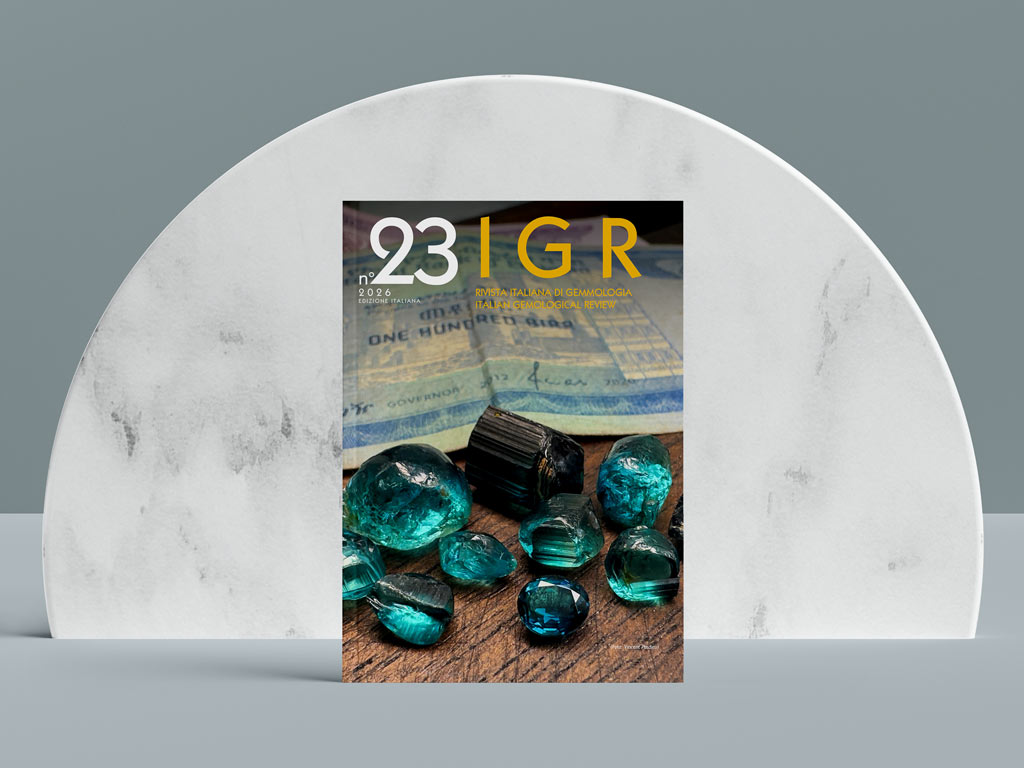
This content was first published on IGR – Italian Gemological Review no. 6 in 2019. The information provided here is therefore current as of the original publication date.


Things change. Over a six-month period DTC has swept away the luxury pretensions of synthetic diamonds. We decided to have a closer look at these Lightbox items and at how the communication machine of De Beers works in this massive operation carried out to separate the marketing of synthetic diamonds from that of natural ones. We know that Millennials want to buy gems as they buy milk. They want to visit farms and check that cows are treated well. Unfortunately, they cannot go among the miners in Botswana as easily as heading their SUVs towards the country. Therefore, we must show them that diamonds come from there, among other countries, and that Botswana is good. So, Tiffany decided to reveal the geographical origin of its diamonds starting from January 2019. However, in the end, the winning model to make the gems speak the language of responsible procurement (but even many other languages) will be only the blockchain register. They envisage one also for coral.
In that regard, now we are also aware of the fact that these registers have been implemented by Gübelin Gem Lab specifically for coloured stones. Based on what we know, the Proof of Provenance will be freely available to everyone. They worked giving the proper attention also to the small artisan miners beside the big extraction companies of rubies and sapphires. This is both a surprise and good news. Didn’t we fear that the future of the trade game involving precious stones would be a monopoly of the few ones that could vertically ensure the integrity of the corridor from their mines to the stores?
Even the gemmological scene, in its hard core of identification procedures, is on the move. This is shown by the controversial developments concerning the revelation of the thermal treatment associated to high pressure applied to some sapphires. There is a clear division among the various institutes, despite the regulatory machine being at full blast. This because we can even agree on the chemical and physical assessment of treatment phenomena, but harmonising the terminology and legislating on what should be written in reports is a completely different matter. In the meantime, our meticulous Luigi Costantini and Claudio Russo continue to give us some lessons on our dear, old microscope.
Myanmar, Tanzania, Nigeria, Ethiopia, Mozambique. Beside the above-mentioned issues, the Magazine focuses again on the resources of these countries that, with their precious stones, would finance their increasingly difficult development. Are they succeeding? In our articles, the readers will find more than an answer. However, the most sincere and moving one was given by an Ethiopian officer to Jeffery Bergman who contributes to the current issue with a very good article on the emerging emeralds of that country. They are naïve and sharp words that make you think of the true sense of sustainability: “We can only bring you what God (or, if you want, Nature) gives us”.
By Paolo Minieri, published on IGR – Italian Gemological Review #6, Spring 2019.