This content was first published on IGR – Italian Gemological Review no. 11 in 2021. The information provided here is therefore current as of the original publication date.

Usually, proposals meant to be innovative by their authors are welcomed with a red carpet, maybe just out of mere formal courtesy. Since I am being given the chance to freely discuss, I will then be your Bad-Mouthed Jiminy Cricket, who goes against the grain, without encomiastic accents or hagiographic tones. A week apart, I have received two press releases, one after the other. Both seem enamoured of numbers.
The first, coming from zhōngguó (中國) or the Middle Kingdom, hails the New Silk Road in the Diamond Classification and Grading System. It is defined as “a system able to bring about a revolution in current practices in the jewellery and goldsmith industry, by using a technology that will set the groundwork for its new standards”. What is it? Conversion and homogenisation – through an undefined alternative search engine – of all the classic standards used to assign a diamond’s degree of Clarity and Colour. Begone D or H or J colour. Away with the bric-a-brac of terms like IF, VVS, VS et alia, and let the memory of the attributes qualifying Cut – Excellent, Very Good, Good, Fair/Poor – be lost forever. The AI engine will express everything in numerical terms including the two other quality factors which make up the famous “4Cs”, thanks to the wonders of artificial intelligence and blockchain technology.
Chow Tai Fook, the Chinese luxury chain at the head of an empire of 6,000 points of sale, proclaims it will be a “consumer-friendly” system (is the current one consumer-hostile?). So, how does it work? Details are scanty, and we are unaware how the system will be converted in monetary terms equivalent to those current internationally. Here is a case of salvific palingenesis, or indeed of delusion of omnipotence. A slap in the face to transparency!
Free to do as you please in your home, but if you want to subvert the system (even if just the diamond classification system) all over the planet, please kindly come to an agreement with the other 6.4 billion human beings (or their representatives) who crowd the globe, or do you think you can change the world as you please?
The second press release, on the other hand, comes from Lucerne, in the Helvetic Confederation, and is described in detail in this issue. No sign, in the Gübelin Gem Lab, of palingenesis or arrogance. Quite the opposite. The announcement is made, urbi et orbi, of a change in the Coloured Gemstone Classification and Grading System practised there. Here again, numbers instead of the previously used adjectives. 92.5–94.9 instead of Excellent. 85.0–89.9 en lieu of Fine. 80.0–84.9 in the place of Good. In every likelihood, Gübelin’s well deserved credit will lead to the new standards being accepted by the industry and the trade.
The Bad-Mouthed Jiminy Cricket, however, points out that, yes, it is true: assessments – when we speak of different quality parameters/factors (Transparency, Colour, Cut, in their manifold components and different expressions) – are best expressed having recourse to numerical gradings, to achieve an arithmetical mean. But is it not also equally true that, in the final judgement which sums them all up, they are translated and formulated into attributes?
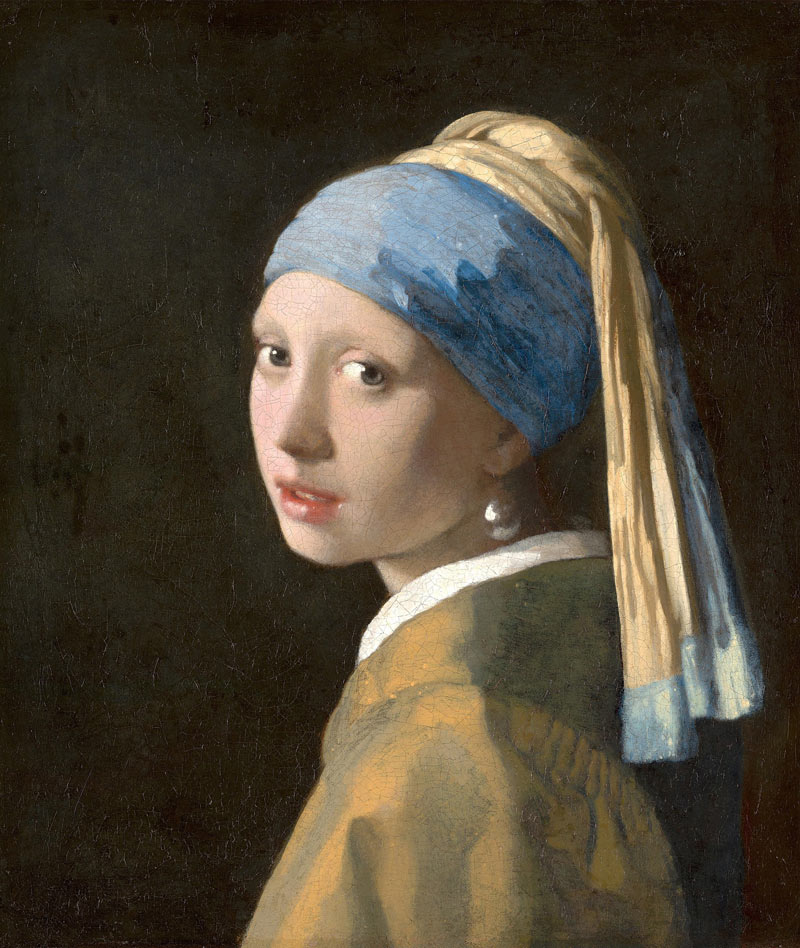
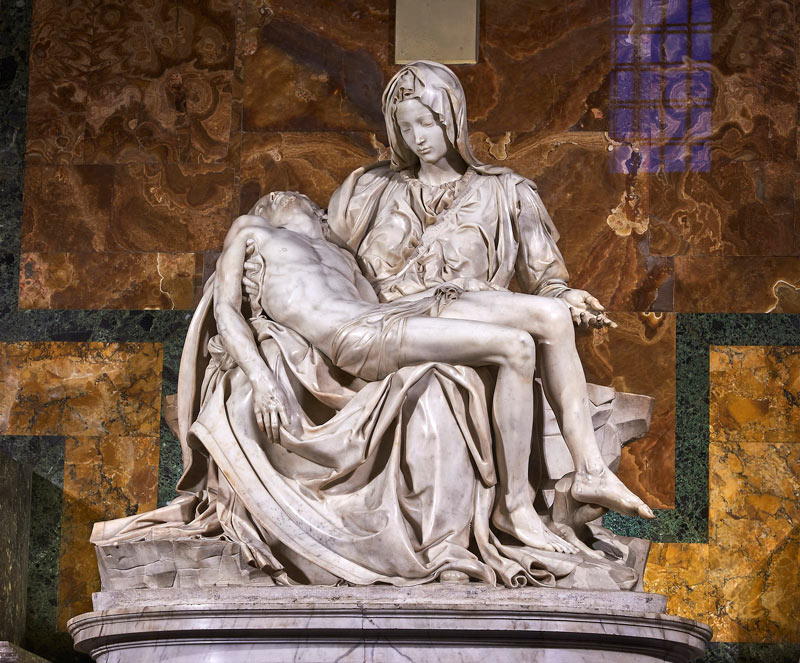
Well, let us immediately delve into the practical. You, physically placed before the painting, as you admire the way light and colour play in Vermeers Girl with a Pearl Earring – would you express your marvel and admiration saying “splendid, enchanting, superlative!”, or would you say, “99.9%!”? And what if you were standing before Michelangelo’s Pietà? Or anything else, the intrinsic nature of which manifests and arouses within you beauty, would you express all this using attributes/adjectives, or “entities suitable for providing a quantitative assessment” (numbers)? No need to bring up Jung’s analytical psychology to grasp the symbolic diversification between an attribute and a number, where the latter coldly expresses “a constituent entity of an orderly succession capable of affording a precise assessment of a quantitative order”.
So what, can we quantify beauty, feelings, emotions and the “dreams” they arouse, delivering ourselves over to an algorithm? Is it true or not that a gemstone, by its very definition, is “a solid material, of natural inorganic or organic origin, possessing qualitative attributes which determine its attractiveness and hence value, such as Rarity, Beauty and Long-Lastingness”?
Beauty, actual or potential, understood as the “sum of intrinsic optical properties which the cut will bring out, such as colour, transparency, brilliance, dispersion, pleochroism, luster, qualities which can satisfy the individual aesthetic feeling of the observer”. Beauty which nourishes your dreams, in every sense of the word. But dreams, are they not the language of the unconscious mind? And this language, does it not express itself as symbols rather than numbers?
This will be the ground on which the game of predilection – on the part of a purchasing public mainly consisting of that “other half of the sky” so sensitive to beauty, feeling, emotion and dreams – for one rating method compared to another. Grant one last wicked thought to the Bad-Mouthed Jiminy Cricket could it be that one of the reasons behind the numerical innovation is to rip the veil away from that factor of subjectiveness which can be hidden in an adjective, whereby – as they say in Naples – “every cockroach looks lovely to its mother”? What should we say then about that factor called Salience? How will things end? Those who survive will know…
By Luigi Costantini (alias “the Bad-Mouthed Jiminy Cricket”), published on IGR – Italian Gemological Review #11, Winter 2020-21