This content was first published on IGR – Italian Gemological Review no. 19 in 2024. The information provided here is therefore current as of the original publication date.

There’s no doubt about it: the Butinis’ familial-gemological partnership — Enrico the father and Flavio the son — never ceases to surprise and intrigue. First of all, how can they find the time to carry out such meticulous research, such extensive and precise documentation, such in-depth historical, bibliographical and gemological analysis, a duty which they have to perform in addition to all the other things they have to do on a daily basis to keep their business running smoothly?
And secondly, what is the motivation for their prolific output in the field of archaeogemmology? This is an undeniable enrichment to the cultural heritage, not only of this Country, but of all mankind.
In a nauseating display of sycophancy, am I exaggerating?
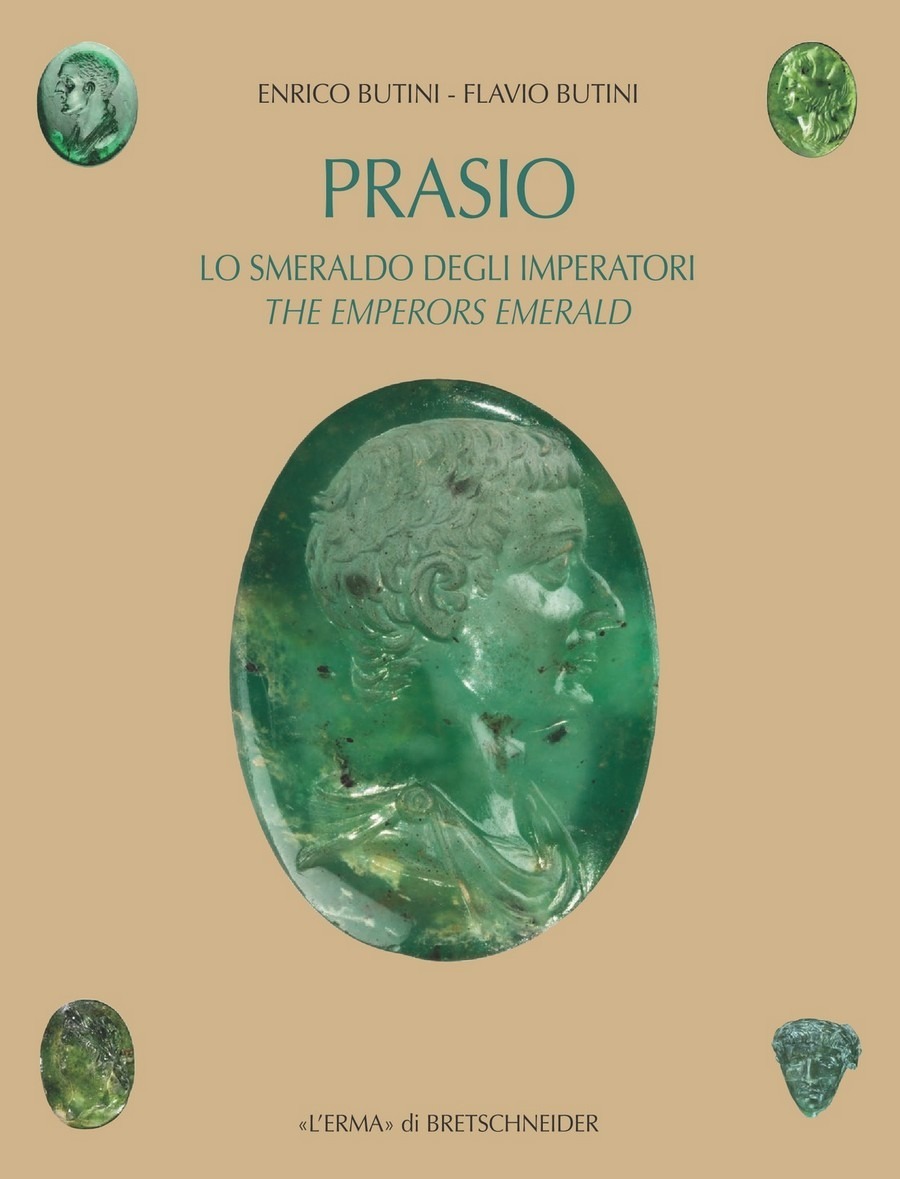
Has the African heatwave fried my already exhausted grey cells? Decide for yourself if you would be so kind as to add (and peruse) their latest effort to your library: “Prase: The Emperors’ Emerald — An Archeogemmological Investigation of Pliny’s Green Stones”, published by “L’Erma di Bretschneider” in Rome, Italy, and also in Bristol, Connecticut, USA, for the English edition.
As to me, I go into a state of mystical ecstasy and:
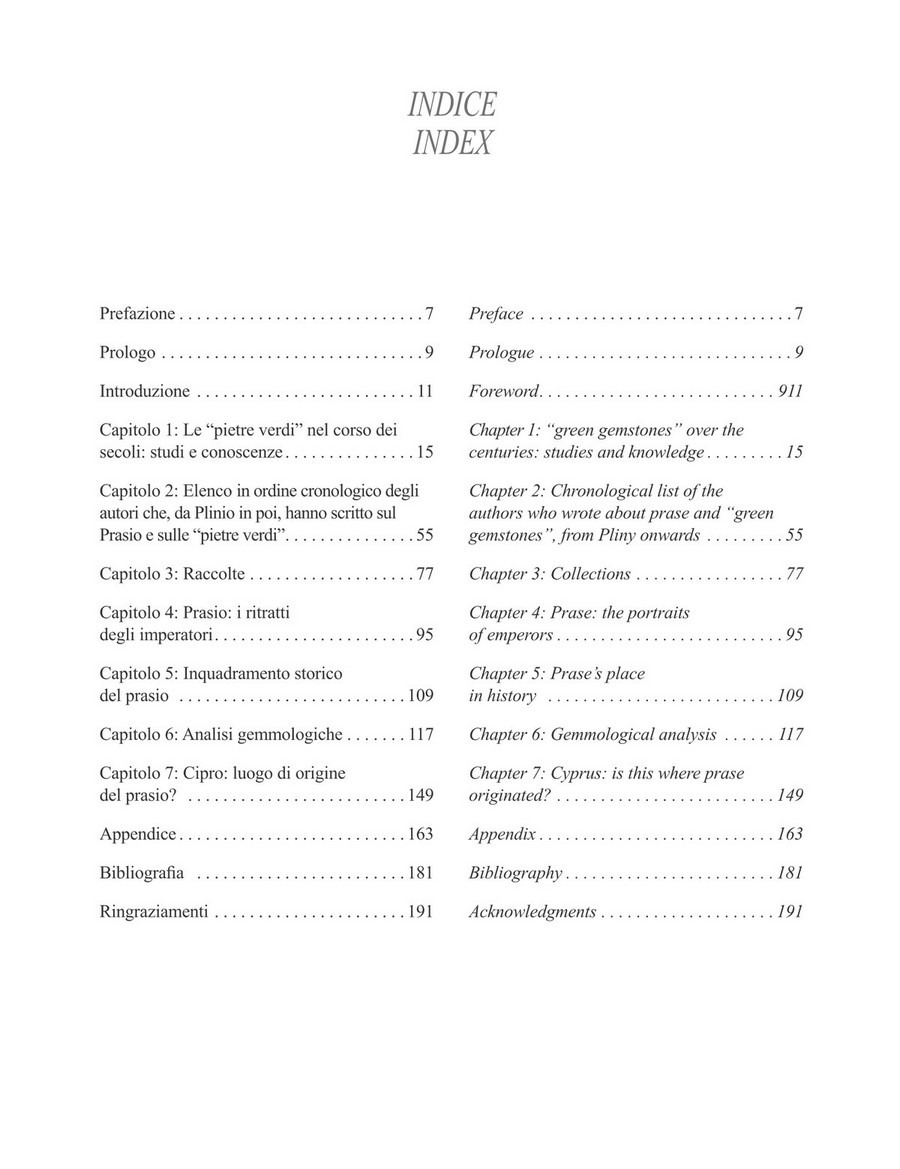
• I am wallowing like a piglet in the trough of historical delicacies — reported in Chapter 1 — where the “Studies and Knowledge of Green Gemstones over the Centuries” are described. One gem leads to another, like pistachios (which are also green, mind you!), starting with Aristotle and Theophrastus of Eresos (3rd century BC) to Gaius Plinius Secundus (23–79 AD), the latter with a wealth of examples (and related photographic illustrations) of all the green stones mentioned in his Naturalis Historia, to awe-inspiring effect. From emerald to amazonite, from chromium chalcedony to heliotrope chalcedony, from fluorite to prasiolite chrysoprase, a “Description of Pliny’s Emerald”, a “Review of Pliny’s Emeralds” and a discussion of “Pliny’s Green Stones” cover the entire spectrum of the “Green World” in 29 pages of scientific explanations and photographs. Not to mention the “Prase’s place in history — 5th–1st Century BC” (Chapter 5), also richly illustrated.
• I’m indulging in a literary luxury and I find all the “authors who wrote about prase and green gemstones, from Pliny onwards” (Chapter 2). Oh, what a pleasure! I will mention just a few of the most famous: Saint John the Evangelist, Hildegard of Bingen, Anselmus Boethius de Boodt, René Just Haüy, Augusto Castellani. Honni soit qui ne s’en souvient pas (Shame be he who doesn’t remember)!
• I’m shamelessly reveling in the orgy of lists, photos and illustrations (Chapter 3) of “Prasiolite in museum collections”.
• Like the Italian poet Giacomo Leopardi when he wrote his world-famous poem “The Infinite”, I’m sweetly drowning in Chapter 4 with its “Prase: the portraits of emperors”. Oh joy, oh jubilation, oh delight as I plunge into these visions of cameos and intaglios of imperial effiges!
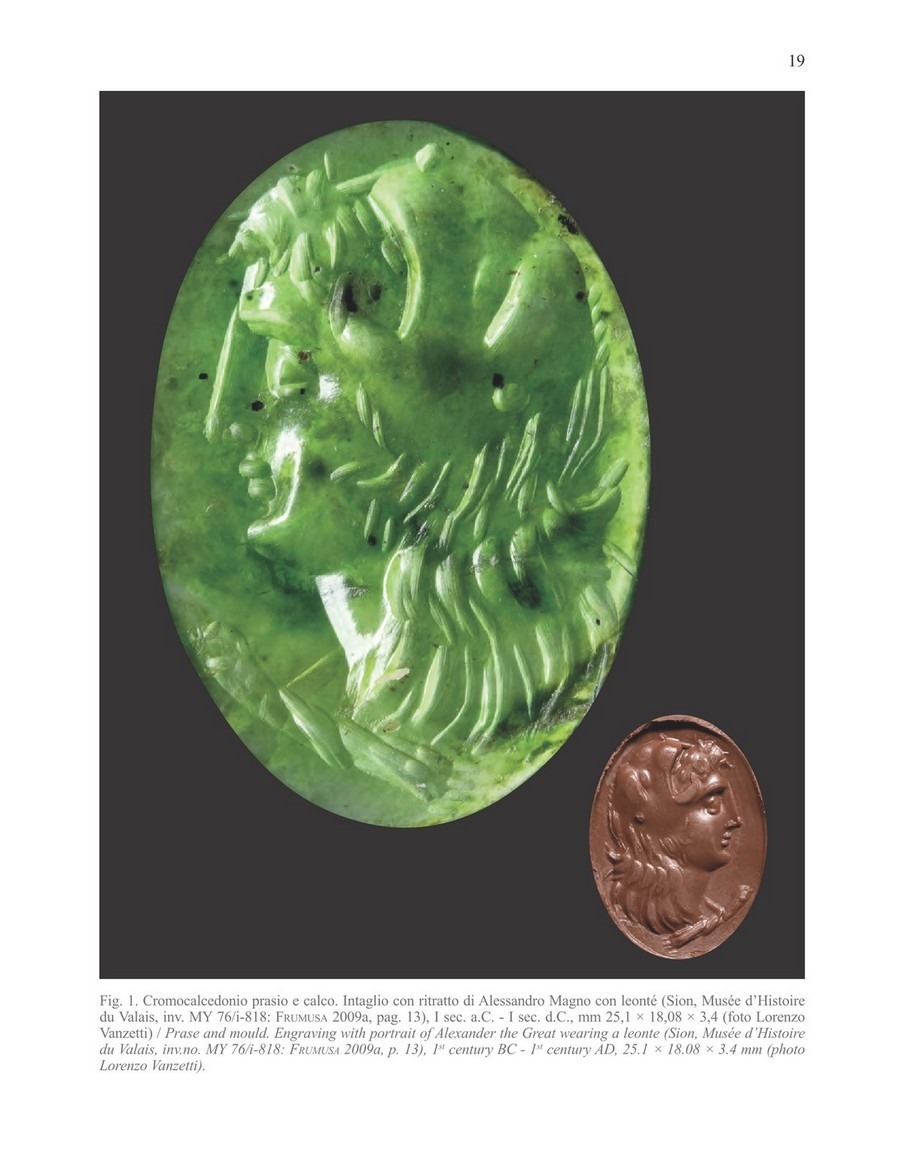
And here I must return to the earthly dimensions, brought back to prosaic reality by Chapter 6, where “Gemmological analyses” are carried out with ruthless scientific precision and all the variables are explored, from “Geology and Genesis” to “Causes of Colour”, from “Inclusions” to “Standard Analyses” to all sorts of “Spectro-somethings” (Raman Scopy, UV-Visible Photometry, PL Scopy), not forgetting FTIR, EDXRF, XRD. And if you want to know what the hell these last ones are, father and son will explain them in detail from page 130 to page 136. Don’t miss it, gemologists, I strongly urge you!
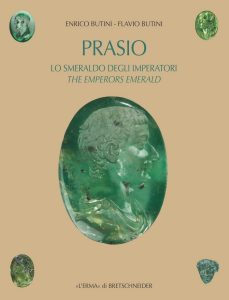 “Prase: The Emperors’ Emerald — An Archeogemmological Investigation of Pliny’s Green Stones”
Enrico and Flavio Butini
Published in Rome (Italy) and Bristol (USA) by «L’Erma» di Bretschneider® in 2021.
194 pages, illustrated, format 25 x 27 cm
ISBN: 9788891322074 (Printed) – 9788891327796 (Digital)
Available in Italian and English language on www.lerma.it for the price of 100 € (printed) or 80 € (digital).
Review by Luigi Costantini, published on IGR – Italian Gemological Review #19 – Autumn 2024.