




This content was first published on IGR – Italian Gemological Review no. 12 in 2021. The information provided here is therefore current as of the original publication date.

There is no doubt that the breakthrough event in the synthetic diamond industry has been the unexpected entry of a player as prominent as De Beers. The mining giant in 2018 inaugurated its own line of CVD lab-grown diamonds and started marketing them under the new Lightbox brand.
The move had a clear and precise purpose, that of avoiding confusion and directing the market to a sharp distinction between the most valued mined diamonds, reserved for engagement, wedding and anniversary jewelry and man-made diamonds, aimed at the fashion jewelry market.
This resulted in a sharp drop in the retailing selling price of synthetic CVD diamonds, the most sophisticated production process for large sized stones. De Beers’ coup de theatre has shocked but not annihilated those American companies that for some time had been betting on the development of the synthetic diamonds market, which is expected to account for US$ 25.2 bn by 2025, a 10% share of the global diamond market by 2030.
Founded in 2013 by Jeremy Scholz and R. Martin Roscheisen, current. CEO, Diamond Foundry is one of them. Interestingly, the first group of investors includes leading figures in the new digital economy such as Twitter founder Evan Williams, Facebook co-founder Andrew McCollum, eBay founding chairman Jeff Skoll, Sun Microsystems founder and Google founding investor Andreas Bechtolsheim, Nest co-founder and inventor of the iPod and iPhone Tony Fadell. These are not ordinary business people and certainly they don’t lack knowledge or information about the future economic scene as well as expected consumer trends.
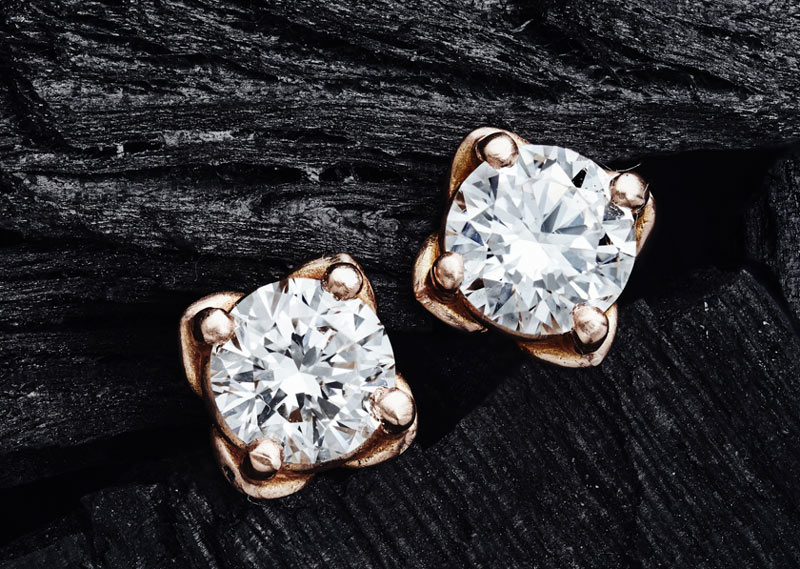
It was only reasonable to expect a backlash in reaction to Lightbox’s aggressive entry. Having already closed multiple rounds of funding, raising a total of US$315 million since its start, Diamond Foundry currently holds enough resources to revive its ambitions. After the latest round, a $200 million investment from Fidelity, the company reached a valuation of US$1.8 bn. These funds are intended to fuel a massive increase in Diamond Foundry’s business with the goal of quintupling the production at its Washington state facility to as much as 5m carats per year by the end of 2022.
“This is the first time that this quality of diamond is produced at mining scale”, Diamond Foundry CEO Martin Roscheisen told the Financial Times; the production is not supposed to feed only the jewelry industry but also new technological applications in markets ranging from cloud computing to electric cars.
Jewelry is still the core business and Diamond Foundry has been actively seeking partnership to team up with fine jewelry brands in the past. Therefore this ambitious development project follows the expectations of a likely market boom after the move of Danish fashion jeweller Pandora, which announced in May 2021 in a press release the launch of Pandora Brilliance, its first collection of lab-created diamonds and the consequent abandonment of mined diamonds.
The first development stage of synthetic diamond marketing policies has been mostly focused on the claim that – being a perfect reproduction of the main chemical and physical characteristics of natural diamonds – it possesses a similarly high intrinsic value. This policy has often led to controversial positions and warnings from regulators. The Federal Trade Commission (FTC) has even warned Diamond Foundry not to use misleading statements that may cause confusion and lead people to believe that synthetic diamonds are real. In particular, according to FTC “the term aboveground real diamonds does not clearly and conspicuously disclose that the diamonds are laboratory-created”.
Pandora, however, puts it much more on the level of sustainability of the man made diamond, another historical workhorse of Diamond Foundry. Its introductory statements were echoed by the most powerful international media. It’s no coincidence that Forbes has headlined: “Lab-Grown Diamonds Gain Even More Credibility As Pandora And Diamond Foundry Ditch Mined Gems”. Once the Chinese HPHT production is further lowering the prices of man-made diamonds and after De Beers successfully separated into two distinct categories of perceived value man made and natural diamonds, apparently all indications are that the marketing of synthetic diamonds has now entered a second phase, in which it is working to consolidate what is its supposed ethical value, rather than its intrinsic value.
Gem News published on IGR – Italian Gemological Review #12, Summer 2021


