This content was first published on IGR – Italian Gemological Review no. 12 in 2021. The information provided here is therefore current as of the original publication date.

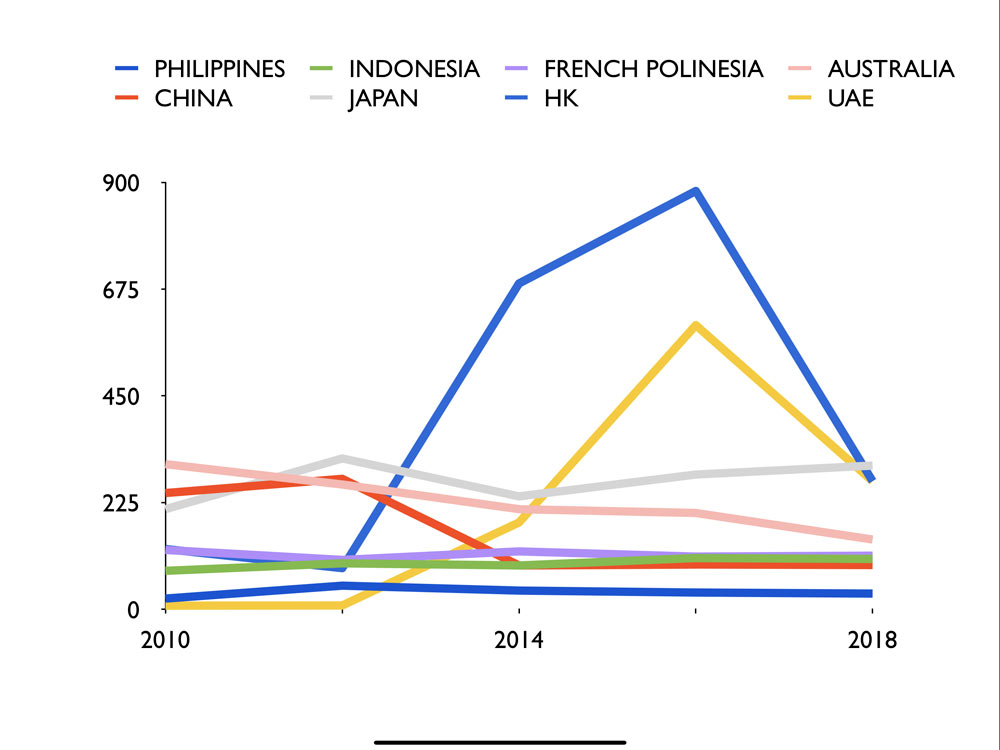
The world of pearls is in a continually evolving stage. Over the past 15 years, we have witnessed several changes. The attempt to implant a stable production of Akoya pearls in China has reached a peak in 2006 with as much as 34.5 tons before declining to 3.7 tons in 2014. Therefore, this product remains in Japan, the country with the highest technology and the largest volume in transactions, which have recorded nearly 50% of world trade in the decade. Freshwater pearls have taken off and represent in quantity about 98% of the material produced in China, though only 5% in value. Australian, Indonesian and Philippine “South Sea” pearls are steadily occupying the highest positions in value together with Polynesian black pearls. Other decisive factors must be added to this scene. The rush for quantity productions has brought Chinese producers to face an inevitable issue of environmental deterioration. Cultivation techniques have developed and have facilitated the entry on the market of many qualities and completely innovative productions through the use of different types of mollusks. Last but not least, total world trade in pearls totaled $903 million in 2019, a sharp 25% decline from 2018.
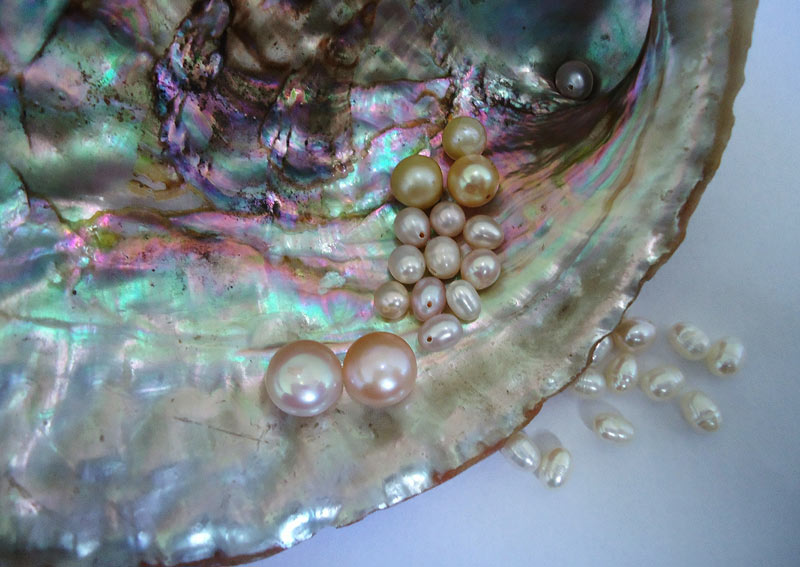
This is the context in which the work of the Pearl Commission of the CIBJO is placed, released in February 2021, a guide for the classification of natural and cultured pearls that complements the already renowned Pearl Blue Book (whose last update dates back to April 2020). The purpose is the same as usual and consists in providing the industry with an authoritative and widely shared text ensuring uniform terminology.
The “CIBJO GUIDE FOR CLASSIFYING NATURAL PEARLS AND CULTURED PEARLS” is a 62-page-manual, available for free download, which offers an overall view on pearl-producing mollusks and on manufactured pearls, using for the first time a wide selection of photographs. The guide differentiates between natural and cultivated freshwater as well as saltwater and freshwater pearls and also describes their size, shape, color of shell, and of course their origin.
Gem News published on IGR – Italian Gemological Review #12, Summer 2021