This content was first published on IGR – Italian Gemological Review no. 15 in 2022. The information provided here is therefore current as of the original publication date.

The “IV National Conference Diamond and Coloured Gems: Identification, Tracing and Ethic Aspects” was held in Ferrara, Italy, on July 7-8, 2022 at Palazzo Tassoni Estense. As was the case for last edition in 2021 held in Bari, IGR promoted the event, which was well attended, contributing as Media Partner to its dissemination, at both national and international level.
Gemmology and archaeology are called upon in close cooperation. The cases studied by Flavio Butini (Istituto Gemmologico Nazionale) involved a collaboration of the lab with public and institutional entities such as the Italian “Sovrintendenze”, the Museums along with private entities such as Auction Houses, antique dealers and private individuals. Gemology fulfills the task of identifying gems found on historical artifacts or belonging to ancient or presumed ancient collections.
The recognition work can offer clues as to the provenance and certain aspects of the ancient societies: a pendant found in an Etruscan shrine was identified as homophacite jade; in a poorly preserved sarcophagus found in the Albani Mountains a jewel made of seven sapphires was found, four of which turned out to be of basaltic origin while three of them probed to be as metamorphic (an indication of a variegated gem supply already in action as early as in the first century AD).
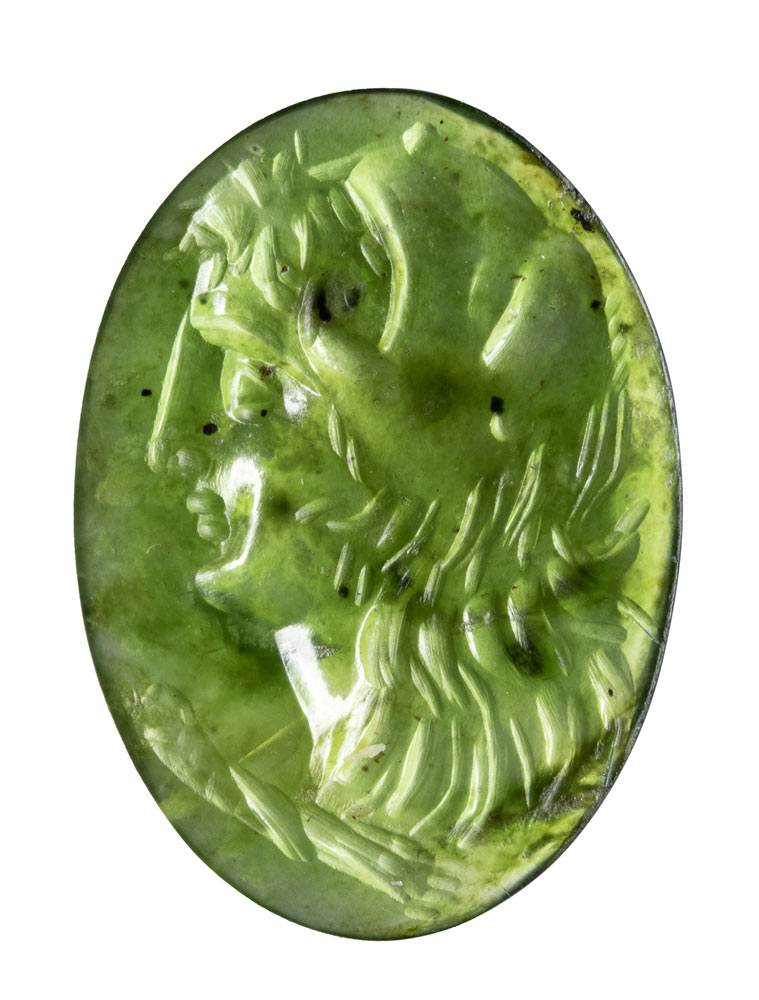
Pieces from the Castellani jewelry, historic goldsmiths who worked in Rome in the nineteenth century, are a challenge for gemologists since objects of real antiquarian value were often offered mixed up with replicas. The “sapphire of the Appian Way”, a reproduction of an antique object made in 1870 by the historic Castellani jewelry shop and described generically as blue quartz, was found to be a cordierite, while the 11-carat gemstone found in Pompeii and depicting a hippocampus is a sapphire of basaltic origin. The murrhine ware, mentioned by Pliny and valued at as much as 60,000 sestertii, turned out to be fluorites, and are the subject of a specific treatment published by IGR.
From these experiences it is possible to generate a specific report in which historical and descriptive data can be added to purely gemological data (Type of cut, and workmanship, description of the subject, judgment of execution, state of preservation, notes on treatments and restoration, period attribution, comparisons and bibliography).
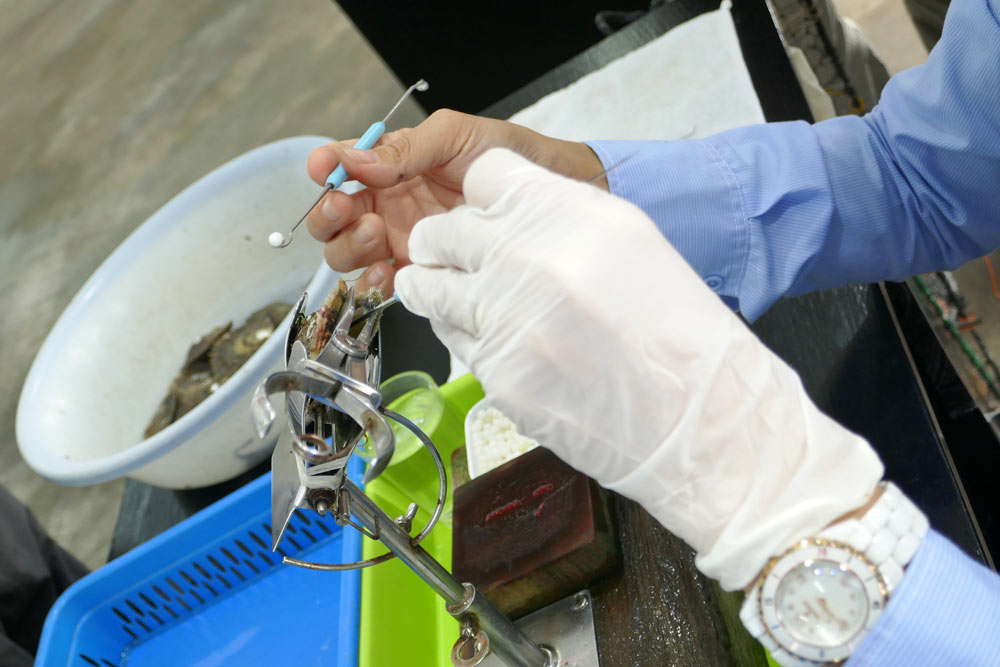
Chiemi Sasajima (Istituto Gemmologico Ligure) reviewed natural pearls (cystic and blister), examples available in the trade are the Conch and Melo, cultured pearls whose first type dates as far back as the 11th or century (Buddha pearl). Grafting techniques for nucleated and non nucleated pearls have been illustrated.
Article by Paolo Minieri and Stefania Coppola, published on IGR – Italian Gemological Review #15, Autumn 2022.