On October 5, 2023, we received a particularly interesting gem in the IDL Dubai lab. Let me break down why it caught our attention.
It was an oval-shaped stone, approximately 1 carat, with an intense pink color. Following IDL protocol, all colored stones, whether diamonds or other gemstones, are handed directly to me, the Senior Gemologist, for initial observation and further examination if necessary.
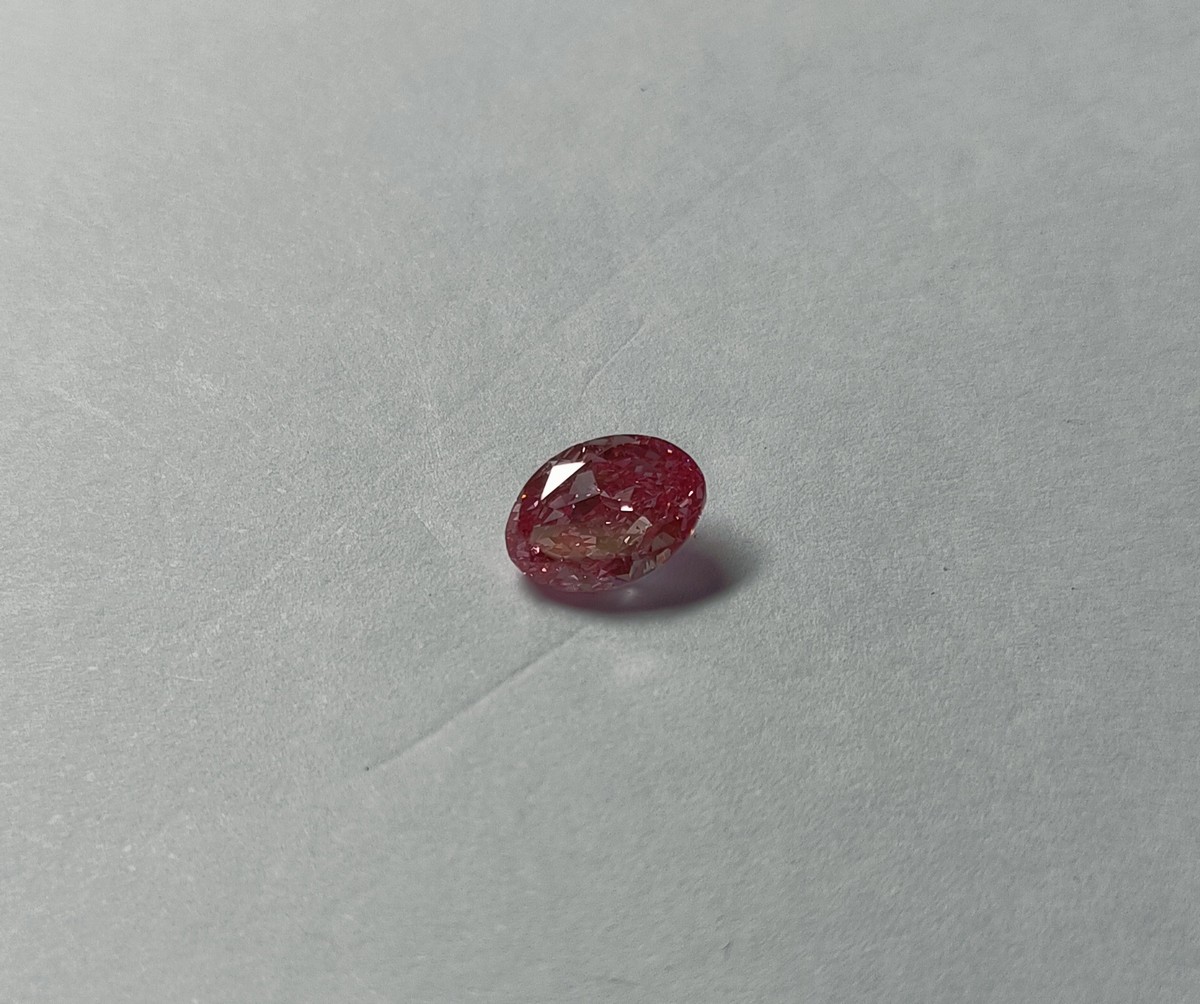
At first glance, the gem appeared to be a diamond, given its typical surface brilliance and the sharp edges of its various facets (Figure 1).
At this point, I had an intuition based on more than 20 years of experience as a gemologist in the laboratory. I was intrigued by the intense color. It reminded me of diamonds with a “surface coating” treatment on the pavilion that mimics the hue of fancy pink diamonds.
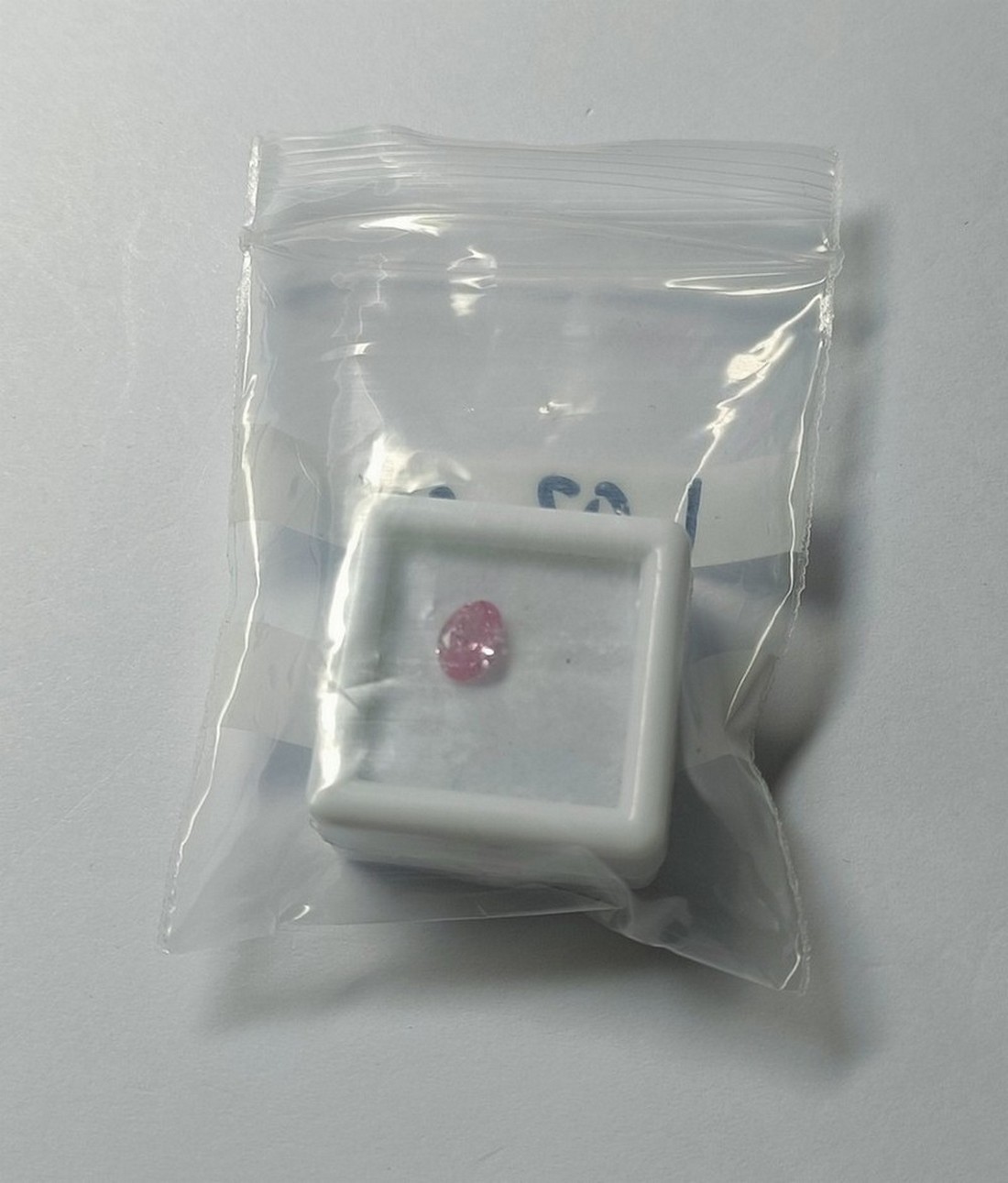
Another factor that raised doubts about this gem was that the client submitted it to IDL in a box typically used for colored stones and placed it in a plastic bag (Figure 2). I would have expected that a potential pink diamond of this size would have been placed in a more appropriate box.
As I always do, I want to emphasize that these were mere observations and not diagnostic conclusions. However, my extensive experience often leads me to consider these details carefully.
A first observation under the microscope ruled out the possibility of an external coating on the pavilion. In fact, it turned out to be a natural pink stone.
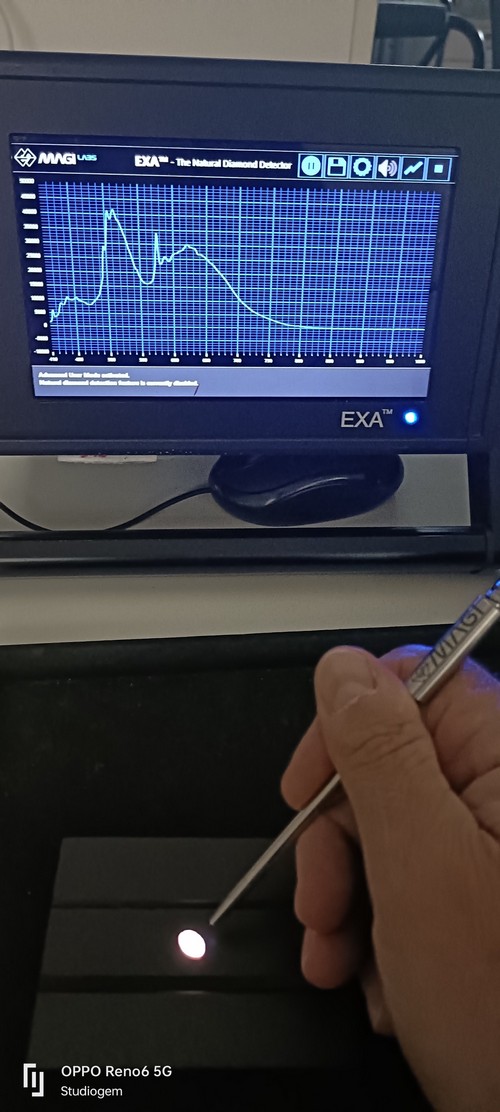
The examination then shifted to the EXA to confirm the identity of the gem (whether it is a diamond or not) and its nature (natural or synthetic). The result confirmed the gem’s nature: a natural diamond.
Subsequent observation under a microscope revealed an inscription on the girdle – GIA xxxxx. So the stone had been previously analyzed and “certified” by GIA. This wasn’t surprising, as it was an intense pink natural diamond. Reflecting the Institute’s excellent reputation, the majority of fancy color diamonds on the market have a GIA report.
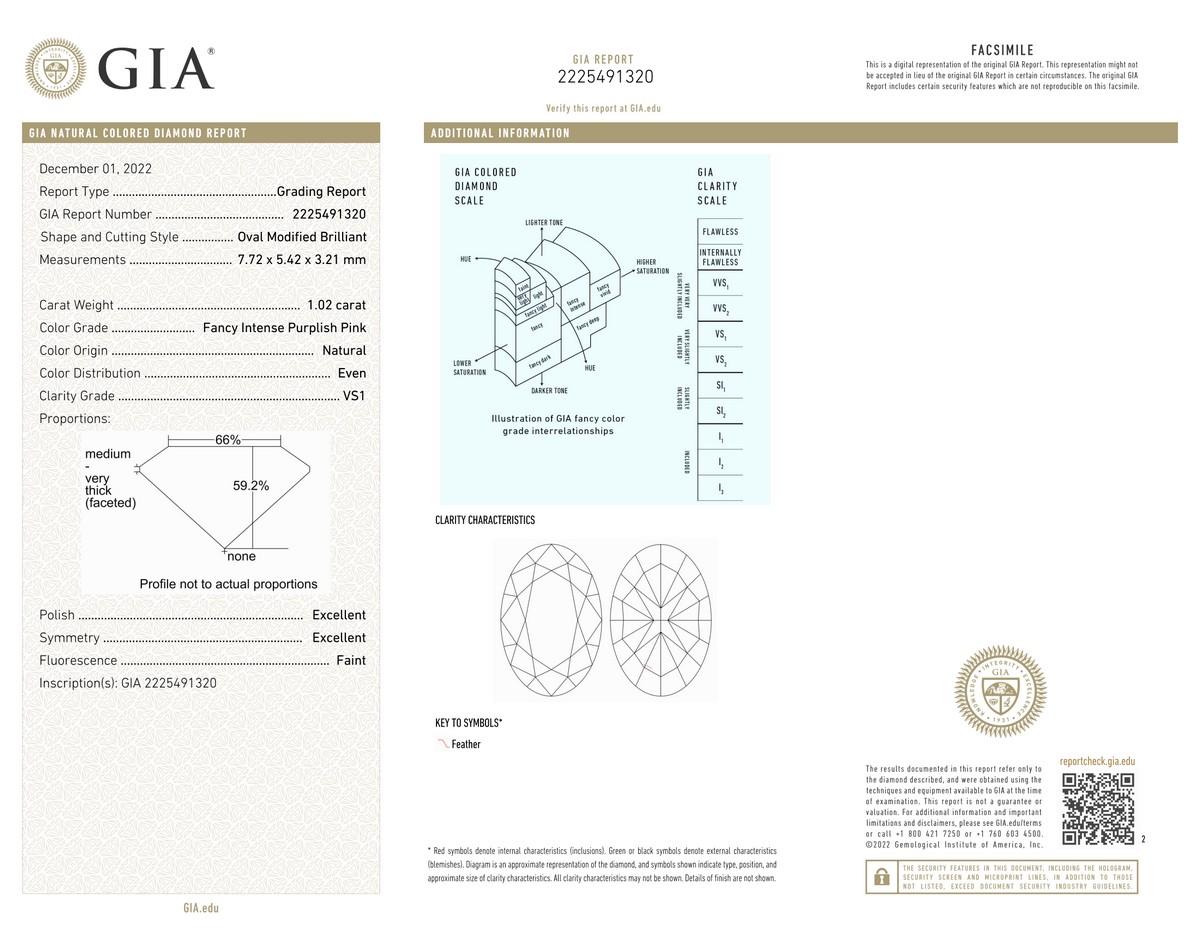
At this point, I visited the GIA website and entered the grading number to access the online copy of the grading report. On the screen I read: Natural Fancy Intense Purplish Pink Diamond, VS1, 1.02ct, modified brilliant oval cut, accompanied by the corresponding diagram illustrating the internal and external characteristics present in the stone (Figure 3).
A gem like this, given its color, clarity and size, would easily fetch a market value of at least $500,000 (personal estimate). That’s why the plastic box and the plastic bag that were used to ship the gem to the lab seemed to be a bit out of place. Why wasn’t it mentioned that the stone already came with a GIA report? Again, these are just suspicions based on many years of laboratory experience with many stones.
I then went back to the microscope to double check the details mentioned in the “certificate”, especially the “inclusions” diagram. And here is the first surprise!
The report highlighted two small fractures on a portion of the pavilion (which determines the VS1 clarity rating), but these are not actually present in the gem.
Instead, I noticed two other small fractures not mentioned in the GIA diagram. One of them even gives me the impression that it was caused intentionally, possibly by a pointed impact.
Even the measurements were not matching; I notice a tenth or two of a millimeter difference. But I can’t rely much on this data, because the measuring devices used may not be aligned.
Given the situation, I insisted on more in-depth spectrometric investigations.
I carried out a UV-vis-NIR analysis, which revealed something quite astonishing!
In the spectrum, two peaks were visible, together with their relative ratio, which is highly diagnostic and indicates the presence of a thermal treatment clearly applied to the diamond: 575 and 637 nm (Figure 4). These peaks are related to the presence of NV (neutral and negative) groups, generated first by the HPHT treatment and later by the irradiation-annealing
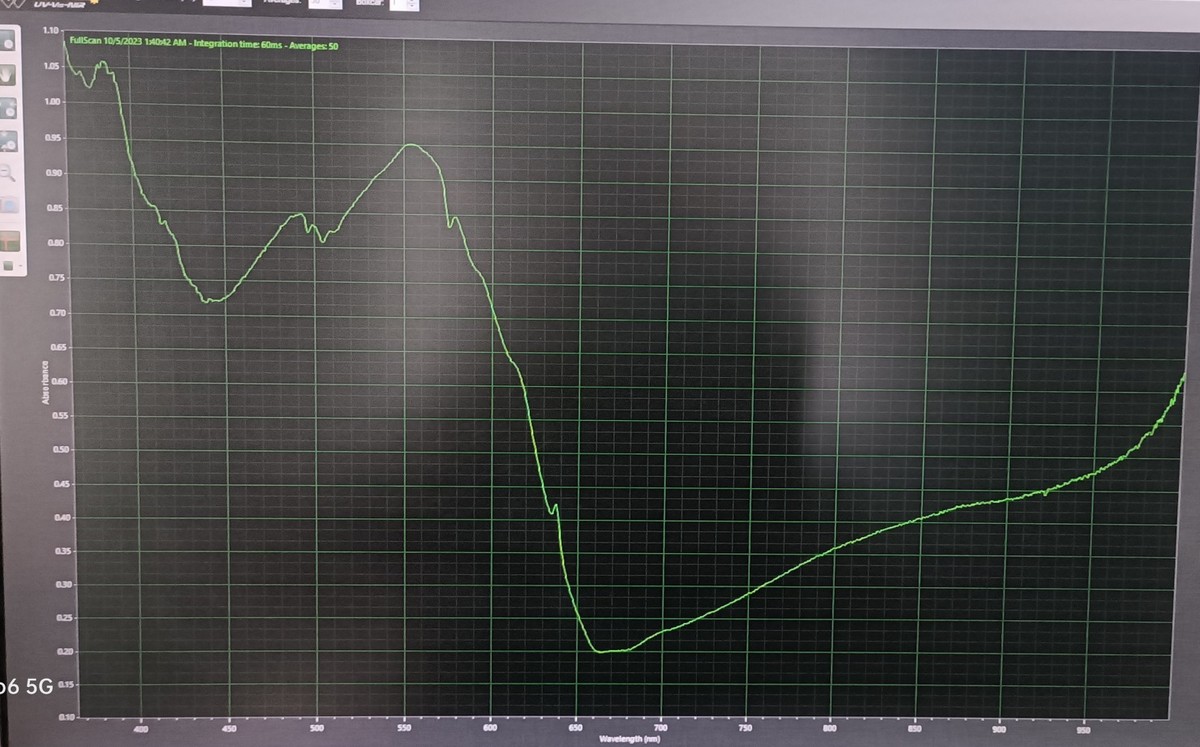
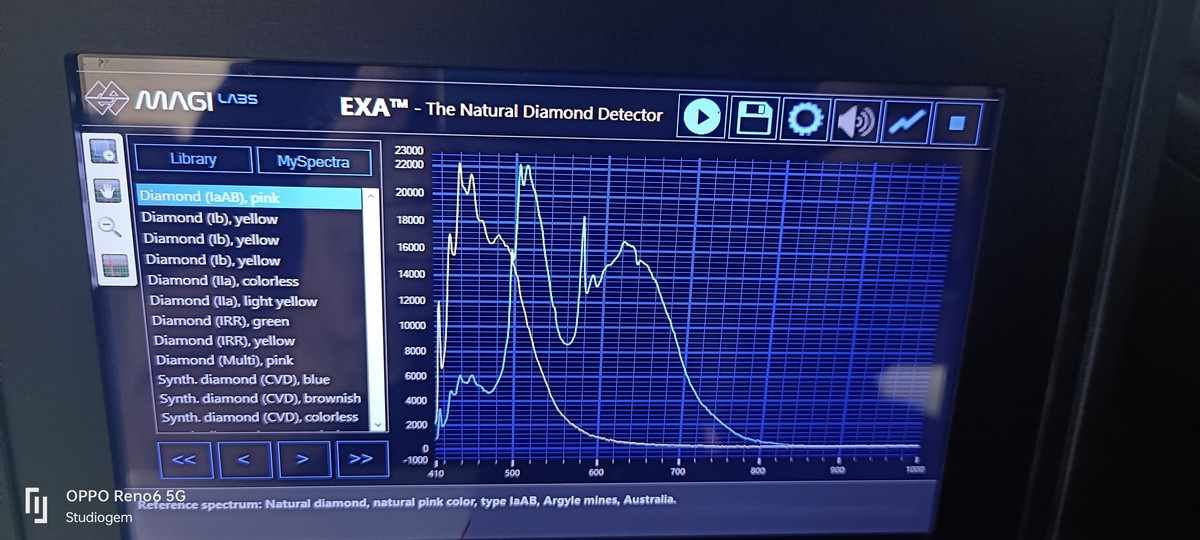
I went back to the EXA and reanalyzed the spectrum. The initial examination with the EXA was just carried out to confirm the nature of the diamond, not its color. Again, the aforementioned peaks correspond to natural pink diamonds treated with a multi-process (HPHT, irradiation and annealing) according to the instrument’s database (Figures 5 and 6).
The fluorescence and its color displayed by the diamond under investigation (Figures 7 and 7a) is a very interesting feature.
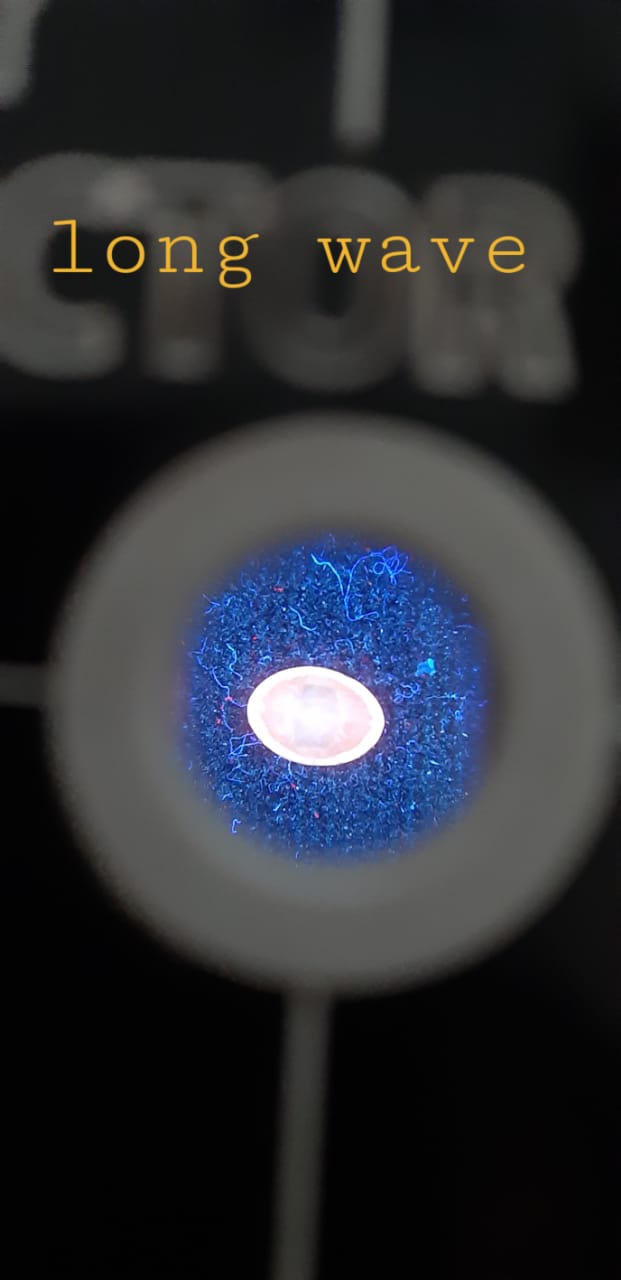
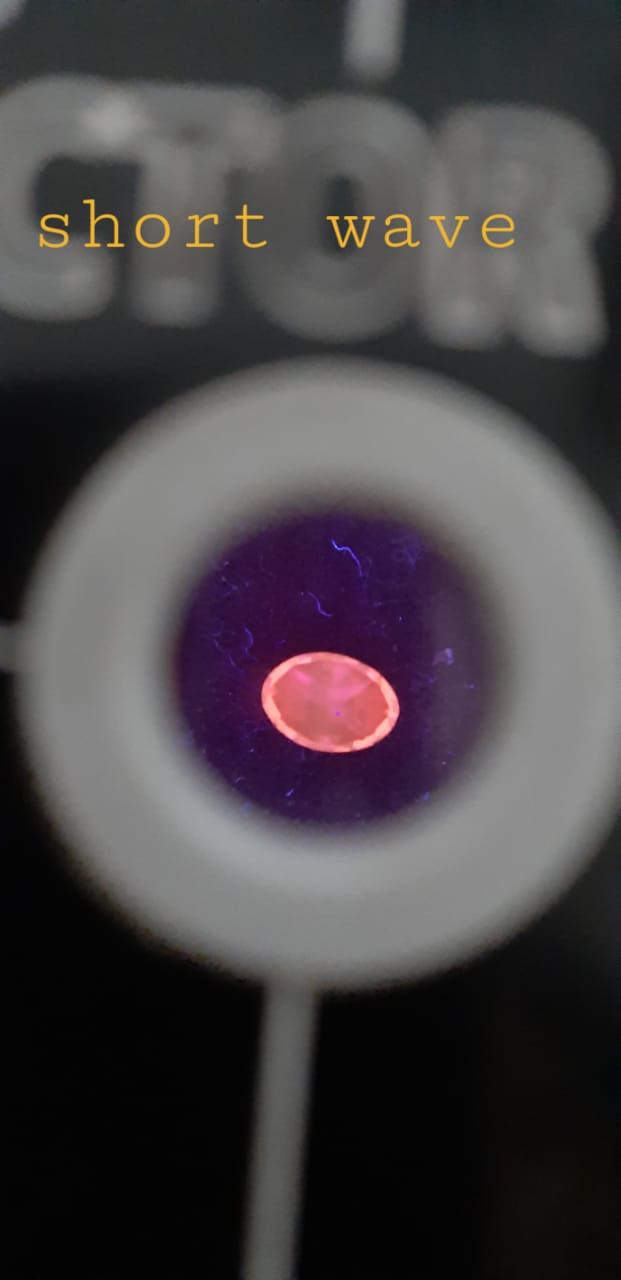
A very intense pink reaction (in the SW) is in itself an indication that there has been some kind of “artificial” application on this stone.
Even in the Raman spectrometer investigation, it was observed how the spectrum was “saturated” by the strong fluorescence (Figure 8). A clear spectrum and corresponding peaks were obtained by the same Raman examination, but using a filter (Figure 8a).
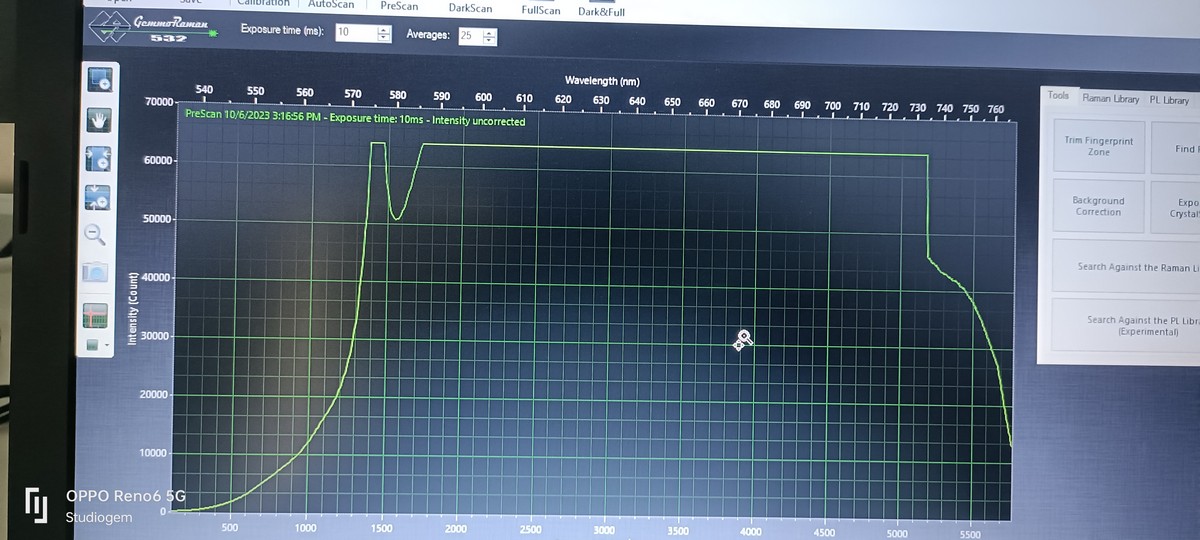
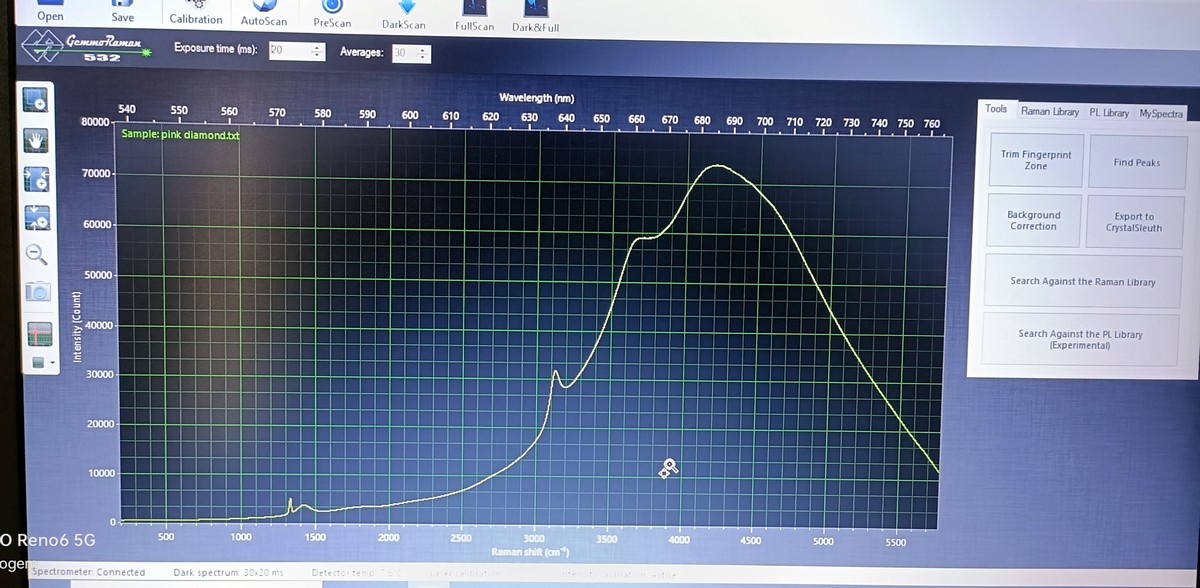
At this point, I’ve gathered enough evidence to assert that the diamond in question is indeed natural. However, it has been treated to alter its color to achieve the condition of Intense Pink.
The question that arises is this: “Has someone used a GIA certificate that describes a natural diamond as having a fancy intense purplish pink color and then cut a diamond with a treated color to match its dimensions and weight?” Obviously, they couldn’t reproduce the internal characteristics visible in the diagram.
And then they engraved the GIA logo and report number on the band!
As requested by the client, a diamond grading report was still issued, but the comments prominently stated that the stone had been treated and did not correspond to the GIA report referenced by the inscription on the ring (Figure 9).
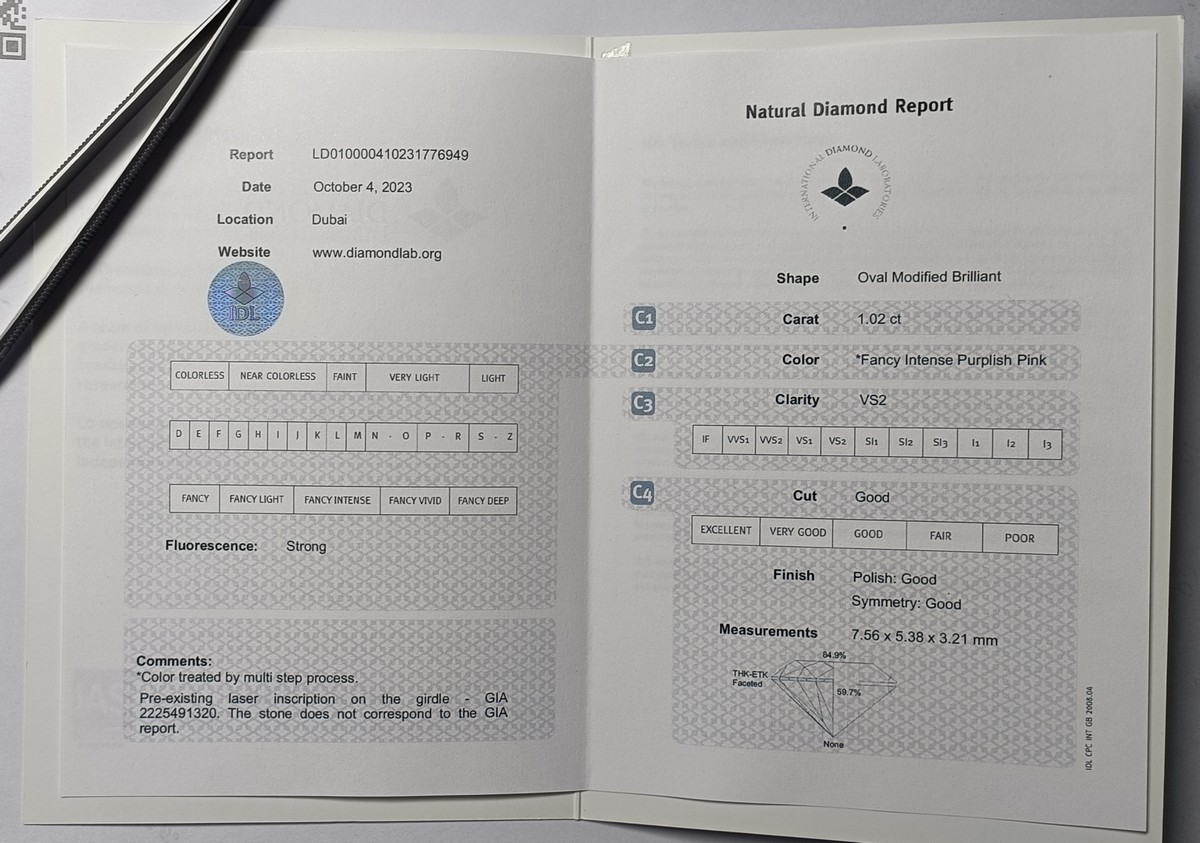
Similar cases have occurred with synthetic diamonds accompanied by GIA reports of natural diamonds, but this is the first time I’ve encountered such a stone in the lab.
I don’t know if the customer who brought it to IDL is the buyer of the diamond, who is apparently unaware of the fraud, or the seller, who may be in search of a second report to corroborate the one he has.
The need for well-equipped laboratories and highly skilled technicians to detect such attempts at fraud is once again highlighted in this case.
Article by Francesco Natale (G.G. GIA – Chief Gemologist, IDL Dubai)