




This content was first published on IGR – Italian Gemological Review no. 4 in 2018. The information provided here is therefore current as of the original publication date.

Small banded agates characterised by pale hues, mainly white and black and only occasionally with a pink centre, can be found near the village of Tiso in Val di Funes. These nodules were anciently called Teiser Kugeln, Tiso nodules, and they often contain amethyst, datolite and other minerals (Figure 32). In the ‘70s great energy was put in the extraction of these nodules of which an important collection is now on display in the Mineral Museum of Tiso.
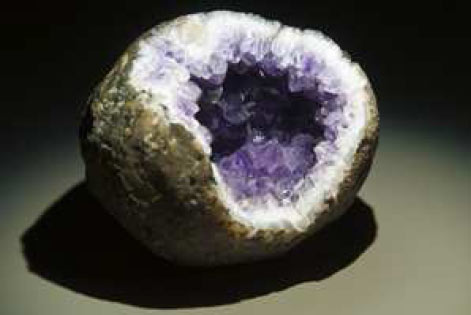
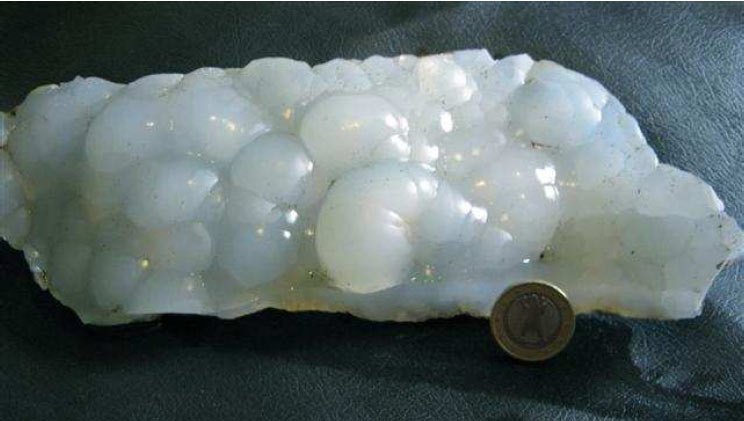
A great variety of agates and chalcedonies can be found near Masonade in Val San Nicolò, Pozzo di Fassa in the province of Trento. While geodes of mammillary grey chalcedony can be extracted near Abano Terme in the province of Padua (Figure 33).

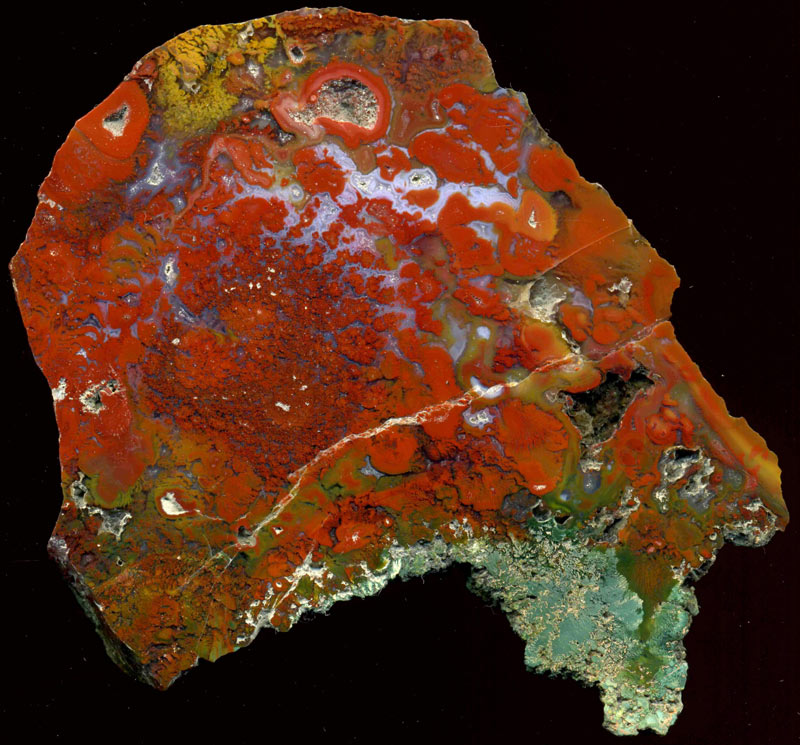
A rich field of white or variously coloured chalcedony comes from Mount Rufoli, near Volterra, in the province of Pisa (Figure 34). Here it can be found in veins inside ofiolitic rocks consisting in a serpentine gabbro. Silica mineralizations are associated to deep sections of magnesite deposits. The veins sometimes show a white or light blue mammillary chalcedony, other times thick and rough cracks with frequent druses of micro crystalline quartz. The chalcedony contained in these cracks is usually opaque of a grey, red, yellow and white hue.
The chalcedonies of Monterufoli (Figure 35) were well known by the famous Opificio delle Pietre Dure in Florence in the medicean age and, at the time, numerous mines existed that exploited this material. Today only some of the ancient mines can be accessed, partly in the Natural Reserve of Monterufoli-Casellima where, however, quality material can still be found.

The area that seems undoubtedly more promising for those looking for agates is Sardinia where, over the last few years, new fields have been discovered. Some agates show lively hues and are rich in inclusions such as musks and plumes of various colours proving to be all but inferior to the most famous agates with inclusions found in the western areas of the US. (Figure 36).
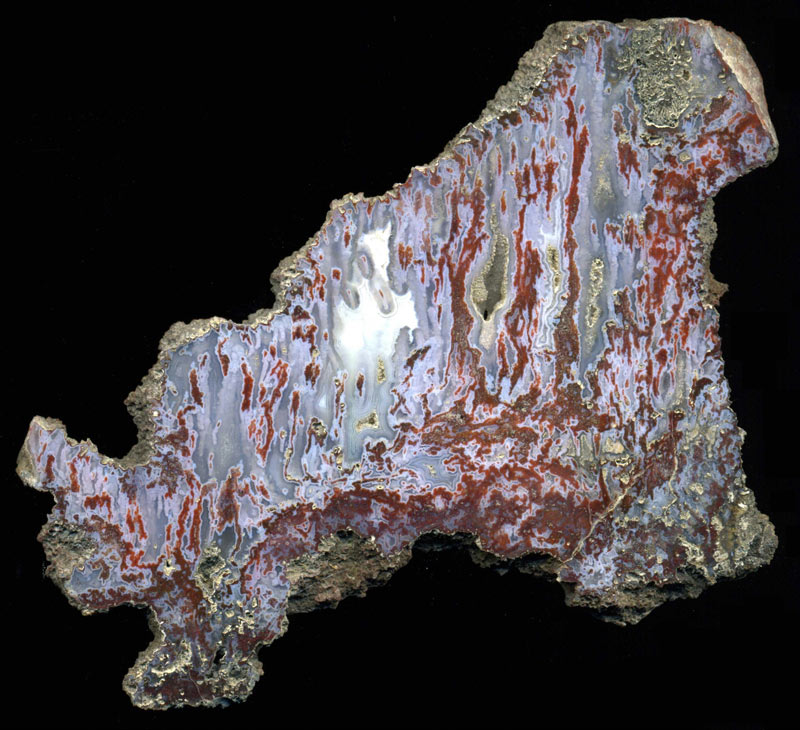
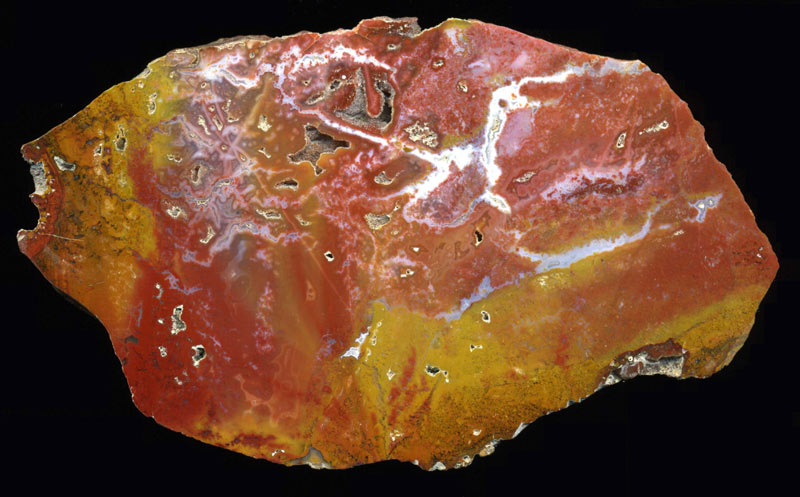
Actually Sardinia was already known in Roman times for its agates as a variety called Sardinian or sardonyx was worked. The Sardinian variety is essentially a too cooked carnelian showing a brown colour. Sardonyx, instead, is the same variety but with white, dark brown and black stripes. Sardonyx was very important in the engraving of two or three-colour cameos where a dark stripe was used as background while the subject was engraved in the white one. Black or banded onyx, instead, was produced by dipping chalcedony or agate into water and sugar and then burning the sugar with sulphuric acid. The alternation of these two processes, more or less pushed to extremes, can give origin to a wide range of hues.
The field where the material for the working of sardonyx came from was probably the well-known one of Masullas, in the province of Oristano. In this area big banded agate of a pale greyish colour can be found. From the biggest nodules fragments of onyx could be obtained with almost parallel stripes used for cameos. Not far from here you can found the tears of Saint Lucy, small nodules of translucent white agate.
Visit the Gems of Italy section!
Curated by the qualified group of expert of the section Gems of Italy, published on IGR – Italian Gemological Review #4, Summer 2018.


