




This content was first published on IGR – Italian Gemological Review no. 6 in 2019. The information provided here is therefore current as of the original publication date.

An important study on Italian opals, whose scientific literature is not rich, has been carried on by Franca Caucia, Valentina Bordoni, Luigi Marinoni and Christian Ghisoli (“Physical and chemical properties of some italian opals”). This section is widely inspired by this study.
Opals available in Italy have scarce importance in the world gemological market and don’t show the Harlequin optical effect, the property making this gem famous in the world (the famous Australian, Ethiopian, Mexican and Brazilian opals).
Nevertheless some Italian specimens are pleasant and interesting for gemologists for their iridescence, todorokite inclusions and variable colors. Italian opals are mainly appreciated by gem collectors more concerned with deposits’ location than intrinsic value of the gems.
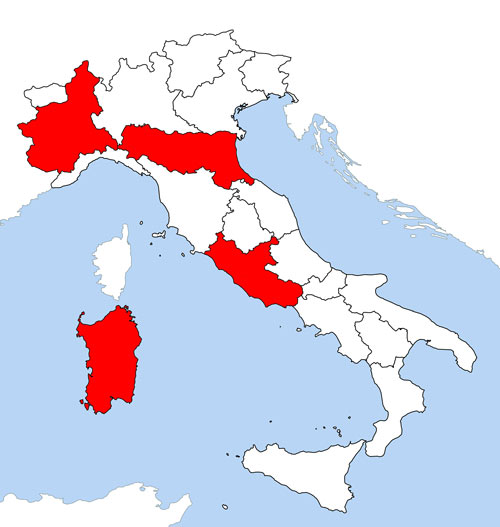
In Italy opal is found in different locations, interesting specimens come from Fioranello and Monti della Tolfa (Rome) (Figure 72), Baldissero Canavese (Turin, Piedmont) (Figures 73 and 74), Monte Calvo (Caselette, Turin, Piedmont), Monte Maniglia near Bellino (Cuneo, Piedmont), Case Montanini (Medesano, Parma, Emilia-Romagna), Silius (Cagliari, Sardinia) (Figure 75).
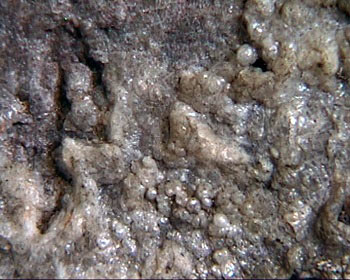


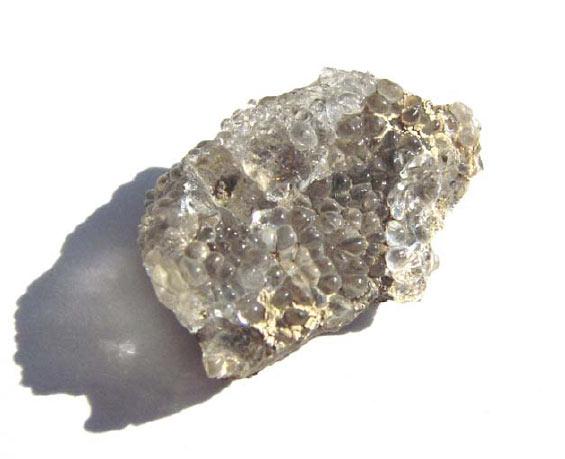
A wide range of colors is associated to this variety of deposits, Italian opals can be white, white-brownish, white-yellowish, white-greenish-yellowish, grey and black (in case blackish todorokite inclusions are spread); the causes of such colors are related to inclusions of iron oxides and hydroxides or jasper, chalcedony and clay minerals. Luster can range from vitreous to greasy, the specimens range from translucent to opaque. Fracture is generally conchoid. Opals coming from Silius (Sardinia) show a typical green-yellow fluorescence that can be referred to tiny uranium impurities (uranyl, UO2). All chemical and physical values of Italian opals are comparable to those of opals from other locations, available in the literature.
The genesis of Italian opals is essentially hydrothermal. This gem has been very much appreciated in ancient times in Italy. Today it’s not in the list of favorites because of the competition of other opals (objectively much more attractive than the Italian opal) that have been discovered in other locations across the world.
Visit the Gems of Italy section!
Curated by the qualified group of expert of the section Gems of Italy, published on IGR – Italian Gemological Review #6, Spring 2019.


