




This content was first published on IGR – Italian Gemological Review no. 7 in 2019. The information provided here is therefore current as of the original publication date.

Selenite or gypsum is an extremely common mineral, particularly in Italy where an uninterrupted layer of Messinian age spreads across the mountain range of Apennines, constituted mainly by gypsum, called gypsum sulphuric formation or in Emilia-Romagna simply named Vein of Gypsum, because there sulphur is less.
This layer represents the deposits released during the evaporation of Mediterranean when the strait of Gibraltar was closed and the oceanic contributions were missing. In the Mediterranean salinity is slightly higher than in the oceans corresponding to 38 grams per liter, i.e. 3.8%. Gypsum represents 3.6% of these salts while clorures represent the most, i.e. 31 grams/liter.
In spite of its low percentage, gypsum hardly dissolves once it is deposited, while cooking salt dissolves quickly as soon as the inflow of water restarts. Thus the gypsum vein is essentially constituted by just gypsum and only locally rocky salt occurs.
In the Apennines near Bologna in the gypsum quarries used for construction crystals over one meter long are found. These crystals are the result of gypsum recrystallization in fissures and are extremely clean and very light yellow. Good quality crystals of gypsum are found in numerous deposits associated to the vein of gypsum, due to recrystallization of evaporite gypsum. Very clean specimens come from Niccioleta, Grosseto, Tuscany (Figure 102).
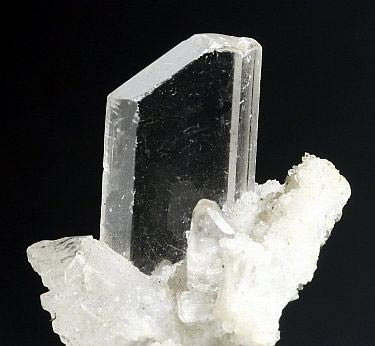
Cutting gems out of selenite is quite challenging because gypsum has hardness 2 and perfect cleavage. The resulting stones are colorless and poorly shining. Yet clean rough is easily available and cheap, so cutters often engage with this challenge (Figure 103).

Other important deposits of evaporite gypsum in Italy are those Permian of Trentino (Bellerophon formation), those Triassic of the Emilian Apennines, in Tuscany and Marche (anhydrites of Burano).
These crystals can be perfectly clean, colorless and suitable for gemstone cutting. High quality crystals of Gypsum can originate from the alteration of pyrite. Crystals some dozen centimeters long have been reported from the pyrite mines in Tuscany, Gavorrano and Niccioleta. These crystals can be perfectly clean, colorless and suitable for gemstone cutting.
In the Apennine in Bologna province the famous gypsum roses can be found within clay deposits. These roses form due to the decomposition of nodules of pyrite and can be spectacular and generally clean with a diameter of some dozens of centimeters. Extracting theses roses is a complex operation because of their softness. Clay must be removed slowly by a trowel and the specimens cannot be cleaned with water otherwise brilliance is lost. Alcohol must be used instead.
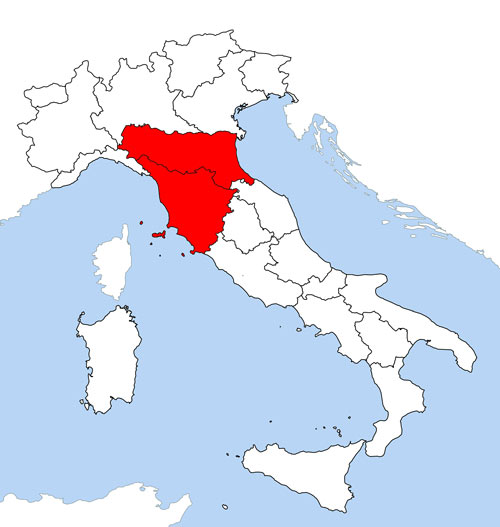
Visit the Gems of Italy section!
Curated by the qualified group of expert of the section Gems of Italy, published on IGR – Italian Gemological Review #7, Summer 2019.


