This content was first published on IGR – Italian Gemological Review no. 20 in 2025. The information provided here is therefore current as of the original publication date.

A recent Vietnamese study conducted by the University of Science, Vietnam National University, Ho Chi Minh City, published on vol.8, no. 1/2024 of Science & Technology Development Journal: Natural Sciences, has provided in-depth insights into the geological and gemological characteristics of zircons from southeastern Vietnam. The results offer new perspectives on these gemstones and the geological processes that shaped their formation.
The study area, located within the Xuân Lôc system, has been affected by two major tectonic events. These phenomena triggered extensive volcanic eruptions, resulting in alkaline basalt formations rich in valuable minerals.
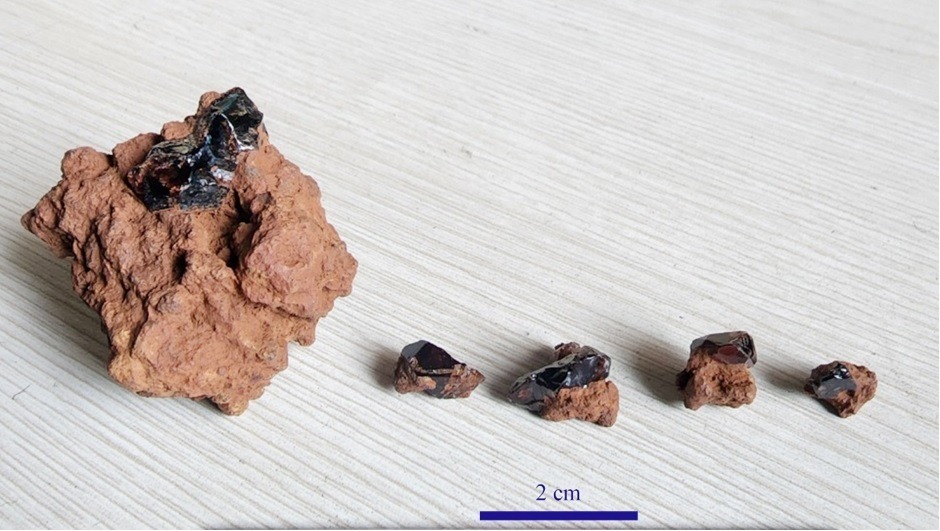
The research focused on zircons collected from the alkaline basalt formation and its altered surface layer. Through mineralogical and gemological analyses, the researchers identified chemical compositions and characteristics that distinguish these samples from those from other regions. The Vietnamese zircons are predominantly composed of zirconium silicate (ZrSi2O4) with a tetragonal crystal structure, as confirmed by X-ray diffraction. Its chemical composition includes a predominance of ZrO2 (49.92–57.97%) and SiO2 (40.95–53.02%), along with traces of HfO2 and Y2O3. Notably, the presence of Y2O3 in some samples induces a photochemical phenomenon known as photochromism.
From a gemological standpoint, zircons from southeastern Vietnam are characterized by a complex color palette that includes shades of orange-red, brown, gray, and colorless. Approximately 38% of the specimens exhibit brown-gray hues, while rarer hues include light gray, almost colorless specimens. One of the most intriguing features is the observed color change: after 18–21 hours in darkness, the samples exhibit a bright orange color that changes to gray or orange-brown after 15–20 minutes of exposure to natural light.
The full article is available at: http://stdjns.scienceandtechnology.com.vn/index.php/stdjns/article/view/1295
Gem News published on IGR – Italian Gemological Review #20 – Winter 2024/25