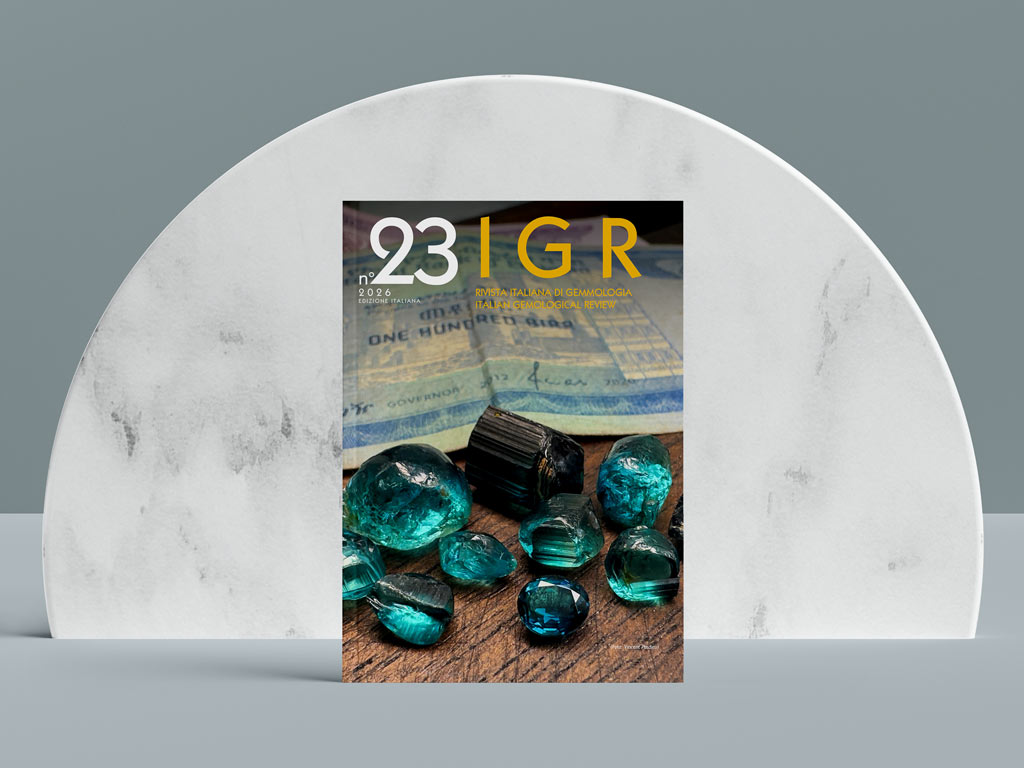
Tucson 2026 emerges as a complex and “atypical” edition, recounted here through three complementary perspectives that paint a multifaceted picture of highs and lows. While geopolitical tensions, tariffs, and visa difficulties led to a dip in attendance and a fragmented supply — technical challenges pointedly highlighted by Bruno Martinez — the market nevertheless demonstrates surprising resilience. Francesco Natale confirms the sector’s strength, driven by a lively collecting scene and a growing interest in colored stones, with prices holding steady despite the global context. Providing the unifying thread is the unique atmosphere described by Alberto Scarani: a sort of protective “bubble” where a shared passion for gemology becomes a collective antidote to the anxieties of the contemporary world. This three-voice report spans from commercial strategies to science, exploring the very psychology of an event that remains indispensable.
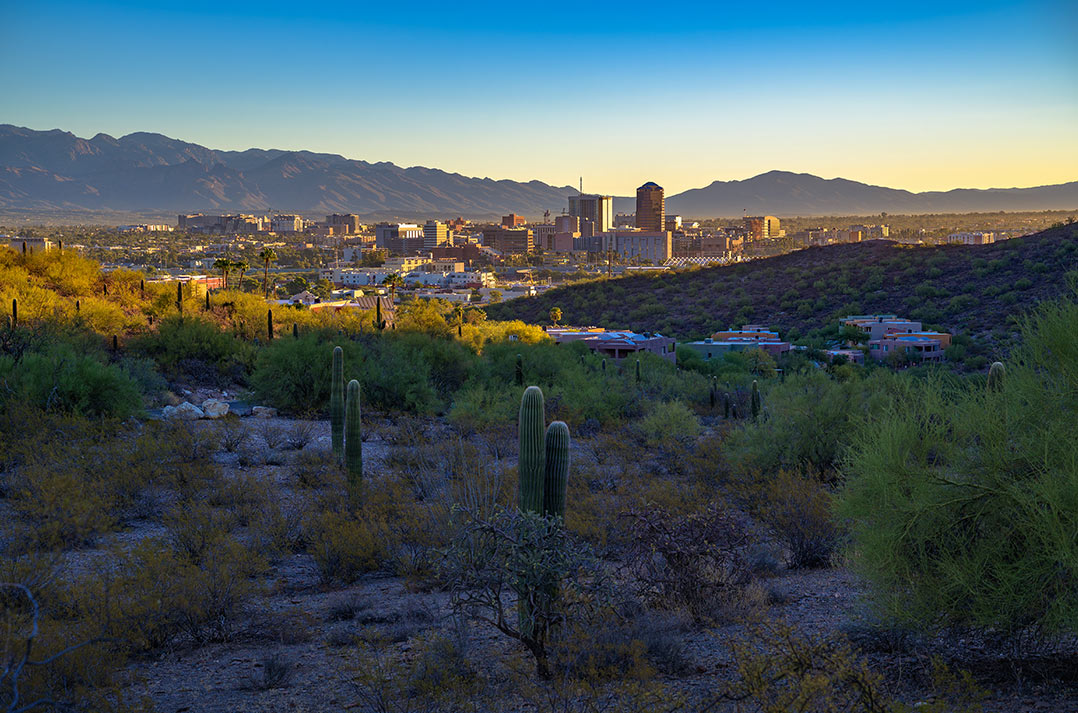
Francesco Natale’s impressions – GG (GIA) – IDL Lab, Dubai
An amazingly extensive exhibition program
I’ve just returned from Tucson after almost two weeks. My usual trip, visiting the various shows, as I’ve been doing for nearly 25 years now. The same “old” fairs, although over time new events have been added, mainly focused on minerals.
I toured the “Pueblo”, which for some years now has officially been the Ramada Hotel.
But for veterans, it will always remain the “Pueblo”, under its old name. Then there’s Motel 6, the Red Lion, the 22nd Street Show, Kino, JOGS, the Holidome.
These are primarily mineral and artisan shows… you can truly find everything.
Among the specialized mineral exhibitions, Mineral City Show, Fine Mineral Gallery, and Westward Look must be mentioned. There are so many that it’s difficult to list them all.
This year yet another was added: Mineral Garden. Very exclusive, with few exhibitors but at an exceptionally high level.
Then there are some very special “shows”, private in nature, organized by individual dealers who display their own collections. The quality here is phenomenal.
The last to open its doors is the Main Show, but I’ve never managed to visit it — that would mean staying in Tucson at least another week… not that I would mind.
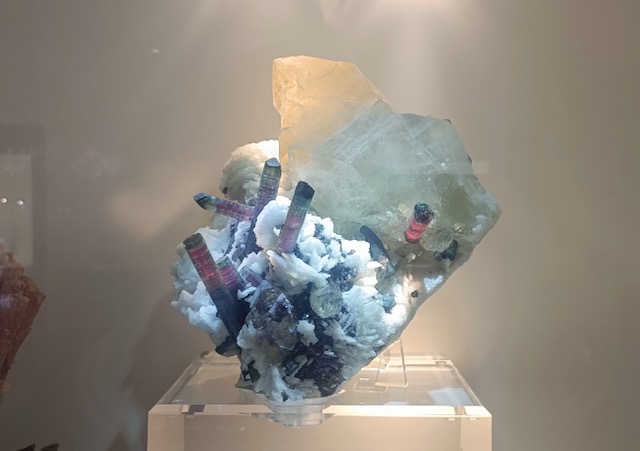
Mineral collecting is booming. And prices?
My impression this year was that attendance was lower than last year. Apparently, entry visas to the United States were granted with considerable difficulty to citizens of some countries that usually flock to the Arizona shows.
Even so, the overall level of business remained very strong, despite fewer buyers and despite tariffs.
Where I saw particular energy and strong public interest was in collectible minerals, a sector that appears increasingly solid. Mineral collecting is thriving.
The booths — or rather the rooms (since they are literally motel rooms) — of many dealers were crowded from the very moment the shows opened to the public. You have to arrive well before opening time if you want a good selection.
And prices? I must admit I was surprised. They did not seem higher than last year — quite the opposite. And normally, prices rise almost every year.
Restoration and fakes. Mining has its limits
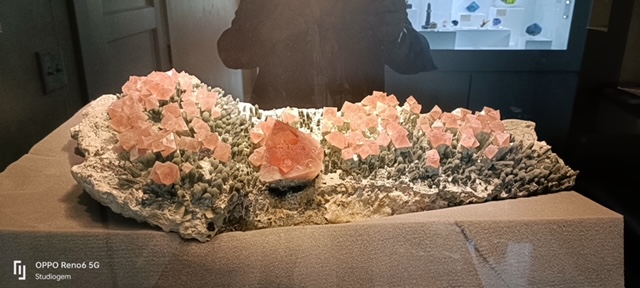
The quality level of minerals on offer continues to rise. Today, collectors are looking for “perfection”. No flaws, no scratches, no chipped terminations. Crystals must be as complete as possible.
But how often does mining actually allow intact specimens to be recovered? Anyone working in the field knows that damage is the rule rather than the exception.
This brings us to the increasingly important role of restoration and preparation laboratories that work on specimens before they reach the market. Their intervention is more and more common. It is entirely legitimate and, in most cases, properly disclosed by the seller.
But not always. In some instances, restoration is concealed, or pieces are described as “repaired” when they are clearly falsified, with crystals glued into place where they should not be. Yes, buyers need to be careful.
Another important point: over the years, new discoveries from remote localities around the world have slowed down. Production is decreasing, and some mines, once promising, are closing.
It may therefore be wise to invest in specimens that are unlikely to be easily available in the years to come — materials from Namibia, Tennessee, Illinois, South Africa, Alpine localities, Sicily, and others.
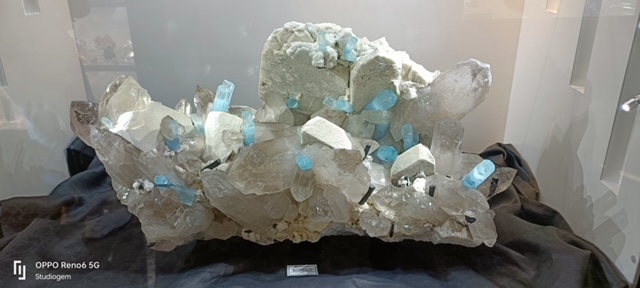
Gems and precious stones: demand keeps rising
Partly as a consequence of the decline in diamond popularity, attention is shifting — and rightly so, in my view — toward colored stones.
On February 2, GJX and AGTA opened, shows dedicated primarily to the gemstone sector. Jewelry is present, but limited — some can be found especially in the “estate jewelry” sections.
As always, many exhibitors focus on the classic trio: rubies, sapphires, and emeralds. But other gem species are very much in the spotlight — garnets, tourmalines, beryls, spinels. These are not new to the jewelry market, of course, but they are undoubtedly receiving increasing attention.
We are all familiar with spinels and “Paraíba” tourmalines. Over the years, prices for these two stones have reached astonishing and once unimaginable levels. Today, top-tier gems also include spessartine garnets (Mandarin garnet), tsavorites, rhodolites (especially from Mozambique), and “Imperial” topaz in its red-orange variety.
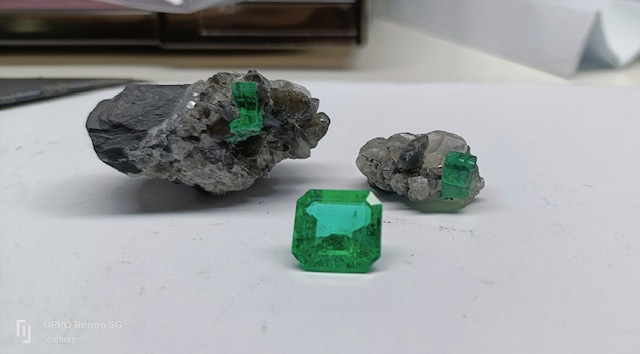
I also saw a number of “new” Nigerian emeralds/green beryls
I should mention the vanadium beryls discovered over the past two or three years, now circulating in faceted form. The main issue here concerns nomenclature. I saw some declared as “emerald”, others presented as green beryl.
They are often extremely transparent stones, almost free of fractures, and frequently accompanied by reports stating “Emerald – No Oil”.
Here the discussion becomes complex because of the color and chromophore question. Is color alone sufficient to distinguish emerald from green beryl? Should we also consider the chromophoric elements (Fe, V, Cr)? And in what proportions must these elements be present?
There are already studies on the subject, but sooner or later further clarification may be needed, perhaps from standardization bodies.
Aquamarines and rubellites: fine stones are now extremely expensive
The price increase for aquamarines and rubellites is now well established. The surge originates at the very beginning of the supply chain. Rough rubellite, increasingly difficult to source, can commonly reach $500–600 per gram. After cutting, prices can easily exceed $1,000 per carat.
We should also consider that major jewelry houses are investing more and more in colored materials. This naturally influences the market, fuels demand for exceptional stones, and pushes prices higher.
Synthetic diamond prices in free fall. Will synthetic colored stones be next?
Let me return briefly to diamonds. I visited several synthetic diamond dealers. It’s incredible how inexpensive they have become. We are talking about just a few hundred dollars per carat for stones of 5 carats and above, even up to 10 carats.
I also encountered several vendors producing and selling synthetic sapphires, emeralds, and rubies at prices around a few tens of dollars per carat.
We all know the commercial damage synthetic diamonds have caused to the natural diamond market. To be precise, not synthetics themselves, but the speculative behavior of certain traders. Let’s hope the same does not happen with colored gemstones.
Tucson is also high-level gemological exchange
Tucson is also an opportunity for professional exchange among gemmologists. Conferences organized by ICA, AGA, GIA, along with dinners and receptions, provide valuable opportunities to engage with international colleagues.
Increasing attention is focused on determining the geographic origin of major colored gemstones: rubies, sapphires, emeralds, alexandrites, spinels, Paraíba tourmalines.
This task is not becoming easier with time — quite the opposite. New deposits are discovered, and their characteristics often overlap with those of existing sources. Colombian, Afghan, Zambian, and Chinese emeralds are a case in point.
Advanced analytical techniques — spectroscopy and trace-element analysis — have become an integral part of daily laboratory work.
In short, one never stops learning.
My Tucson 2026 has come to an end — and I am already counting the days until the next edition.
Alberto Scarani’s impressions
A brief reflection on the Tucson 2026 experience. Tucson and the Solaris Syndrome: The Magic of Gemstones as an Antidote to the Anxieties, Frustrations, and Fears of the Contemporary World
My overall impression of the fair was very positive. Aside from a few notable absences, likely due to immigration and tariff issues, I received overwhelmingly positive comments from a variety of stakeholders, from the most prestigious fairs to the smaller shows. But above all, almost every time I interacted with people, I sensed a singular, I would even call collective, atmosphere of mental relaxation, perhaps also contributed to by the best weather in the last 15 years.
In such critical geopolitical times, in this constant paroxysmal escalation that envelops us all, pushing even the most moderate to adopt extreme positions for a variety of reasons, I had prepared myself for an atmosphere of constant conflict, of opposition that wasn’t just ideological. To my utter surprise, I found that virtually EVERYONE I interacted with seemed to have put their more extreme positions, their demands, and their discontent on hold, in a collective atmosphere that I immediately dubbed the “Solaris syndrome”, after Tarkovsky’s masterpiece. It’s as if everyone, in a completely unanimous and almost coordinated way, had decided to take advantage of this opportunity to immerse themselves in a surreal “bubble” completely impermeable to the incredible mass of frustrations, fears, worries, and anger that engulfs us all at this particular moment in human history.
On a small scale, I seemed to recognize a similarity with one of the most efficient human self-protection mechanisms: when pain and stress reach levels that the body or mind cannot bear, the brain shuts down. Too much pain? The patient faints. Too much psychophysical stress? The mind erases, removes. It was an almost metaphysical experience; we all decided, unilaterally and almost in concert, to leave behind everything that’s happening outside to make room for our truest and most sincere passion: gems and minerals. And so, we entered the magical atmosphere of Tucson, closing the door behind us, hoping to escape, at least for a while, the miseries that our species seems to so strongly desire despite being in the position of enjoying progress and well-being unprecedented in human history.
Bruno Martinez’s impressions
An Interlocutory Edition, Overall Positive — Yet Marked by Deep Uncertainty
This edition proved to be distinctly atypical compared with previous years. The macroeconomic and geopolitical backdrop, shaped by the introduction of new tariffs and trade restrictions, created a widespread climate of uncertainty that inevitably affected the various Tucson events in 2026.
The supply, traditionally broad and diversified in both type and quality of gemstones, appeared less abundant. Several companies chose not to showcase their top material, also due to increasing customs complexities and constraints on international trade. Signs of caution had already emerged in the months leading up to the shows; nevertheless, a number of long-standing exhibitors confirmed their participation, partly to avoid the risk of losing exhibition space secured over many years.
As expected, transactions did take place, albeit within a more fragmented operational framework. Several buyers reported the need to split purchases among multiple suppliers, reshaping their sourcing strategies in response to the reduced availability of concentrated stock. One positive side effect of this situation was the establishment of new commercial relationships, which are likely to consolidate over the medium term.
As for the main colored gemstones — sapphires, emeralds, and rubies — supply remained broadly stable, with prices high and in line with expectations. Other fine colored stones, such as spinels, tanzanites, tourmalines, and alexandrites, did not show particularly noteworthy developments compared with previous editions, especially in larger sizes.
Paraíba tourmalines appeared slightly more accessible in mid-range qualities, while top-tier material continued to command very high prices. By contrast, transactions involving mid- to lower-quality stones were limited, also due to elevated gold prices, which continue to exert a significant influence on the jewelry market.
It was evident that many sellers initially maintained a firm pricing stance, later adopting greater flexibility in response to market conditions that are objectively less dynamic than in the past.
On the gemmological front — an essential component that fully justifies spending at least a week in Tucson during the show period — the overall standard remained high. The presentations offered technically valuable insights across a range of specialist topics, within a relaxed and collaborative professional environment that is rarely encountered elsewhere.
However, there was no announcement of an innovation comparable to last year’s major breakthrough, when the release of the “Hybrid Master” for diamonds represented a true turning point from an instrumental and methodological perspective.