




I first heard about the discovery of Paraíba tourmaline in Ethiopia on May 25, 2026, when one of my contacts from Shakiso mentioned “Paraíba” to me. He was looking for buyers and also wanted confirmation from our lab, the Africa Gemological Training Institute (AGTI), that the stones were indeed Paraíba tourmalines. After studying at GIA in Bangkok in 2018, I founded the Africa Gemological Training Institute here in Ethiopia in 2024; the institute teaches gemology and gem faceting, as well as providing gem identification services. I told them to bring the stones to Addis Abeba so we could examine them. However, they found a buyer before reaching our lab, and we never had the chance to see that parcel.
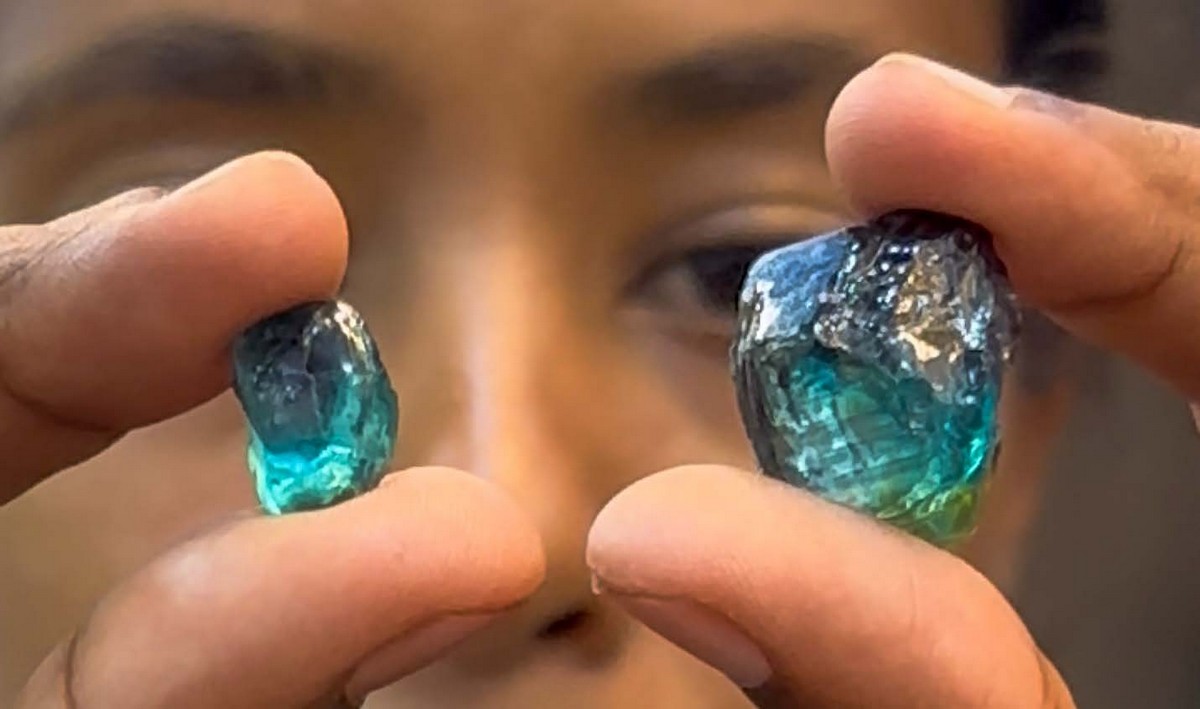
The deal did not remain secret for long. Soon, it became common knowledge in the gem trade of Addis that a parcel of Paraíba tourmalines sold for reportedly more than 200 million Ethiopian Birr, meaning over 1 million USD. News of the discovery of very valuable tourmalines near Abuloo village, close to Shakiso in the Oromia region, spread like wildfire through the Ethiopian gem trade and quickly beyond Ethiopia’s borders. This region was already well known for coffee, gold, and emerald mining, but this new discovery suddenly brought a different level of attention.
By early June, several international buyers from Thailand, Germany, Switzerland, Brazil, Sri Lanka, India, and elsewhere began showing up in Addis Ababa and Hawassa. Local dealers, particularly those active around the emerald mining areas near Shakiso, almost stopped trading other stones and began focusing on these new beauties. It was, and still is, the talk of the town.
On my side, I started collecting data from my local contacts, gem dealers and artisanal miners, and I also shared the news and sought advice from a few friends: the Swiss geologist Leonard Cornuz, one of my classmates from my studies at GIA, who had visited sapphire mines with me a few months earlier, and his mentor and friend Vincent Pardieu, a gemologist I had the pleasure of meeting in Tucson in 2025 and kept in contact with to this day. Vincent asked me whether it would be possible to visit the place, but the situation was very chaotic.
Rumors in Addis suggested that it was not safe to go there, particularly as I had heard that news of the discovery attracted a rebel group rumored to be active in the region, who had reportedly moved into the area to take control of the mining site. This was also visible in some videos published on TikTok, the most popular social media platform in Ethiopia. I therefore advised Vincent to wait until the situation became safer.
After SSEF published a press release about the discovery of Paraíba tourmaline in Ethiopia on June 18, 2026, many people started asking me whether the news was true. By then, I had been able to see several parcels of attractive stones in Addis Ababa, so I decided to make a video and post it on June 25, 2026, to confirm that something was indeed happening in Ethiopia.
Visualizza questo post su Instagram
A bit later, on June 27, Vincent Pardieu published the result of a preliminary study he did with his colleagues from the LFG (Laboratoire Français de Gemmologie) in Paris and the C. Dunaigre laboratory in Bangkok on some stones acquired by one of his friends from Bangkok who travelled to Ethiopia. Their preliminary study showed some stones rich in copper produced near Abuloo are eligible to be called Paraíba tourmaline (according to the terminology on LMHC Info Sheet number 6 about Paraíba tourmaline), but some others, even if they had a similar aspect to the copper-rich ones, were not eligible for “Paraíba” as they are colored by iron. The findings by Pardieu et al. were confirmed one day later by German gemologists from DSEF in Idar-Oberstein who studied some of the stones acquired in Addis by some German buyers.
The most challenging part was that the difference could only be distinguished using UV-Vis-NIR spectroscopy, equipment not available yet in Ethiopia. Of course, more research and lab testing should continue to understand the nature and the diversity of the tourmalines from the new discovery near Abuloo.
During meetings in Addis with people from the mining site, I heard that mining had stopped after the arrival of the rebels. Later, however, local authorities and Aba Gada (traditional local authorities) had apparently been able to convince them to leave the area and allow the local people to continue mining.
Once I received news that security had improved after their departure and that people had started mining again, I told Vincent and Léonard that, even though it was still dangerous, I considered going there to collect real-time data for myself. Of course, because of the safety issues, I did not tell my immediate family that I was going to the mine. I only told them I was going to Hawassa to purchase some sample stones. Although Léonard and Vincent could not join me, they nevertheless gave me and my team advice on how to carry out the mapping and collect useful data. I was not going alone. My good friends Tewodros, Ashenafi, Samuel, Haji, and Yeabsira helped facilitate the trip.
The Field expedition
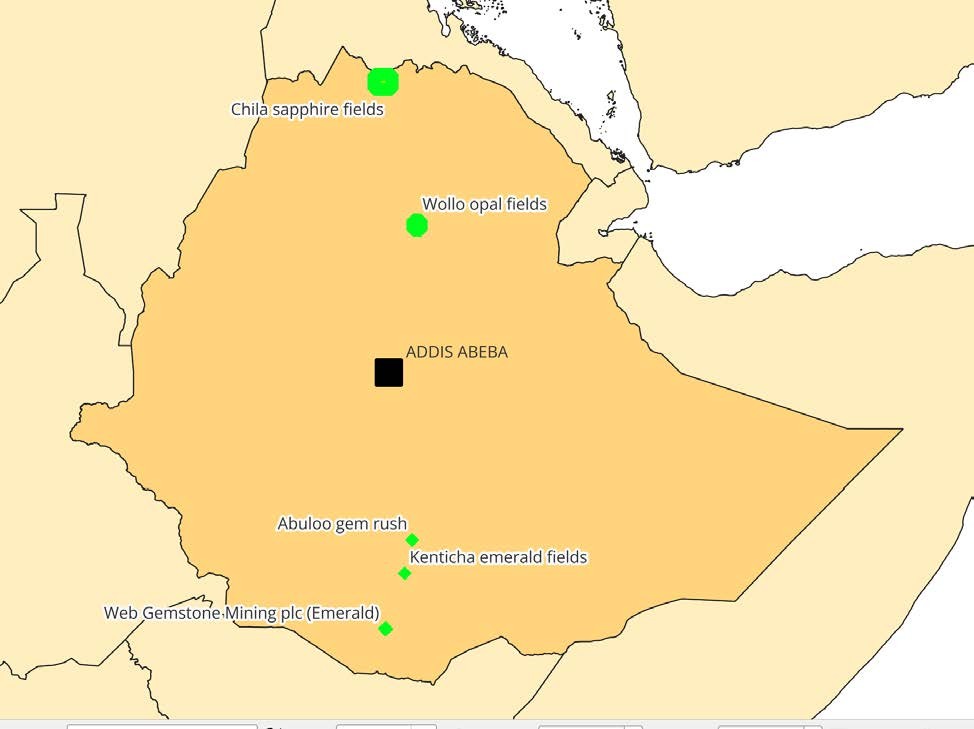
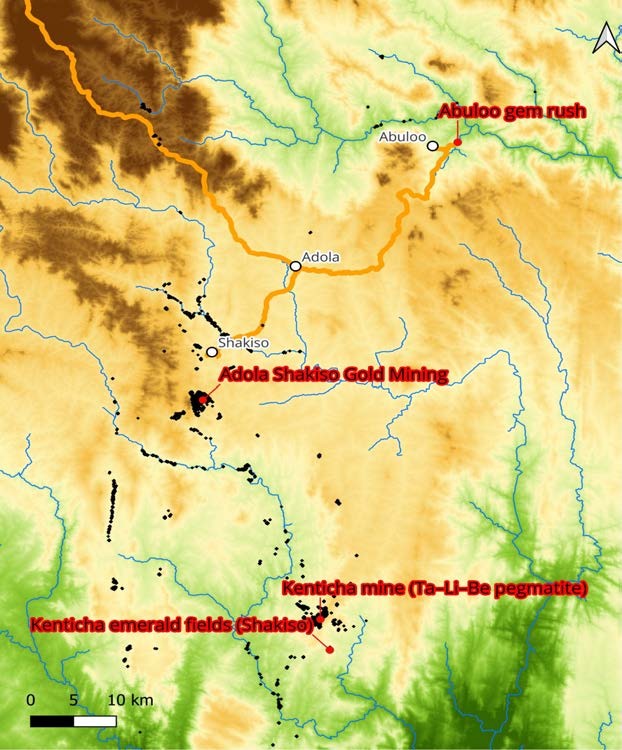
Our expedition started from Addis Ababa on June 25, 2026. From Addis to Hawassa, we drove for about four hours. From Hawassa to Shakiso, we drove another three and a half hours and spent the night in Shakiso (see map in Figure 4)
Early on June 26, 2026, we got up and started driving to Abuloo, passing through Adola, which used to be called Kibremengist, a name given by Emperor Haile Selassie meaning “grace to the king” or “grace to the governor.” When we reached Abuloo village, we parked the truck and transferred to motorbikes at the bike station. The riders were young men who provided transport services with their motorcycles. They are known for their reliable skills, at least that is what I was told. The ride lasted only about ten minutes, but it was still a little scary.
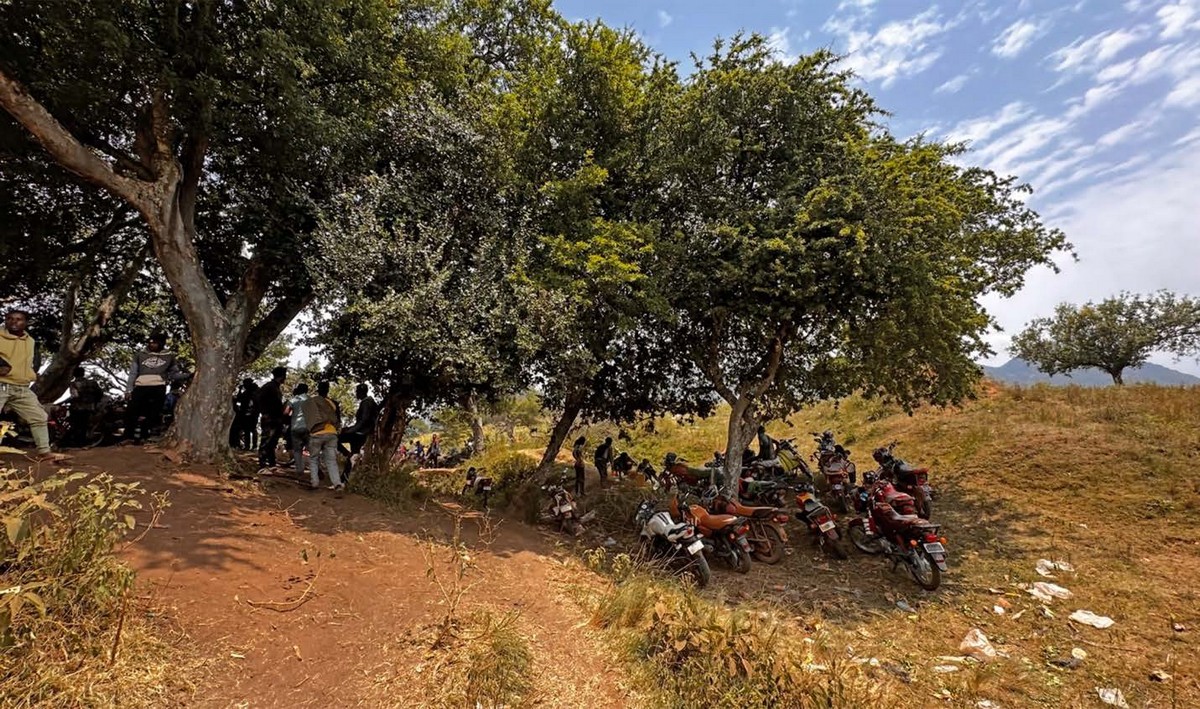
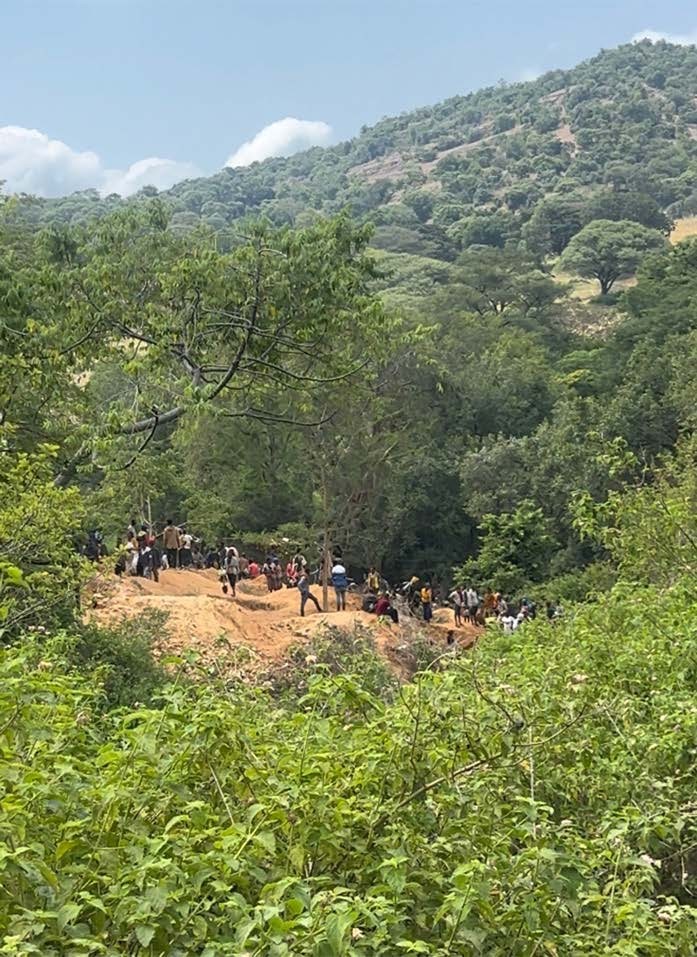
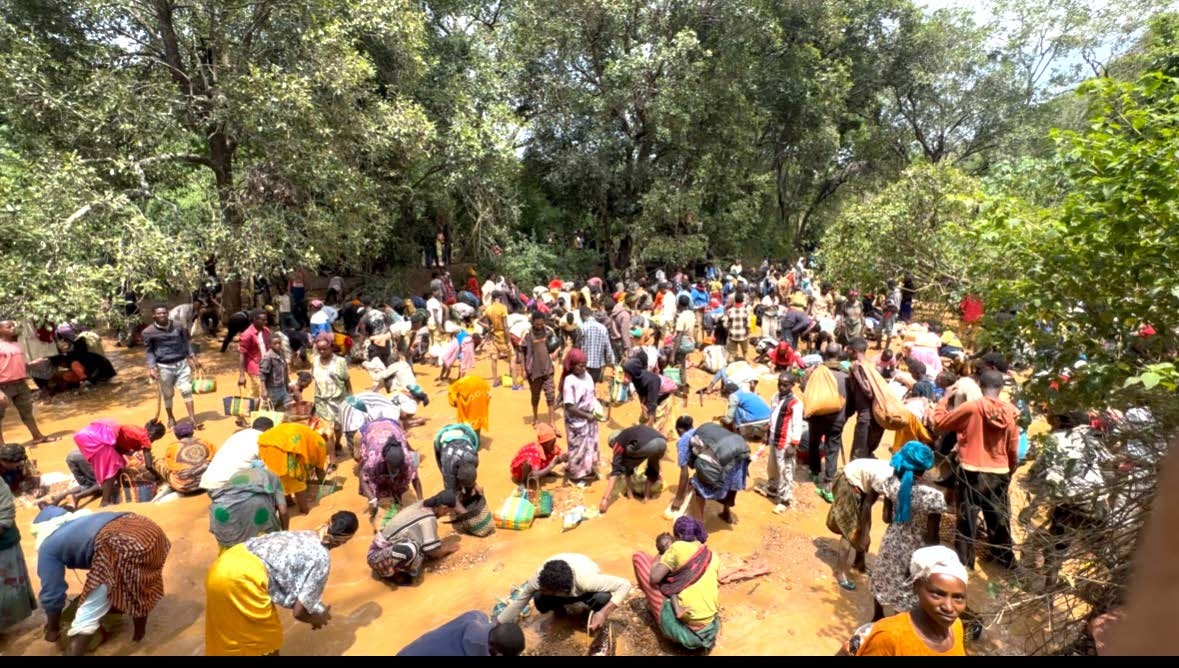
From the motorbike stop we walked downhill for about twenty minutes. As we approached the mining site, we began to hear the noise of a huge crowd digging, together with the sound of people washing soil in the nearby stream. The mining was taking place along a stream between two hills in an area covered by trees. I had goosebumps and felt a strong sense of excitement. I wanted to rush forward and see the mine with my own eyes, beyond the trees.
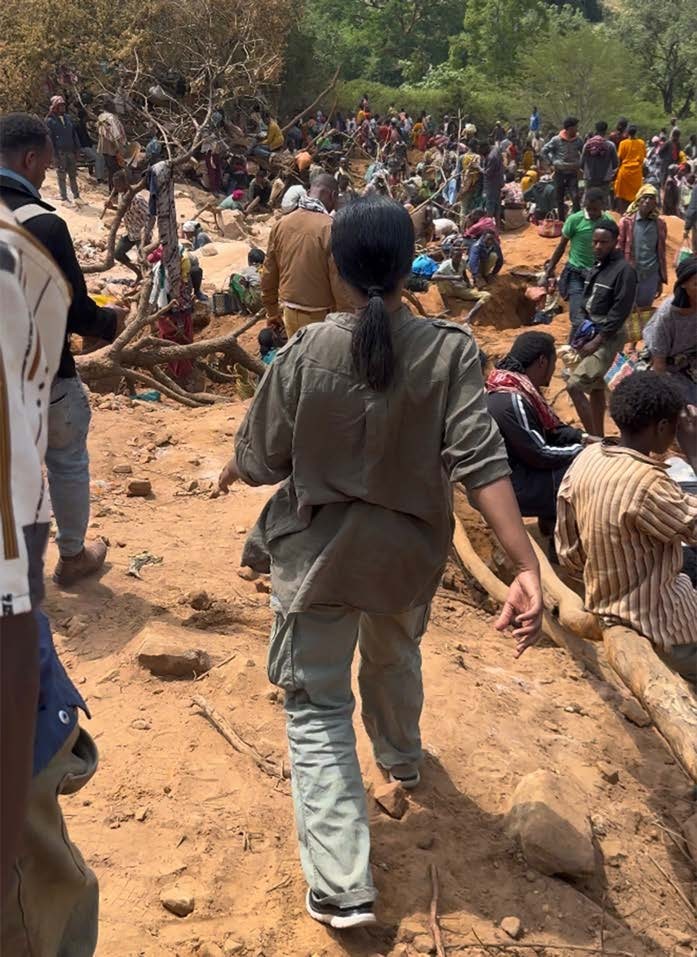
When we finally arrived, the number of people on-site, the excitement, the urgency, the uncertainty, and the commitment of everyone there created a scene I will never forget. Standing at the mining site, I witnessed an overwhelming scene: more than 3,000 people packed into the area, digging, washing, carrying, buying, and selling.
Nearly every open pit was guarded by armed men. If most of the people at the mining site were friendly, one of the security guys was obviously not very happy to see one of my friends filming around with his camera as he pointed his AK-47 at my friend’s face, something that my friend will remember for the rest of his life. But as my friend presented his excuses and as we moved on to more friendly people, everything went well. Still, it was a good reminder that, as Leonard and Vincent regularly told me, on a gem rush things can be tense.
For that reason, we decided not to show in this field report any close-up faces, except mine.
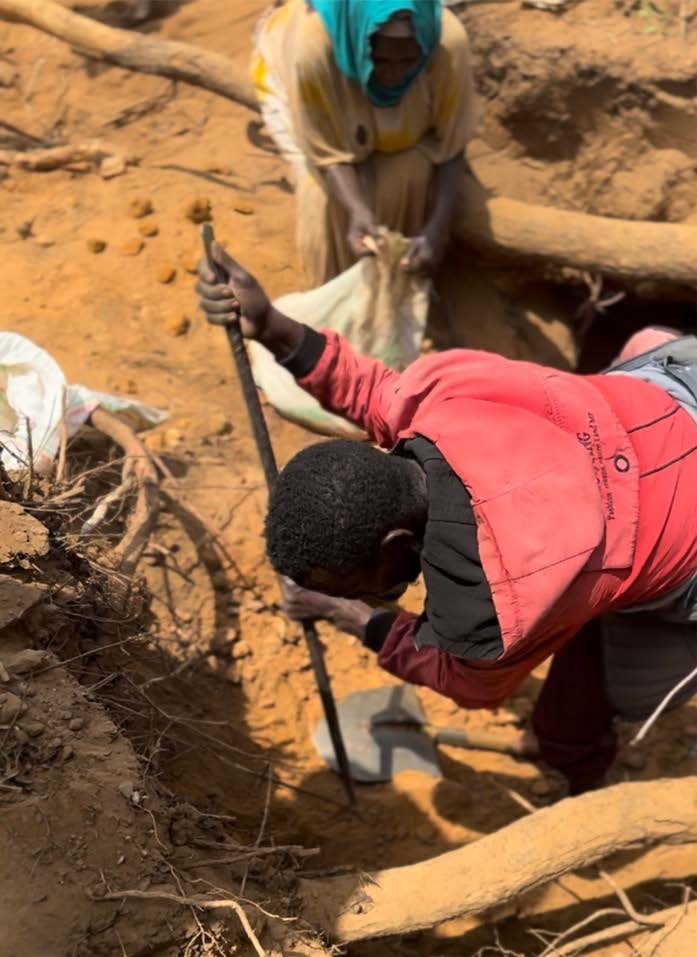
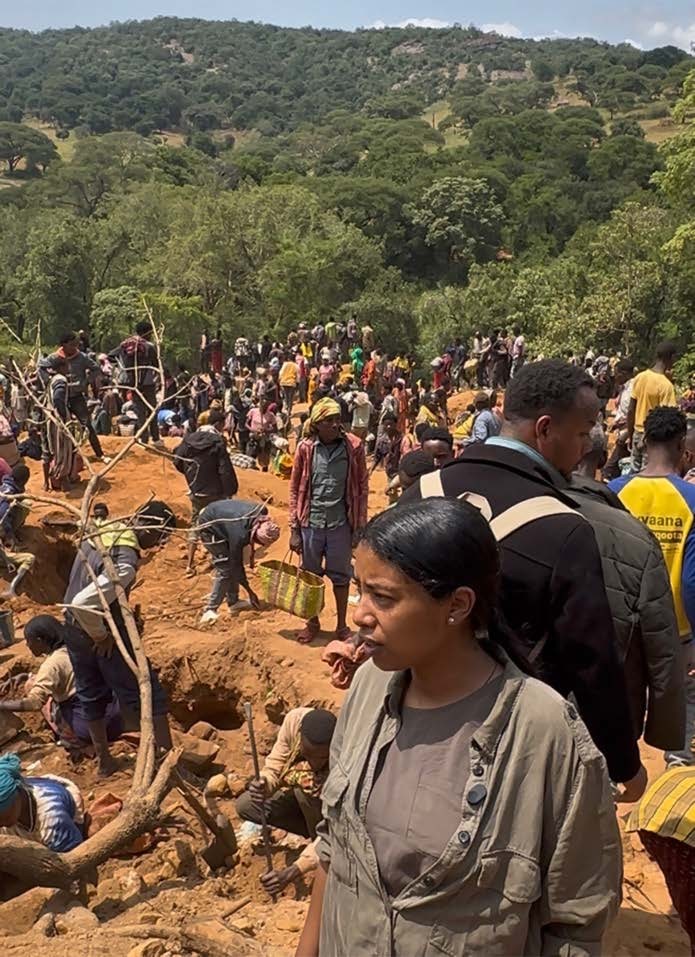
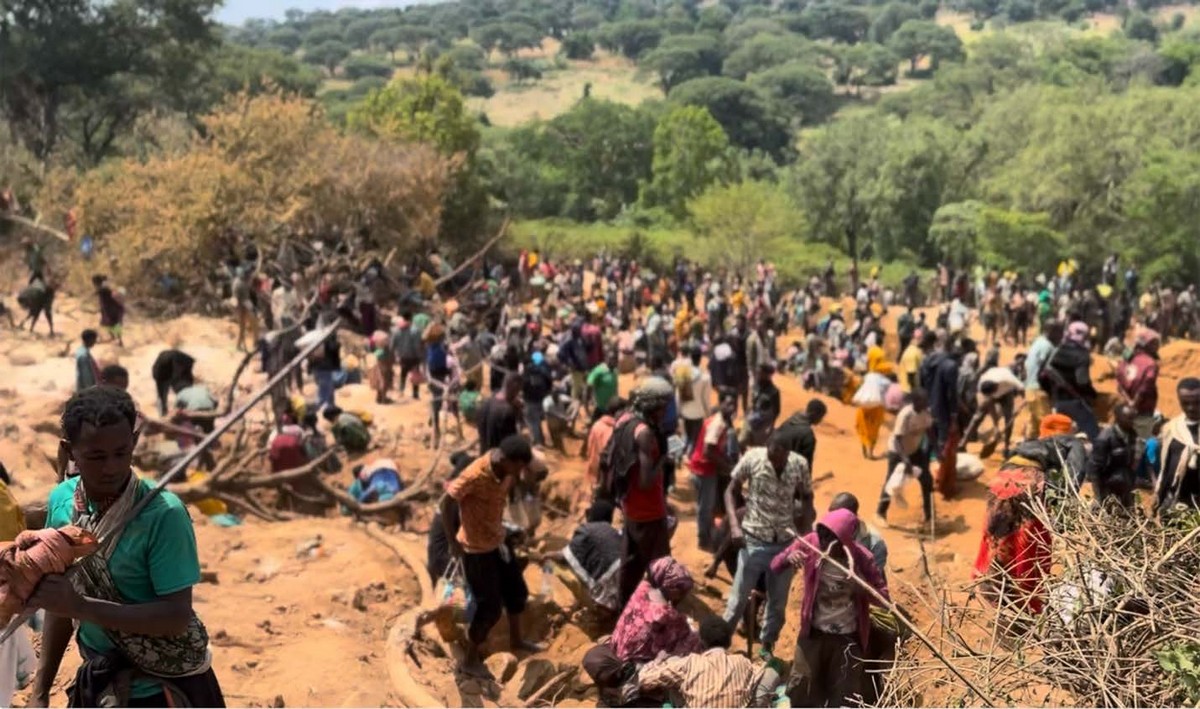
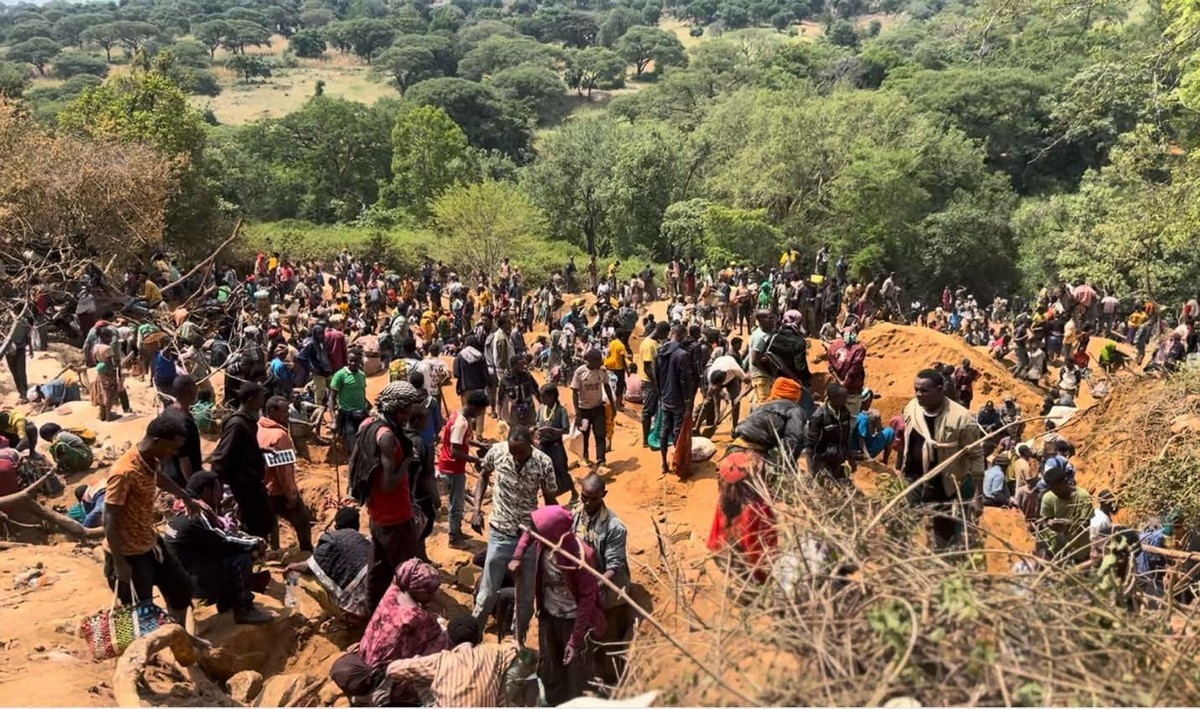
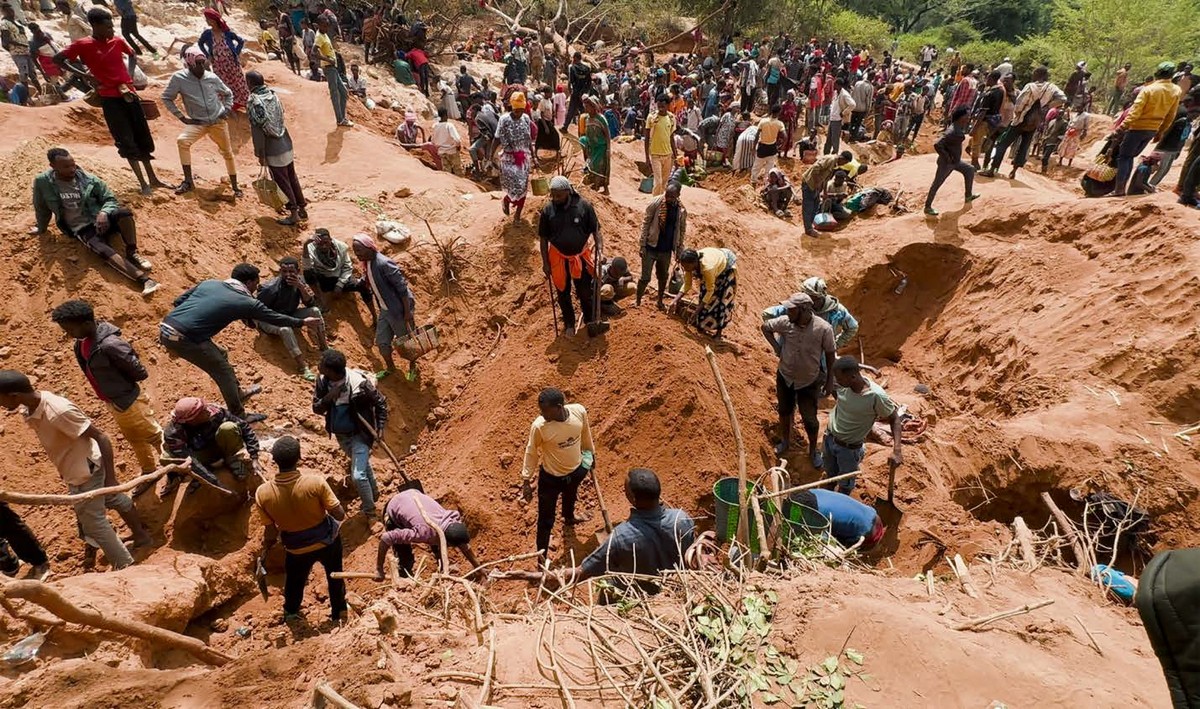
I heard two different stories about the first discovery of these Paraíba tourmalines. In Addis, there was a rumor that the stones had first been found by a villager while digging a hole for a toilet. However, when I arrived at the mine, I was told this was not true. According to the people I met there, the stones were first discovered a while ago during traditional gold prospecting.
At the mine, discussing with people, I learned that the primary workforce consisted of residents from Abuloo and neighboring areas such as Shakiso, Adola, and Kenticha. They are the frontline miners, while buyers are now arriving from every corner of Ethiopia. The rush has completely reshaped the local economy that is dominated by farming (mainly coffee but also maize), gold and emerald mining. With national inflation and widespread socioeconomic struggles, this discovery represents a rare, life-changing lottery ticket. So many people left their usual occupation to come and try their luck mining Paraíba tourmalines. Some people have been lucky and already found exceptional stones, giving them the capital needed to transform their lives and giving many others motivation to come mining.
Many have reinvested the money they earned from gold mining into the Paraíba pits, hoping to multiply their wealth. However, because there is still very little local understanding of gemstone quality, it is too early to measure the full economic impact of this discovery. On-site commerce is rapid and volatile. Transactions at the pits are strictly cash-based, and the sheer volume of paper currency is staggering.
It is common to see duffel bags literally overflowing with stacks of bills. Local dealers usually have the first opportunity to buy, while special stones or higher-quality parcels are sent to nearby regional hubs such as Shakiso, Adola, and Hawassa for secondary negotiations.
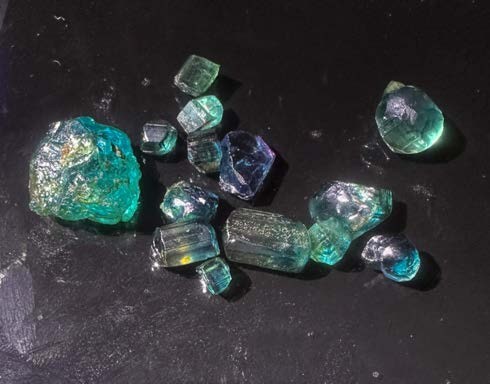
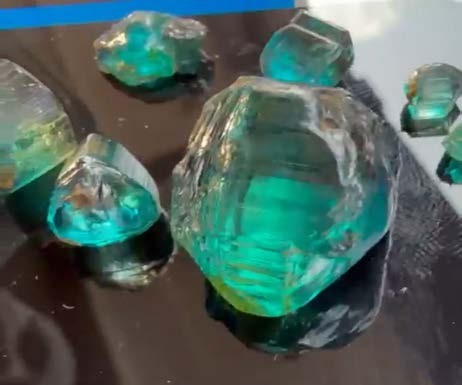
Geologically, the deposit produces a stunning variety of tourmalines, including neon Paraíba-type stones, deep blue indicolite, pink, green, and black crystals. They occur in secondary surface soils down to a depth of about six meters. The clarity of the stones ranges from opaque to eye-clean or loupe-clean. Most stones are under two grams, but I personally saw notable specimens weighing up to 8.6 grams. All are extracted using simple tools such as shovels, picks, and bags for transport and washing. There are more than twenty active open pits situated side by side. Miners find tourmaline right at the surface and dig down to depths of about six meters.
Because the soil is soft, many miners place the excavated earth directly on the lips of the pits instead of moving it away from the edges. This creates a serious hazard, as the loose soil can easily collapse back into the holes. The pits themselves are not necessarily dangerous; rather, it is the lack of basic precautions that is costing lives.
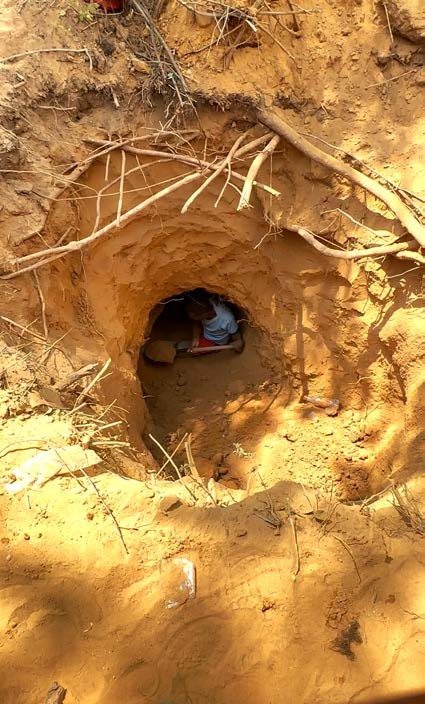
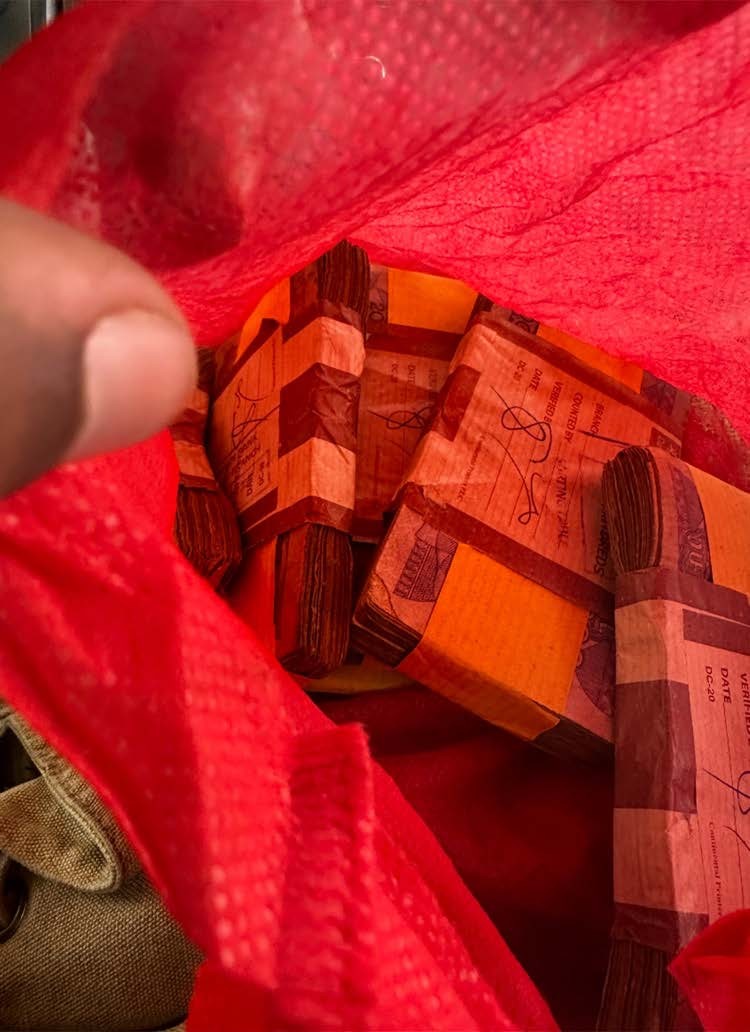
After a few hours at the mining site, we returned to town for safety reasons, as we had heard that the rebel group still sometimes visits the area at night. After looking at some stones in Hawassa, we returned to Addis Ababa on June 29.
I am glad I came back safely, yet I am happy that I did not miss the opportunity to witness what may be a once-in-a-lifetime adventure: the Abuloo tourmaline discovery and a gem rush in Ethiopia.
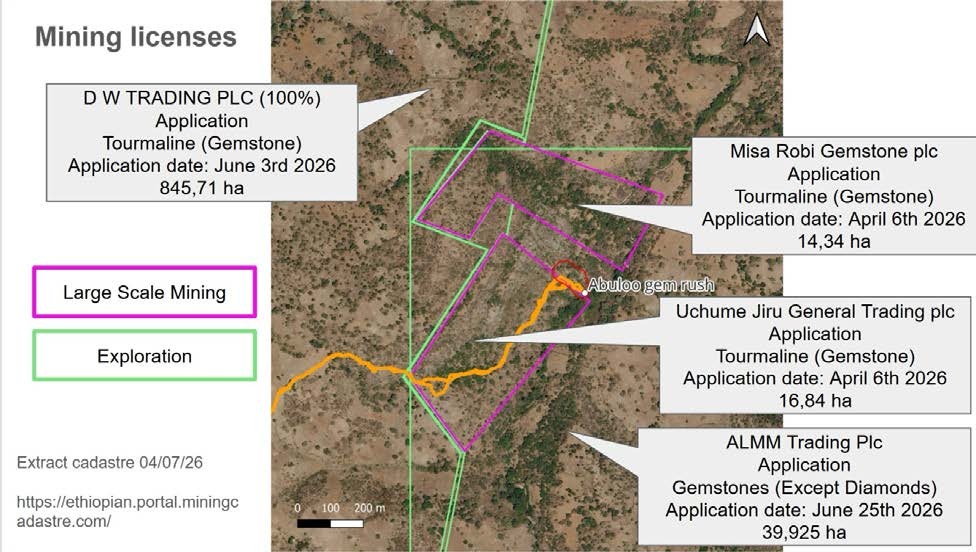
Moving forward, it seems that the Ethiopian government is taking steps to bring some regulatory order to the chaos of the Abuloo mine. At the Africa Gemological Training Institute, we feel ready to work alongside them by providing the technical guidance and structural support that may be needed. My wish, as an Ethiopian and as a gemologist, is to see this blessing harnessed as a powerful and lasting economic opportunity, one that genuinely benefits and elevates the people of Ethiopia.
At this stage, nobody truly knows where this gem rush will be one year from now. Time will tell.
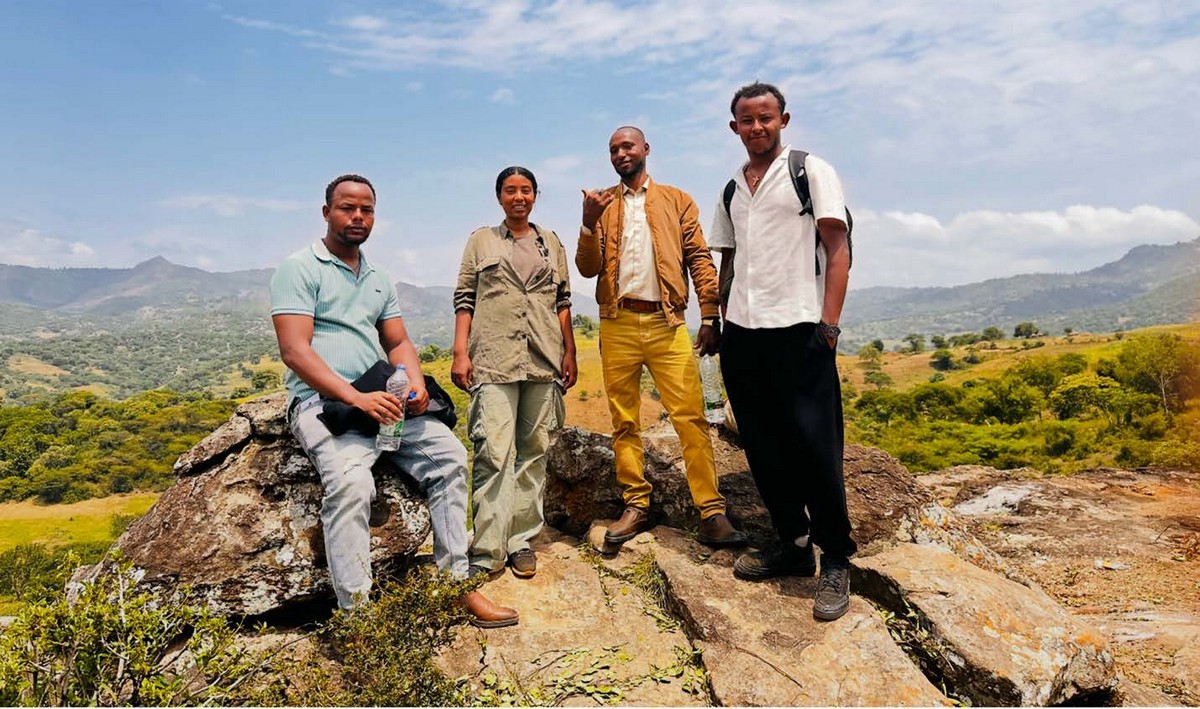
I would like to thank my friends Tewodros, Ashenafi, Samuel, Haji, and Yeabsira who helped me go on this field expedition and return safely, Mr. Ararsa who enabled me to see and document his stones, and my friends Leonard Cornuz and Vincent Pardieu for their support in preparing this expedition and writing this field report. Finally, I would also like to thank the people I met in Abuloo, Shakiso, and Hawassa for their welcome.
Visualizza questo post su Instagram
Visualizza questo post su Instagram
Article by Haimanot Sisay, edited by Vincent Pardieu, maps by Léonard Cornuz, originally published on July 4, 2026. Content translated and republished with permission on IGR.


