This content was first published on IGR – Italian Gemological Review no. 2 in 2017. The information provided here is therefore current as of the original publication date.

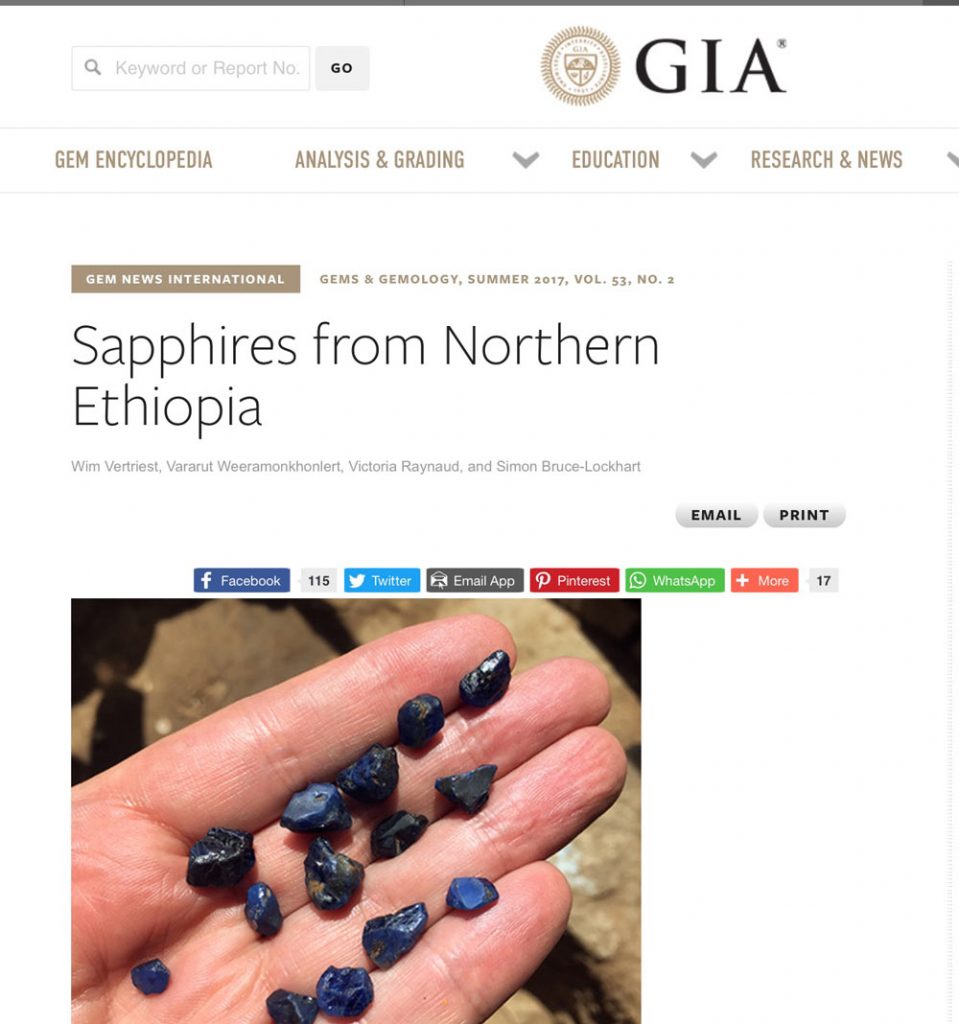
Also experts are amazed. After the impetuous introduction of the Ethiopian opal, always predominant (with 98% of total 231 million US$ of raw Ethiopian gems produced) was now the turn of emeralds and then sapphires, already efficiently reported by a detailed account of Gems & Gemology. They consist in secondary deposits situated in the northern region of Tigray in the proximity of the city of Chila (Awet, Tila, Hadush Simehden, Medego Kebele). Crystals have an average weight of about 2 grams with a high content of iron and UV-Vis-NIR spectra typical of basaltic deposites. Around 1000 artisan miners settled in the area and the first buyers arrived from Sri Lanka. At the moment, after the first semester in 2017, they are evaluating the yield of the Ethiopian sapphire after the various treatment and cutting processes. The poor relevance of Ethiopian precious rough materials is due more to the political turmoils of the country over the last decades than to the true solidity of the mining wealth. With an impressive average growth of the GDP by 11% from 2004, Ethiopia is liberalising and diversifying its economic structure, once dependent on the export of coffee. The potential is still not explored though the MoMPNG (Ministry of Mines, Petrol and Natural Gas) wants to carry out a survey that can attract investments to finance the extraction on a large scale. The geological formation shows a great variety of precious minerals (gold, platinum, tantalum, besides chrome copper, manganese and nickel). The Government adopted a policy that favours the influx of foreign capitals that help obtain permits expiring after twenty-five years, with tax reductions and royalties equal to 8% for the mining prospecting and exploitation. The greatest results were evidenced in the production of gold, close to 500 tonnes a year, and of opal (1500 kg in 2010, a growing trend) mainly destined to the Indian and cutting markets.
Gem News by Trasparenze News, published on Rivista Italiana di Gemmologia #2, September 2017.