This content was first published on IGR – Italian Gemological Review no. 5 in 2018. The information provided here is therefore current as of the original publication date.

Among the publications on precious stones, diamond is probably the most frequently represented one; in fact, there are countless books that have the “ultimate” gem as their main subject, the stone that has taken part to the history of mankind since its beginning.
So much has been written about this miracle of nature that, since its first appearance, it has amazed every human being mainly because of its extreme hardness, very soon considered as a perfect metaphor of indestructibility.
What can we expect then from the umpteenth publication about diamonds? Well, even though it may appear dense and overwhelming at a first sight this monograph proves to be an extensive source of information, probably the most heterogeneous and, at the same time, complete compendium I have ever dealt with.
A quick scroll to the list of the very authoritative contributors is sufficient to appreciate the more than 150-page volume and realize the importance of this masterpiece.
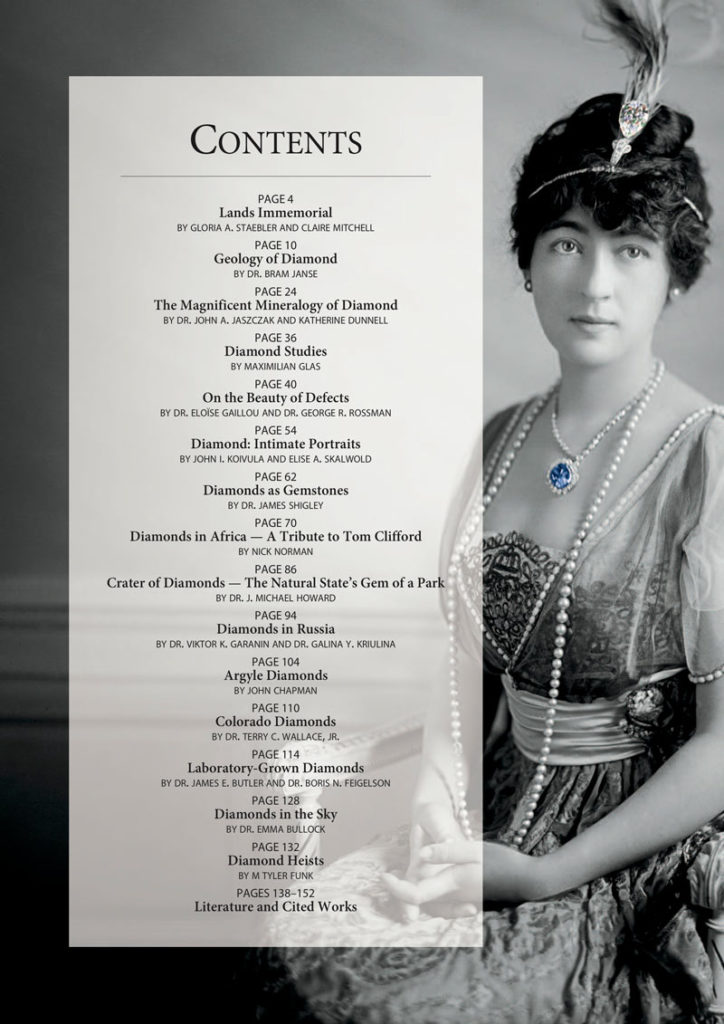
Take one out of the most significant names that come to mind when on the topic, and ask each one to contribute according to their technical expertise. Masterly balance all these contributions and you will have an ideal path that winds along science and culture, history and tradition, market and geopolitics, an extraordinarily exhaustive itinerary, yet never redundant and predictable, where the reader will be taken by hand to know the most compact carbon form through the careful observation of its most distinctive angles.
The journey starts by tracing in details the history of diamond, a section curated by Gloria Staebler (also editor of the monograph) and Claire Mitchell.
The two authors here are able to be formally impeccable without ever lingering on the superfluous or falling into a mere list of events; the wide range of anecdotes has certainly allowed a remarkable fluidity, without breaks or stumbles.
A similar monograph can not disregard a serious and exhaustive dissertation about the geological processes that led to diamond formation and to the mining procedures. Although the article by Dr. Janse provides a complete and detailed picture of the subject, as well as an interesting and precise statistical section about mining activities by country and over the years, numerous further references to the genesis of the Diamond can be found in the other contributions included in the book.
“The magnificent mineralogy of diamond” by J.A. Jaszczack and K. Dunnell summarizes in 11 pages, accompanied by superb photographs and diagrams, the concepts related to diamond’s structure and morphology, focusing on the comparison with graphite and on some usually less dealt with aspects, as twinings, fibrous and polycrystalline diamonds, surface characteristics and inclusions.
Maximilian Glas, with his “Diamonds Studies”, contributes to further explore the aspects concerning the morphology of rough diamond through a splendid summary table extracted from the “Atlas”, Der Diamant, eine studie (1911 – Von Fersman & Goldschmidt), focusing on the singular case of the re-entrant cubic morphology and presenting in full the particular rough specimen “Mohs Rose”.
Contrary to what usually imparts color to other gemstones, color in diamond in most cases is due to imperfections in the crystalline structure rather than to the presence of chromophore trace elements. These “defects” are today at the center of in-depth studies. Starting from the classification of diamonds by type, the article “On the beauty of defects” by Eloise Gaillou and George R. Rossman analyzes the causes of them and describes in a very effective and concisely way the defects related to the various “fancy color”.
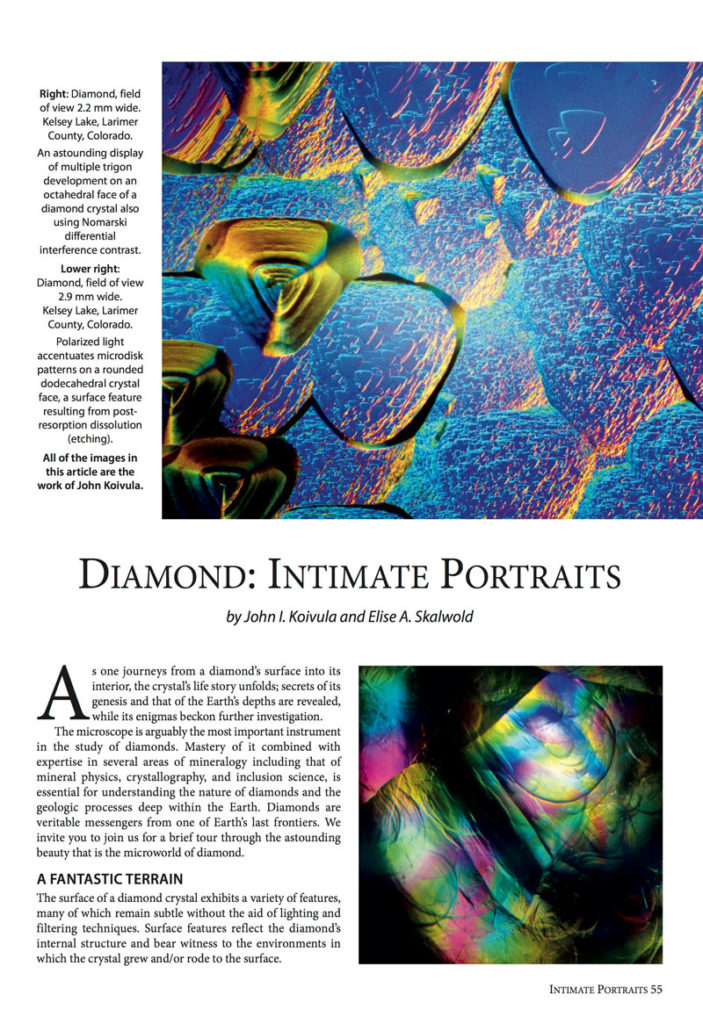
Inclusions? Who would you entrust with the task of describing in pictures the magnificence and the spectacular nature of the work that Mother Nature has accomplished within diamonds? A name for all, John I. Koivula, who, in “Diamond: Intimate portraits”, brilliantly assisted by Elise A. Skalwold, provides further proof of his incomparable mastery giving us a compendium of breathtaking macro photography that just by itself alone makes the volume worth buying.
And again, who could summarize in a few pages the importance of diamond as a gem better than Jim Shigley, wisely integrating a whole series of general notions, on cutting processes, and qualitative analysis methods? In his “Diamonds as gemstones” we also find a nice biographical homage to Robert M. Shipley, Sr., founder of GIA, Gemological Institute of America.
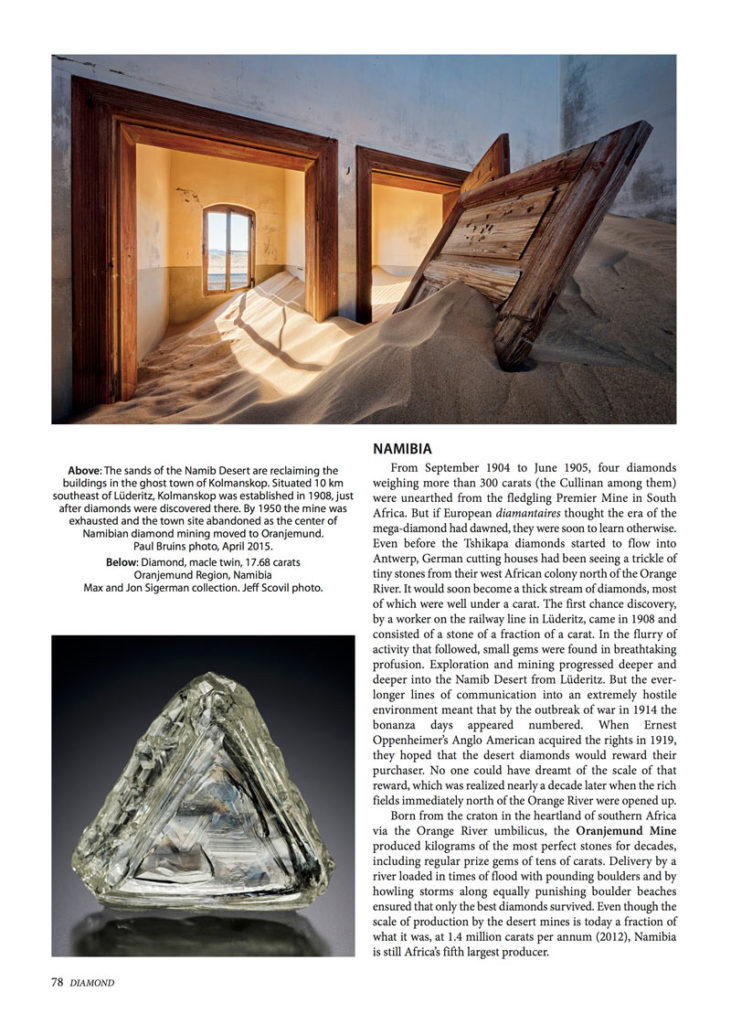
Then one has just to turn the page to find himself in Africa, since the end of the XIX Century the largest source of diamonds in the world; obviously a specific article dealing with the territories could not be overlooked, in addition to the already well-known and commonly available notions. The various deposits are examined in it by producing nations, with a tribute to Tom Clifford who discovered new techniques changing the method of geological prospecting over the entire continent (“Diamonds in Africa” – Nick Norman).
If Africa partially represents the past, Russia, especially after the relative downsizing of DeBeers and the consequent exploit of Alrosa, is now central in the diamond production landscape, and it is therefore not surprising to find a wide section specifically dedicated to it (“Diamonds in Russia” – Dr. Viktor K. Garanin, Dr. Galina Y. Kriulina).
And what about the insights? Aspects and topics often inexplicably overlooked in the most popular books about diamonds get a fair coverage in this monograph. So, if we want to get familiar with one of the most important, unique and productive mines in the world, Argyle in Australia, let’s follow John Chapman and he will reveal us all of the secrets of the most prolific diamond field of rare fancy reds, pink and not only.
Two articles are then reserved to US deposits. “Crater of diamonds” by Michael Howard illustrates the history, geology and tradition of perhaps the best-known mine site in the USA. The site in Arkansas is in fact the only diamond field on the planet where anyone, after paying the entrance fee, can challenge fate sorting the sand and the pebbles in search of diamonds, and keep them in reward for their good luck.
The second contribution, “Colorado Diamonds” by Dr. Terry D. Wallace, Jr. tells us how a fraud orchestrated at the end of the XIX Century by a couple of cunning scammers claiming the presence of rich deposits in the western United States to dupe investors, resulted ironically into a discovery, in the mid-60s of the last century, of a real deposit that, nonetheless never took off but has since remained a mere geological curiosity.
At this point, a contribution on the production of synthetic diamonds should necessarily be offered “Laboratory-grown diamonds” by Dr. James E. Butler and Dr. Boris N. Fiegelson traces with pragmatic care one of the most daring technological challenges of the last century, using effective schemes, descriptive tables and photos of considerable impact.
Finally, to complete the work, two singular articles: “Diamonds in the sky” by Emma Bullock that introduces us to the intriguing world of extraterrestrial diamonds and “Diamond Heist” by M. Tyler Funk, a very interesting anecdotal collection of the most famous worldwide robberies and thefts concerning diamonds. The monograph then ends up with a rich and useful bibliographic section.
In conclusion, “Diamond – The ultimate gemstone” is not only a complete, organic and comprehensive monograph about the queen of gems, it is also a splendid and very rich photographic kaleidoscope whose content is never banal, in which even the most skilled experts will find interesting notions rarely published elsewhere but that, thanks to the straightforward and never affected narrative technique, can be easily enjoyed even by amateurs.
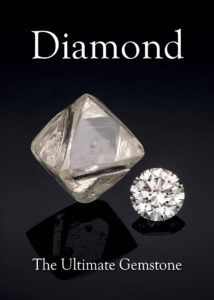 “Diamond – The ultimate gemstone”
“Lithographie Monograph” No. 19
Various Authors
Published in Arvada, Colorado (United States) by Lithographie LTD in 2017.
152 pages, dimensions A4
ISBN: 9780983632351
Available on www.lithographie.org for the price of $ 40.
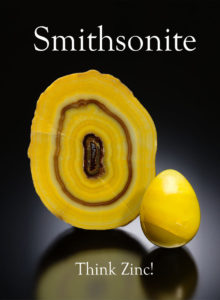
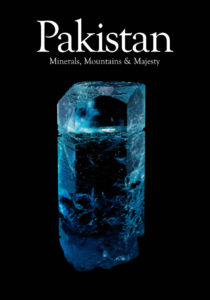
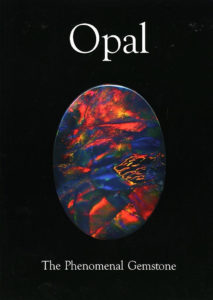
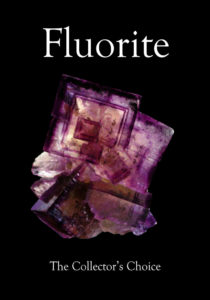
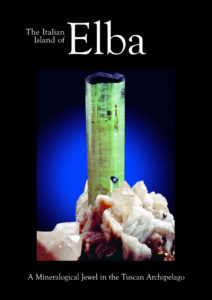
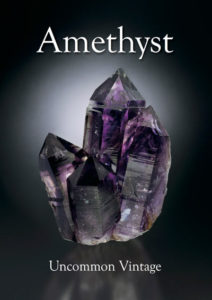
About the “Lithographie Monograph” series
Eighteen years ago, mineral dealer and small business consultant Gloria Staebler agreed to store a small pile of flats of books and magazines for German publisher Christian Weise (Lapis) in her Tucson storage unit. A few of those flats were inadvertently mixed with her mineral flats, and when Gloria returned home to Connecticut with them, she was astonished to find that there as demand for them, even thought they were in German. Negotiations with Weise ensued and Lithographie Ltd. and it’s Mineral Monograph series was born.
The initial intent had been to simply translate the beautifully-illustrated German series extraLapis, but Gloria quickly learned that the German series was edited for a German audience but the international, English-speaking edition needed a broader approach. New authors, editors, and photographers were brought in to supplement and update the first books in the English-language series. Over time, the monographs morphed into an original series that like its German counterpart, still relies on unparalleled imagery and print quality to covey the science and aesthetics of minerals and gemstones.
As the monographs have evolved, so too has the mission of Lithographie, Ltd. which began as a means to serve the mineral collecting community but which in recent years has discovered an appetite in the diamond and colored stone markets for the historical context, accessible science, and unique perspective that the monographs offer. The company’s awakening to the potential for its publications in gemstone community has stirred discussion about issuing updated editions of some of the popular but now out-of-print volumes in the series, including Emerald (No. 2) and Opal (No. 10). The 20th monograph in the series, Rubellite is expected to be released at the 2019 Tucson show.
By Alberto Scarani, published on IGR – Italian Gemological Review #5, Autumn 2018