This content was first published on IGR – Italian Gemological Review no. 12 in 2021. The information provided here is therefore current as of the original publication date.

Is it true or not that gemology (gem/logos) has only one answer to give: what is this gem (or supposed gem) that I have in front of me? Yes, it is. While I’m really a fan of the Logos challenge, namely the well-reasoned collection of other multifaceted answers, let’s do this now: set aside the excess of curiosity. Pity, the Logos was very poetic, wasn’t it? Oh yes. But let’s ground our feet and focus on the gem that is urging our first and decisive answer: what is it?
First of all, a gemologist is supposed to do nothing more or less than correctly disclose the chemical and physical properties inherent to the “gem”, subject to investigation. This is where I wanted to get to. While we are playing the poets with countless doors opened by the Logos, in Italy there are people who are busy pleasing unscrupulous sellers and issuing improper documents that qualify a piece of junk as a gem. We open our wings and dare to discuss about high systems, they write what they like. We attempt to make observation and characterization a rigorous exercise, and they thrive on “do-it-yourself reports”, exercises in their free, arbitrary, unsubstantiated, deceptive prose.
Please do not get me wrong: I do not question the work and reports of people who work with discernment and fairness, whether they belong to large institutes or they work on their own in less renowned laboratory. Those who are in line with the scientific literature, those who update their methodologies, those who are putting their face to the test, should not feel called into question. Sure, there are discrepancies, different approaches, divergent reference scales and grading systems. IGR has made the borderline between objectivity and unavoidable subjectivity of grading criteria a permanent topic of interest. But this is again Logos.
Wherever there are scientific scruples and professional conscience there will never be damages, just temporary difficulties that a networked community will be able to clarify. No, as far as what we see in Italy, I launch a specific and clear “j’accuse” against the amateurishness, the lack of competence, the approximation, the groundlessness, often accompanied by arrogance, in these reports written by people possessing no titles and – if they have them – certainly no conscience. Whoever has knowledge and sense of responsibility must stop turning away and tolerating such malpractice. The skilled and respectable figures in gemology, the serious and trained analysts should make their outrage heard.
How did we get to this point in our country? Good question, here are a few pointers to answer it.
What is lacking are trusted and reliable bodies in charge of verifying the qualifications of people who sign documents pretending to be gemological statements. The pretension (based on what?) of “writing” a descriptive document is accepted, while people entering the trade and the whole business would rather need to learn first how to “read” it in detail. Without contrasting, but even encouraging, the race to “writing”, it is as if we were suggesting to a high school student to learn directly how to compose novels and symphonies rather than studying the basics of grammar and harmony.
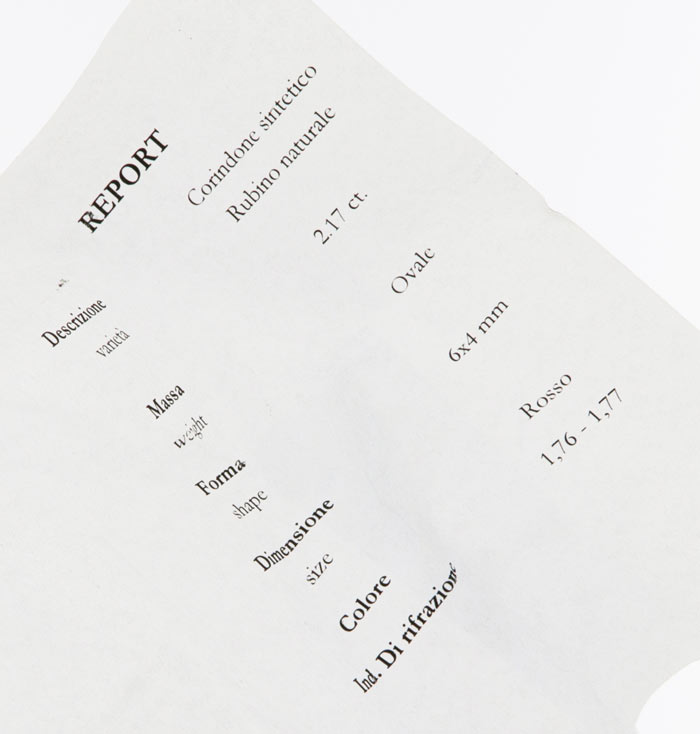
So you don’t fall into shared rules and protocols appropriate to qualify a document as reliable or NOT reliable. What instrumentation do these people have at their disposal? What qualifications have they earned?
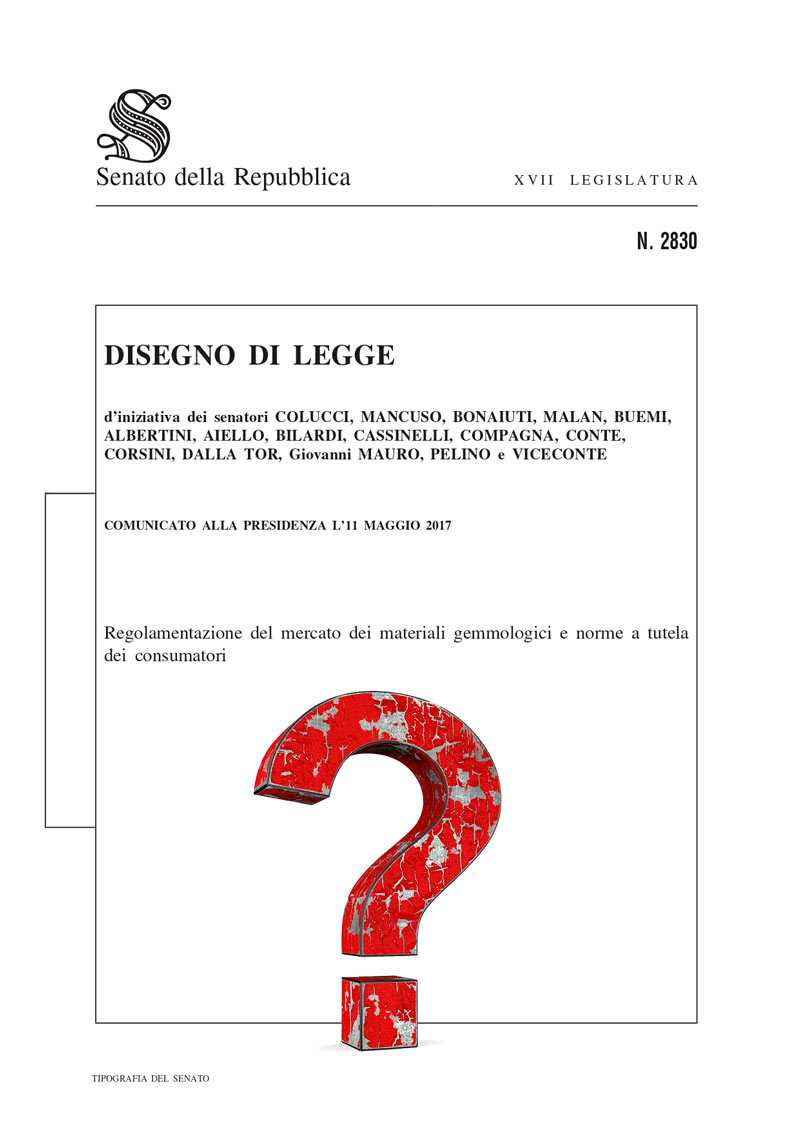
Our Italian Parliament has buried a serious regulatory draft bill that would have regulated the gem trade and would have implied an assumption of responsibility by the selling parties. Why such a comprehensive and advanced bill has been abandoned, while very experienced and knowledgeable gemologists, as well as authorities of the industry involved, had responsibly agreed upon, in spite of their different backgrounds?
Why haven’t the most influential and responsible trade associations or individual entrepreneurs – after the proposed law failed – adopted a fair disclosure voluntary code of conduct for materials offered for sale? It is necessary to build an alliance with consumers, to regain their respect, to heal the damage caused by carelessness or bad faith.
Conclusion. A Neapolitan proverb goes: “the fish stinks starting from its head”. Bringing back a level of decency and seriousness in certificates and reports has to be a professional responsibility of those who do this job with qualifications, experience, skills and fairness in the interest of the citizen-consumer. If we do not react immediately, we will end up being accomplices of the vast handful of “do-it-yourself graders”.
By Paolo Minieri, published on IGR – Italian Gemological Review #12, Summer 2021