This content was first published on IGR – Italian Gemological Review no. 14 in 2022. The information provided here is therefore current as of the original publication date.

For decades, the Angolan diamond industry, set in motion under the USSR assistance in the 1970s, was monopolized by an elite protected by the former political leadership. Most of Angola’s exports were channeled through Dubai, and only recently has collaboration with Antwerp increased.
The new national leadership promised a new governance of the mineral resources, and now President Lourenço’s Angola is launching a Diamond Exchange in Luanda, possibly as an affiliate of the WFDB (World Federation of Diamond Exchanges, 30,000 members).
A veteran of the diamond industry, Peter Meeus, who not coincidentally activated and directed the Dubai Exchange for years, has been appointed to coordinate the operation. In November 2021 at the new diamond center in Saurimo (about 800 km east of the capital Luanda) Meeus, demonstrating his already excellent Portuguese, explained in more detail this project that should provide a country that is expected to become the second world’s diamond producer by 2030, with a world-class marketing infrastructure. The Luanda Bourse is the second in Africa after the historic South African DDCSA, which, however, was conceived in a very different context, functioning as a secondary market for the one-time monopolist De Beers.
According to Meeus, the traditional model of the diamond bourses, based on many brokers intermediating feverish transactions, is now outdated. “Tenders” and “auctions”, these are the new key words, within a business model that since 2014 is becoming more and more popular because it efficiently responds to the needs not only of traditional houses auctioning rough diamonds but also of many companies that are independently placing their rough gemstones on the market. In Antwerp alone about 120 tenders are held per year, in Dubai in 2021 approximately 60.
Work is underway to get Dubai off the ground and to secure the assistance of top-notch international tender houses but first it will be necessary that sorting and evaluation capacity are upgraded to international standards.
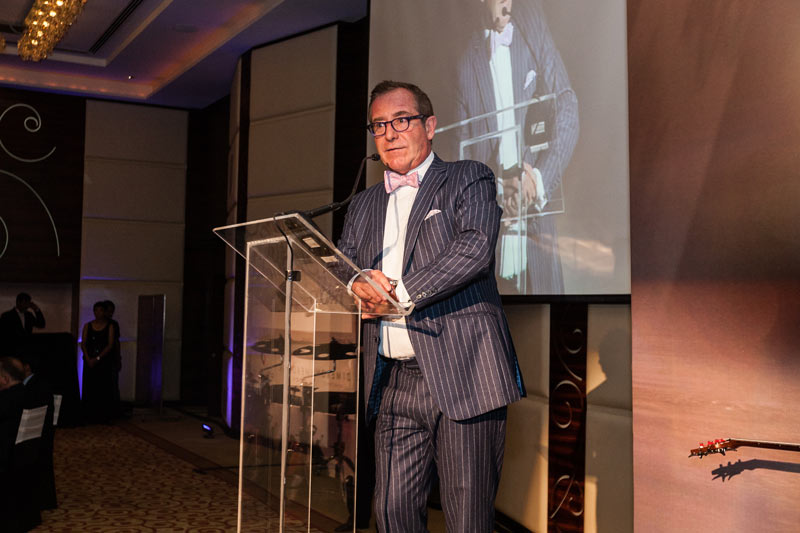
But, in the end, will buyers ultimately choose Luanda over the sophisticated and well lubricated traditional diamond hubs? «To somebody who lives in Surat in India – Meeus declared to Rough and Polished – going to Antwerp is no less complex than going to Angola, especially during the COVID-19 period. The connections to Luanda are quite good. We will have the use of an entire floor for tenders where people can come and visit and inspect the goods in a dedicated environment».
What will be the sale policy in Luanda? The ability to produce a clear and easy-to-understand offer will be decisive. «It can be under a centralized selling system similar to the large producers De Beers and Alrosa. Or is that only a wishful thinking bearing in mind the different ownership structure of the mines? The answers lie in the ability to assort and aggregate diamonds from different mines into a product. For smaller mines eventually it could become clear that they will get better value for their goods – that by selling in bulk».
As a first tangible move, a contract for the so-called deep boiling was awarded, a process that can result in a value addition of about 1.2 billion dollars or more, Meeus noted. For buyers to access the lots in an orderly manner and properly grade the material, acidification must be used, a process by which all types of rough mining diamonds are washed and cleaned to remove all dirt and impurities to be subsequently offered in the proper way.
The launch of the Luanda Diamond Exchange, also includes the creation of an independent academy that will train young qualified staff, managers and supervisors who are expected to take on jobs of high responsibility.
Gem News published on IGR – Italian Gemological Review #14, Spring 2022