This content was first published on IGR – Italian Gemological Review no. 14 in 2022. The information provided here is therefore current as of the original publication date.

The Australian pearl industry produces 15% of the world’s South Sea Pearls and 30% of its total value ($195M, 2018), while Indonesia emerges as the largest producer in quantity, contributing for about 50 percent, or some five to six tons. The Philippines is also increasingly competing in the market still dominated by Hong Kong as a key commercial hub for the distribution of cultured pearls.
In this market context, the Australian pearl farmers have been hit hard by an aquatic disease, a market-destroying financial crisis, natural disasters and COVID-19. The last decade has been a difficult time for cultured pearls, marked by the risk of overproduction as already recorded in the case of freshwater and Tahitian pearls.
After difficult seasons, the key word today is innovation. And so, in a world first, the Australian producer of South Sea pearls, Pearls of Australia, has entered the world of blockchain. This step was taken in collaboration with Everledger, a specialized company that has pioneered blockchain applications for diamonds and color gems. Pearls of Australia, awarded as Australian farmer of the year in 2021, grows pinctada maxima oysters across three pearl farming operations in Western Australia and NSW for three generations.
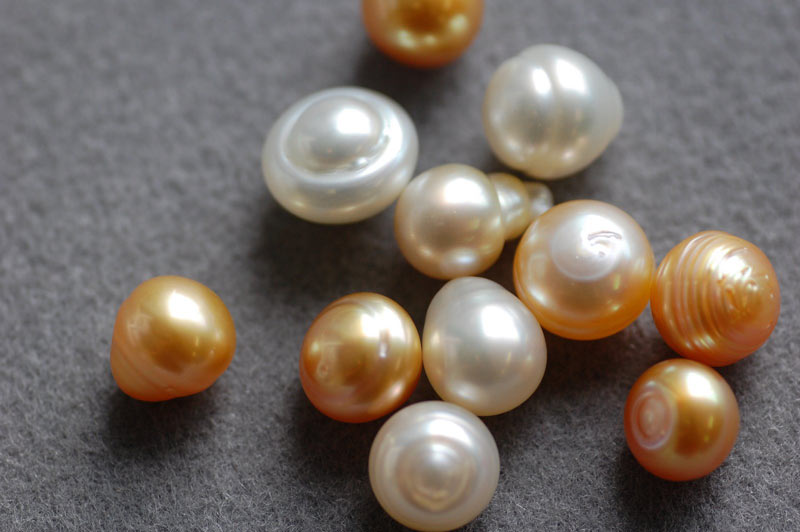
«Where diamonds needed to counter conflict and human rights issues, pearls needed a platform to share their unique journey of harmonious collaboration between man and living nature» Everledger’s CEO Leanne Kemp has declared. Seemingly, this consideration appear to support the assumption that the initiative responds more to marketing needs rather than just the supply chain transparency, though also the origin, the ethical practices as well as the disclosure of any treatment and any ownership changes for generations to come are all data recorded by the Blockchain.
James Brown, CEO of Pearls of Australia, has a market oriented vision too: «We decided to embark on this provenance journey about a year ago – he said – after witnessing years of pearl value eroding in the eyes of consumers when the reality is that producing good quality pearls is getting increasingly difficult».
Apparently, one of the purposes of the digital register is the necessity of separating the pearls produced by the pinctada maxima oyster in Australia from those from Asian competitors. It is a fact that on the market the lots are frequently offered undifferentiated. Therefore the Blockchain applied to pearls is intended to protect and certify geographical origin too. Will there be any physical tracking such as laser inscription and nanoparticles as is being done in the diamond and colored gem industry? It seems that the system does not require any physical addition to the pearls. The univocal identification is based on stored and digitally scanned high-quality images as well as on precision-based descriptors of pearls’ dimensions and characteristics.
Gem News published on IGR – Italian Gemological Review #14, Spring 2022