This content was first published on IGR – Italian Gemological Review no. 18 in 2024. The information provided here is therefore current as of the original publication date.

On November 9, 2023, the European Parliament issued a Resolution (2023/2905 RSP / P9_TA 2023-0397 titled “Effectiveness of EU Sanctions on Russia”. Let’s go straight to the point, in paragraph 17 we read the following: «Calls on the Commission and the Member States to expand the sanctions to include a full ban on the marketing and cutting of diamonds of Russian origin or re-exported by Russia in the EU; calls for the EU and its Member States to sanction the state-owned company Alrosa and to broadly introduce systems to track the origin of diamonds based on new technologies»(1).
Now, you may ask, what’s misleading about all this?
European Sanctions on Russian Diamonds: the Cricket reads the text and deems it utterly ineffective
For a better understanding, I recommend a careful reading of the introductory section of the above-mentioned resolution, marked from D to M. There is a thorough explanation, complete with figures, which shows that all the sanctions imposed on Russia so far, especially those related to gas and oil, have proven to be almost useless. The accomplices in this endeavor are not only wheeler-dealers such as Turkey, China, India and the rest of the BRICS gang (an acronym for the prominent group Brazil, India, China, South Africa) and their cohorts, but also a number of member states (EU) as well as representatives of the industry working there.
Cheers, prosit, à la santé, na zdrowie! Honestly, if that’s not mockery, what is? Meanwhile, as the Italian comedian Totò used to point out, it’s we who are footing the bill (the cost of all the resulting implications). So, after “reiterating”, “emphasizing”, “recalling”, “inviting”, “expressing deep concern”, “urging”, “condemning”, “instructing”(2) on a plethora of issues, the ethics of which only a simpleton could question, but the practicality of which is about as effective as drawing a “two of clubs” in a game of hand bridge, what exactly are our egghead representatives of the European Parliament doing?
They’re now diving headfirst into the world of diamonds (if from Russia), unleashing their decrees in rapid succession without regard to whether their directives can be practically applied by those who toil tirelessly day in and day out, doing the grunt work necessary to keep the all thing running smoothly. This is especially true when it comes to people involved in the diamond industry, including cutters, wholesalers, importers, jewelry manufacturers, jewelers, goldsmiths and more. And it is at this point that the pitfalls and associated storm clouds looming on the horizon become apparent, weighing heavily on the industry as a whole. Let’s be honest, my friends. On whose shoulders do you think the full weight of the resulting responsibilities and consequences will ultimately fall?
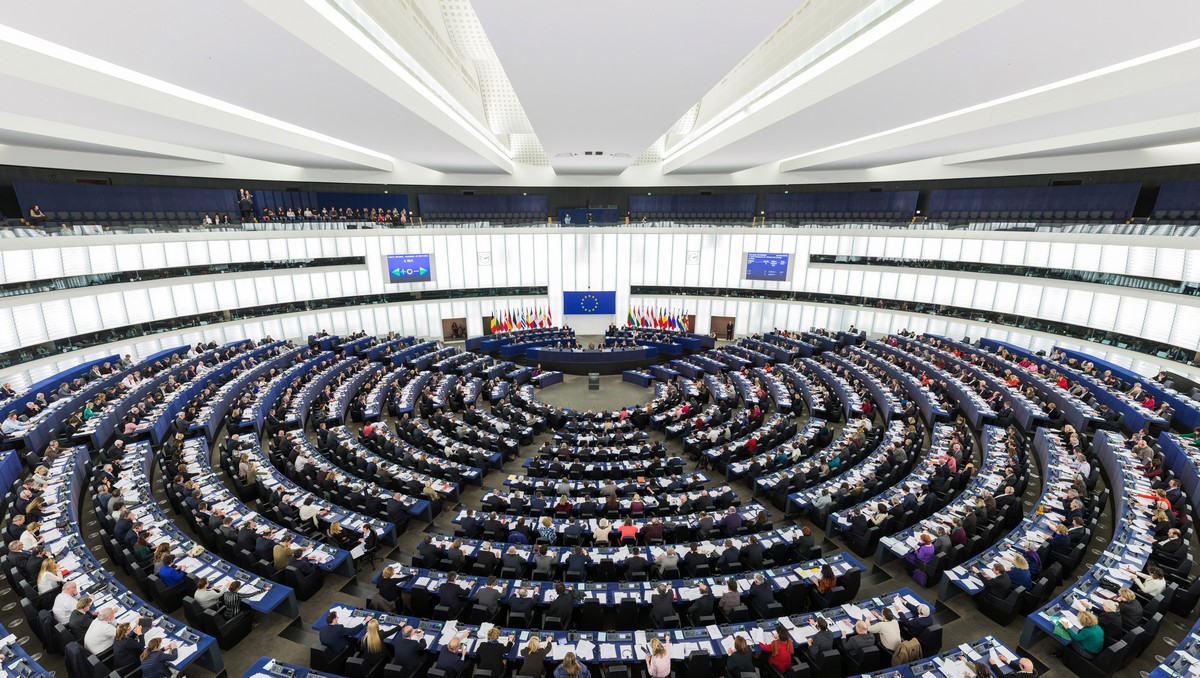
It’s unclear who will track them down and how. But, dear friends, one thing we do know is that it’s you who will have to foot the bill
This will result in additional costs, including an inevitable increase in the price of the white stones that we so dearly cherish. The question is, who will foot the bill? As Martin Rapaport has pointed out(4), for small and medium-sized companies that do not have the resources to implement supply chain controls through audits, these costs will be far from insignificant. Without clear guidance on the implementation of the ban, they will be in the dark and in a precarious position.
After being taken for a ride, we are being put salt in the wound because there is no clear indication of how this will be implemented. And finally, what you gentlemen are hinting at, after much dithering, which is traceability through the blockchain system, has so far proved inapplicable to diamonds, except in two emblematic cases that do not apply to our situation. And therein lies the twist that we will expose below.
Here is the first claim: «The widespread introduction (who should do this?) of a tracking system (one of how many options? How many could we choose from, for heaven’s sake?) for the origin of diamonds based on new technologies» (and what are these new technologies, and why are they not specified? Perhaps there is a lack of confidence in their effectiveness and a reluctance to commit). This kind of beating around the bush will give you an idea of the scale of the problem. There are a number of other elements which suggest that we are entering a quagmire. These include debates that flared up at the end-of-year celebrations (‘23), involving the World Federation of Diamond Bourses, the Belgian government, the Indian Gem & Jewellery Export Promotion Council and others, on implementation details that mainly concern the industry(3)(8bis). Not to mention what Martin Rapaport envisaged in his famous price list of 23 September 2023(4).
It’s a matter of phact that in Brussels they are diving headlong into Russian diamonds, even before the G7 joint statement of December 6, 2023 released by USA, Canada, France, Germany, Japan, Italy, UK, plus the associated EU, all unanimous in their intention to impose sanctions, but not on how to enforce them or how to do so within their own borders(13)(15), and after the US-led ban of March 2022(4bis). It really seems like there’s a desperate race to see who can get there first with the fiercest face(4quinque). Is this to be worn as a badge of honor? As a mere exercise in propaganda, or what?

EU to Restrict Access. Ban on Russian Diamonds Over One Carat, Regardless of where they have been manufactured
In short, the European Union and its member state Belgium took immediate action quickly to ban direct imports from Russia. This ban will apply not only to rough and polished diamonds (excluding industrial diamonds) as of January 1, 2024, but also to diamonds of one carat or larger mined in Russia and then cut and polished elsewhere as of March 1, 2024(4bis).
What about diamonds of 0.50 carats and larger set in finished jewelry? And what about synthetic diamonds? The answer seems to be a little vague — they say yes, no, or maybe. There’s a possibility that a clever importer could try to pass off “bloody” natural Russian diamonds as synthetic, so it could get a bit tricky(4ter)(8bis).
As for the tracking system, the trumpeters from the rooftops announce the advent of a “robust mechanism of certified and verified traceability” as of September 1, 2024(4ter). However, there’s a noticeable reluctance to comment on how feasible and effective this system will be(4quater).
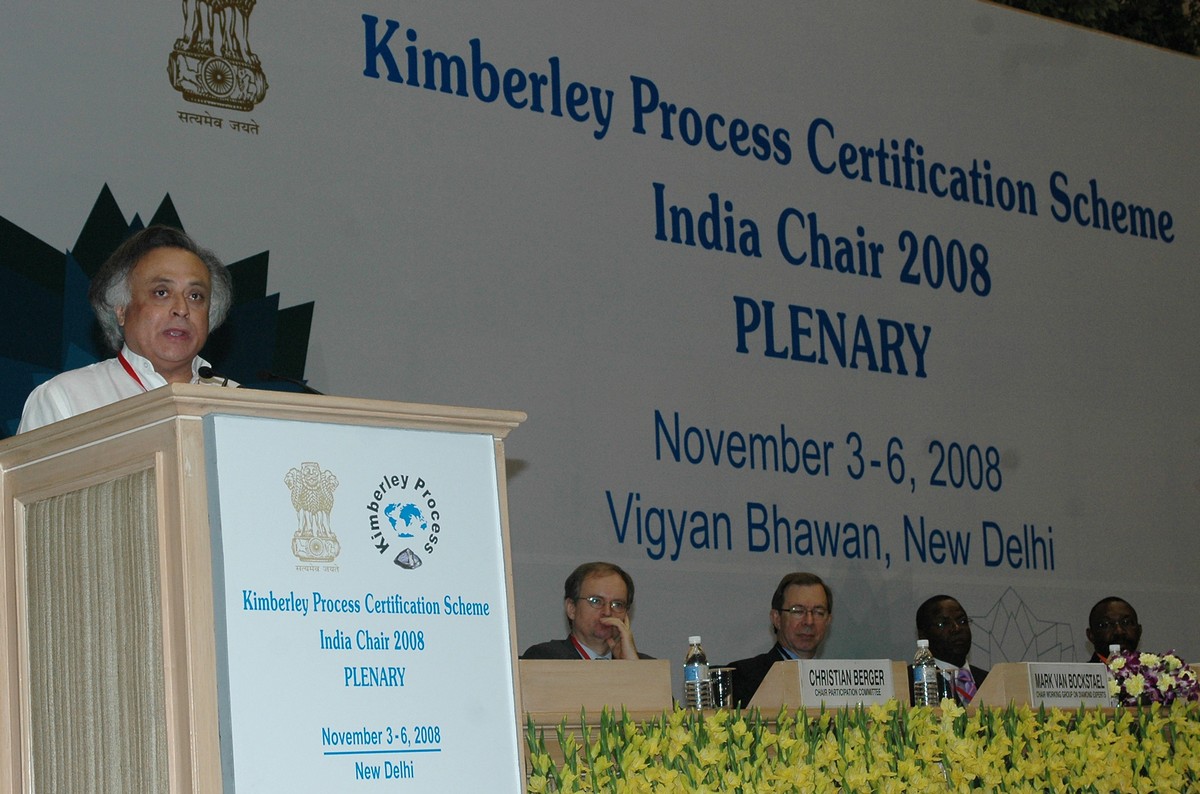
Why is this? Perhaps because this is where the absurdity becomes apparent. The sanctions on gemstone imports (all of them) are impractical. This is illustrated by the deceptive practices that characterize certain aspects of the crumbling KPCS (Kimberley Process Certification Scheme)(5) after 20 years of ineffective effort(6). It is also illustrated by the unsuccessful 2008 U.S. embargo on Burmese gems imported under the guise of being Thai, Sri Lankan, or Indian, even though it was well known, even in the inner circles of the trade, that 95% of the finest rubies and jade at that time came exclusively from Myanmar (Burma)(7). There are quiet discussions in the confidential chambers of the high-end diamond dealers, suggesting that Belgium could be given the responsibility and challenge of becoming the central hub for all rough diamonds worldwide(7bis)(7ter). Allegedly, could this serve as a compensation for the four billion euro hit — the turnover in Antwerp linked to the import of Russian diamonds — which will now be subjected to the sanctions guillotine(8)?
Fireworks in Surat, where they are testing the efficiency of our blockchain-based process to rule out Russian diamonds (sic!)(8bis)(8ter)
Celebrations are in full swing in Surat, India, where 90% of the world’s diamonds are produced. This industry boasts a staggering $30 billion turnover through global imports and exports, involving major players such as the US, China, Japan, Antwerp — yes, you read that right — and Dubai, and providing a livelihood for 1.5 million people(9). On December 17, a colossal diamond bourse was unveiled to complement the existing one in Mumbai. Think about this: 4,700 offices spread across 9 interconnected buildings, each rising to 15 floors, and totaling a whopping 613,160 square meters — surpassing the size of the Pentagon in Washington(10).
Do you think they’d let anyone make off with the steaming pot of soup? Certainly not, my friend!
But just to give you a glimpse of the challenges that may face the implementation of these resolutions and potentially undermine their practical execution, let’s get to the point, as promised. And the crux of the matter has a name and a surname: the Blockchain Tracking System for Diamonds. So far, this system has only been implemented in the operations of the first two of the three major companies that control 70% of the global diamond mining market: the British, formerly Anglo-South African, Anglo American (which holds the majority stake in De Beers), the Russian Alrosa (which contributes to a third of global production), and the Anglo-Australian Rio Tinto.
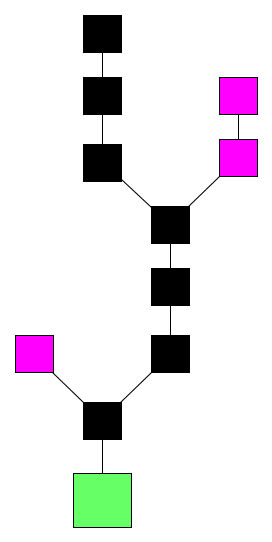
Why only the first two? It’s simple. They’re the only companies that can oversee the entire supply chain, from the mine to the finished cut to the primary distribution channels. Everyone else, for one reason or another, can’t. So what does a blockchain system (a chain of linked blocks) rely on to work? A quick look at the graphic representation of the blockchain with the blocks of the main chain and some definitions from Wikipedia under the entry “Blockchain”(11) will immediately unravel the mystery, as well as the rationale behind the decision of the Euro-Land and the G7 Resolution.
With blockchain there is no escape. Do you think the Russians are willingly going to add themselves to the list of ‘bad guys’?
«Blockchain: a data structure consisting of growing lists of records, called ‘blocks’, that are securely linked together using cryptography. Each block contains a cryptographic hash of the previous block, a timestamp and transaction data. Because each block contains information about the previous one, they effectively form a chain, with each additional block linked to the previous ones. As a result, blockchain transactions are irreversible — once recorded, the data in a particular block cannot be changed retrospectively without altering all subsequent blocks».
Got all that? Good. Now let’s ask some direct and simple questions:
Do you think Alrosa, the world’s largest diamond producer, accounting for 95% of Russia’s total production (a third of the world’s total) and owned by the Russian state, will enter data on its production into the blockchain in order to impede the flow of its diamonds, which generate $4.5 billion a year?
And what about India, which has excellent trade relations with Moscow and cuts 90% of the world’s diamond production? What data will it put on the blockchain if it has to disclose the origin of those octahedral and rhombododecahedral crystals destined for its cutting and polishing industry? And if India is forced to do so, how will the Indian industry behave?
Will the holy Trimurti miraculously resurrect the long-dead Golconda mine to fill the void? Will it source from countries that are already part of the De Beers chain and closely linked to it, or will it turn to third country producers who might miraculously multiply the yield of their deposits — like the loaves and fishes of the biblical parable?
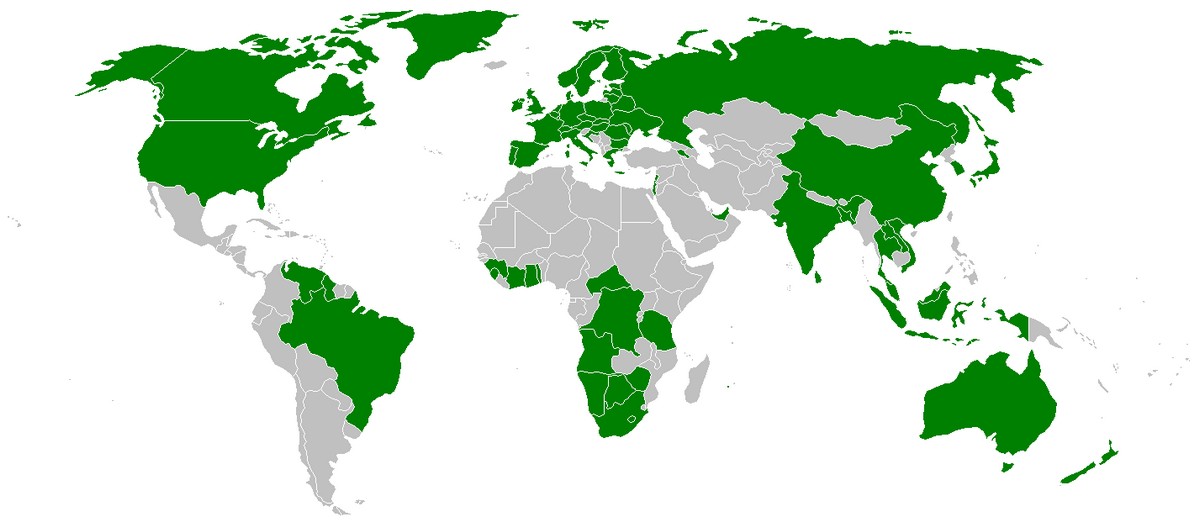
Or what if it turns to those African countries that even the Kimberley Process has failed to curb for more than twenty years(12)? Or will the Dragon, a close ally of the Bear, step in to set things right in its own way? We’d love to see Ursula ordering Xi to clash with Vladimir!
And if, to cut the Gordian knot, they decide to exempt India from declaring the origin of diamonds, allowing it to lead the blockchain blocks, what would you call this manoeuvre? And if «registration — which should take place as close as possible to the moment of export from the country of origin or, failing that, at the mine — the Diamond Bureau in Antwerp (Belgium) will issue certificates (to be entered into the blockchain registry)» (as they’ve put it in black and white)(13), how would you interpret it? A mockery, perhaps?
What if the unfolding narrative mirrors the US sanctions imposed on Myanmar (Burma) a few years ago, as mentioned above? In that scenario, the main beneficiaries of the ensuing chaos and emotional upheaval caused by the sanctions — apart from those who used third party ‘cover’ channels to disregard ethical concerns — were international brands. Well-known names such as Tiffany and Cartier deliberately went beyond the restrictions imposed, even exceeding the US State Department’s mandates. In doing so, they turned the situation into a successful strategic marketing tool.
What does this mean, you may ask? Does it suggest that these companies, confident in their alternative sources of supply, exaggerated their professed ethics to the extent that they attracted an even larger audience of ethically outraged individuals with wallets flexible enough to indulge in shopping at Tiffany and Cartier, ça va sans dire(14)? What can be said? I leave that to you. Ethics mocked or ethical mockery?
Yours faithfully,
Bad-Mouthed Jiminy Cricket
Notes
(1) European Parliament resolution of 9 November 2023 on the effectiveness of the EU sanctions on Russia (2023/2905(RSP)) – https://www.europarl.europa.eu/doceo/document/TA-9-2023-0397_EN.html
(2) Ibidem (1).
(3) https://www.jckonline.com/editorial-article/g7-russia-diamond-ban-jewelry/
(4) https://www.rivistaitalianadigemmologia.com/en/2023/11/15/trade-should-not-be-given-the-duty-of-enforcing-sanctions-against-russia-rapaport-says/ – For your convenience, we quote: «[…] on the challenges associated with the implementation of measures proposed by the Group of Seven (G7) countries that aim to impose further restrictions on Russian diamonds […] the responsibility for implementing any sanctions program rests with the government, not with the industry […] the primary authority in any government sanctions program lies with customs offices, rather than the industry operators […]»
(4bis) https://www.jckonline.com/editorial-article/g7-russia-diamond-ban-jewelry/ e https://agta.org/everything-you-need-to-know-now-about-russian-diamonds-to-stay-compliant-in-2024/
(4ter) https://www.jckonline.com/editorial-article/g7-restrict-russian-polished/
(4quater) https://www.jckonline.com/editorial-article/g7-russia-diamond-ban-jewelry/
(4quinque) https://www.jckonline.com/editorial-article/g7-sanctions-blockchain-diamonds/
(5) https://www.rivistaitalianadigemmologia.com/en/2023/11/15/trade-should-not-be-given-the-duty-of-enforcing-sanctions-against-russia-rapaport-says/
(6) https://en.wikipedia.org/wiki/Kimberley_Process_Certification_Scheme
(7) https://www.ruby-sapphire.com/index.php/component/content/article/10-articles/874-burma-gem-embargo-the-gem-trade
(7bis) https://www.jckonline.com/editorial-article/g7-restrict-russian-polished/
(7ter) https://www.jckonline.com/editorial-article/podcast-jewelry-district-ep-112/
(8) Il Giornale, December 30, 2023, pag. 16
(8bis) https://www.jckonline.com/editorial-article/g7-russia-diamond-ban-jewelry/
(8ter) https://www.jckonline.com/editorial-article/podcast-jewelry-district-ep-112/
(9) Il Giornale Economia, January 4, 2024, pag. 20
(10) https://www.igi.org/surat-diamond-bourse-surpasses-the-pentagon/
(11) https://en.wikipedia.org/wiki/Blockchain
(12) https://en.wikipedia.org/wiki/Kimberley_Process_Certification_Scheme#Expulsion e https://en.wikipedia.org/wiki/Kimberley_Process_Certification_Scheme#Global_Witness
(13) https://www.jckonline.com/editorial-article/g7-sanctions-blockchain-diamonds/
(14) Jewels of Responsibility from Mines to Markets: Comparative Case Analysis in Burma, Madagascar and Colombia – A Thesis Presented by Sarah Wade Dickinson De Leon to The Faculty of The Grduate College of The University of Vermont, May 2008 – https://scholarworks.uvm.edu/cgi/viewcontent.cgi?article=1064&context=graddis
(15) https://www.jckonline.com/editorial-article/russian-diamond-sanctions-march/
Counter-Current Gemology from the “Bad-Mouthed Jiminy Cricket” Luigi Costantini, published on IGR – Italian Gemological Review #18, Spring 2024