This content was first published on IGR – Italian Gemological Review no. 3 in 2018. The information provided here is therefore current as of the original publication date.

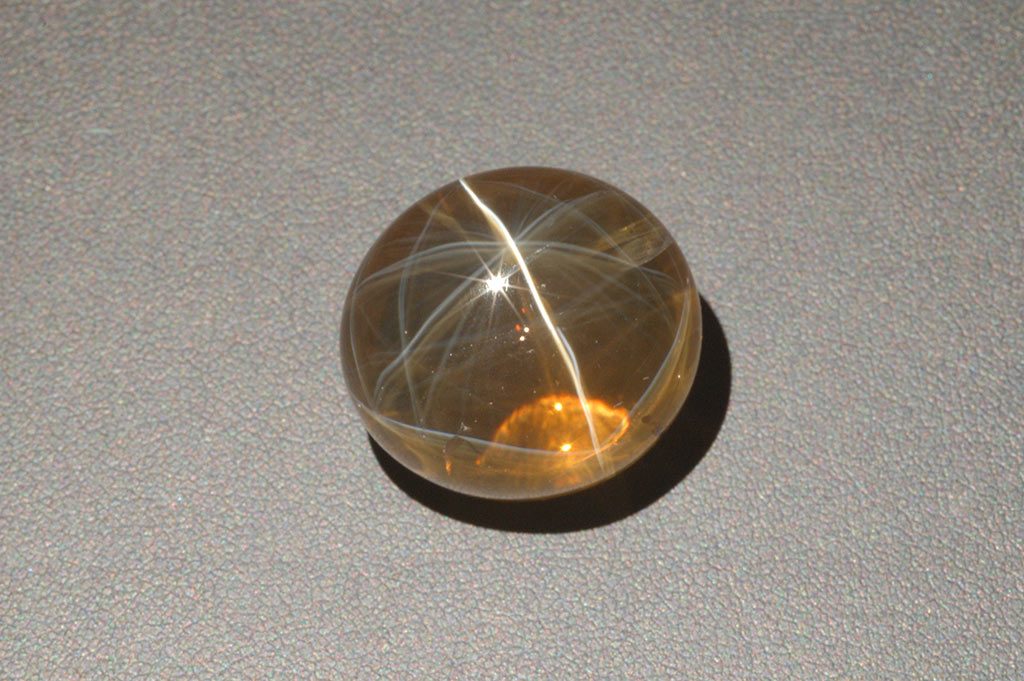
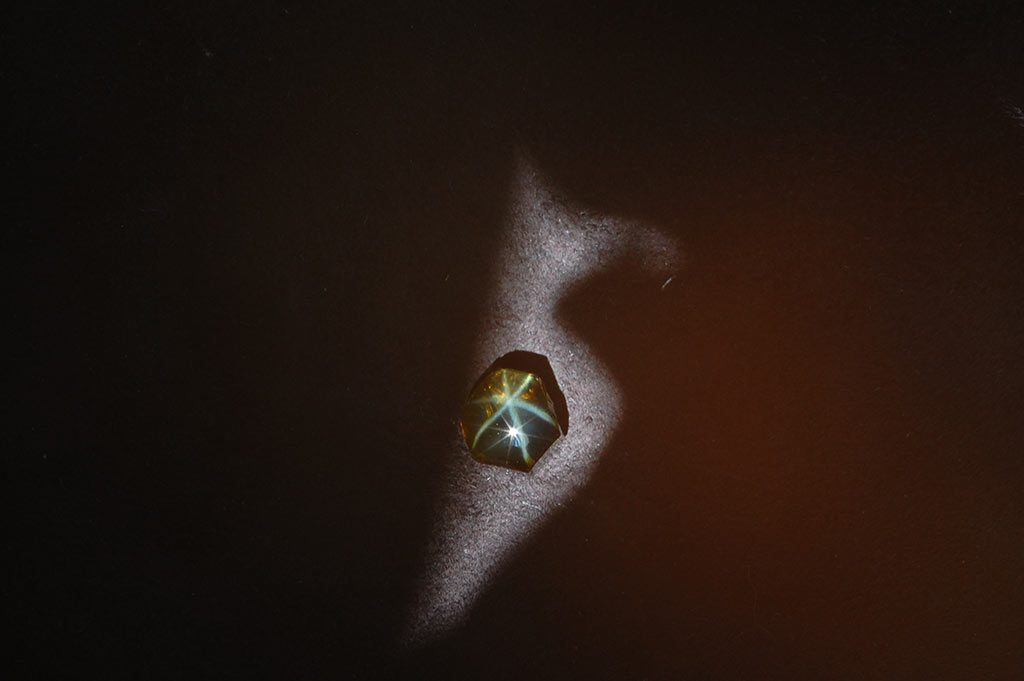
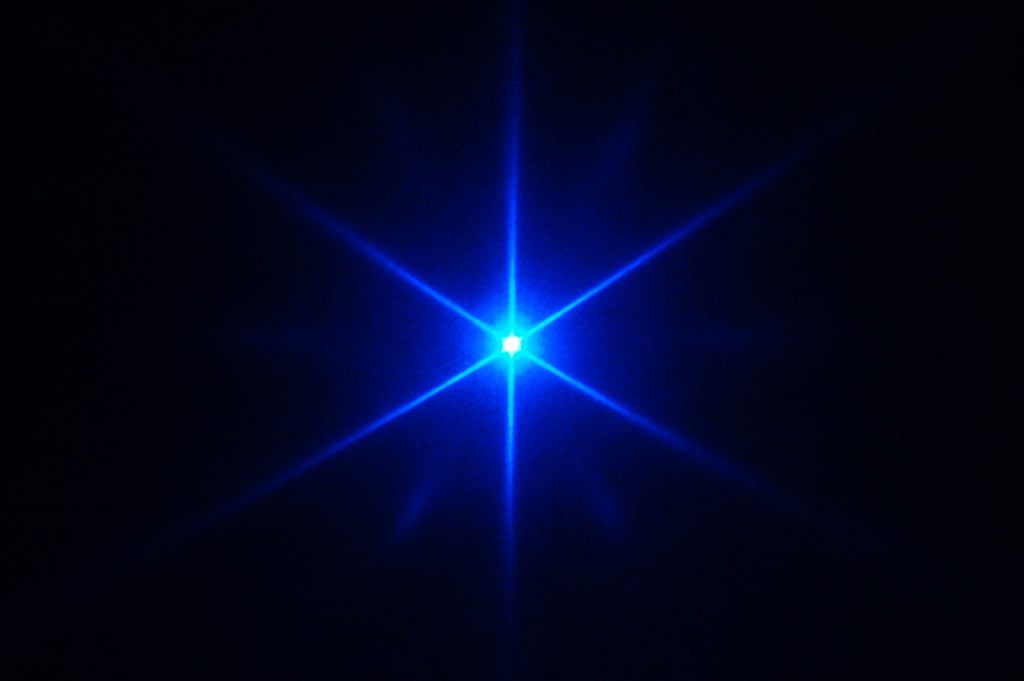
4,314 cm3 equal to 4.31 dm3, that is over 3 kilos of everything you would have always wanted to know or that you would have never imagined to have the chance to learn on the still little known magic world of “star stones” or “asteriated gems” (from the Greek aster, star) that is designated as the optical effect, asterism, that the “Gemmological Dictionary” by M. Superchi defines as “consisting in a star-shaped brightness (with four, six or more rays) due to a reflection of light on the inclusions or discontinuities present in a crystal, regularly oriented following the symmetry; such effect is well evident when the crystal is cut as a curved surface, with a proper orientation”.


Only a German could have been able to put together with such minute precision and systematic attention over more than 20 years:
- The detailed description of over 60 different asteriated gems, some for the first time ever, including trapiche varieties;
- More than 1000 outstanding colour pictures on all the knowledge on star gems: from historical documents to the relative extraction activity, from the listing of the most famous and representative gems, to the exemplification of species and varieties, as well as origins (natural or synthetic), without leaving out the chapter dedicated to the treatments meant to artificially induce asterism;
- A list of over 800 references meant for the purpose of scientific research.
I think neither justice is done to the monumental work by Steinbach, nor the author is given the right acknowledgement, without duly taking into account, in the specific case, the subjects he so exhaustively treated in this that, in my opinion, is and will remain, who knows for how long, the true Encyclopaedia of Asteriated Gems. Also to provide the researchers or the enthusiasts or the professionals, with the full awareness of what they will buy, in terms of potential knowledge that could be translated also into economic opportunity, against payment of a sum of money, which, once paid out, will be irrelevant when compared to what could be obtained.
Here are the contents, then, divided based on specific themes, of the 9 chapters composing the 896 pages of the volume.
- Asterism through the centuries: an historical excursus of 66 pages, rich in quotations and references concerning this type of stones, spanning from the time of Homer and Plinius the Elder to the definition of the CIBJO nomenclature to our days, passing through the XII century of Albert the Great and the XVIII of Anselm Boetius and Jean Baptiste Tavernier. All these names should not leave indifferent the gem enthusiasts.
- Famous asteriated stones: from the Neelanjali Star Ruby with 12 (!) rays to the Golconda Star Sapphire, without leaving out other celebrities populating the vast prairies where sculpture and engraved stones caracole.
- Scientific aspects of Asterism: a broad spectrum treatment of the nature and causes of such phenomenon from an optical crystallographic point of view focusing on the role played by the different types of inclusions, for the various species where this phenomenon is evidenced, that can not be separated from their geogenesis. A luxury that continues for 26 pages, dedicated to the Newton hiding in you.
- Treatments in asteriated gems: if you had cherished vain hopes that at least in this part of the Creation the mephistophelic human hand had not intervened, quickly go through pages from 179 to 203 and you would make up your mind. They provide a list of the sad numbers of treatments: from diffusion to irradiation, from thermal treatments to artificial colouring to end with various types of fillings.
- Synthetic asteriated stones: 40 pages about everything the bipedal mammal of the homo sapiens sapiens species could invent to emulate Mother Nature. From the various types defined based on species (corundum ruby and sapphire, chrysoberyl alexandrite, opal, spinel, zincite) to the specification of the manufacturing method (flame melting, flux melting, Czochralski) including the general details of every single manufacturer.
- Imitations of star stones, assembled and artificial: everything you would have ever wanted to know on the tricks implemented to imitate the “beautiful stones” and on identification methods: Doublets with a quartz or corundum base and a natural star or induced by scratching, doublets and triplets imitating trapiche emeralds, quartz-glass-chalcedony or corundum-glass corundum doublets, just to quote some.
- All the gems with asterism: a 434 (four hundreds and thirty four) page excursus detailing all the species (and/or the relative varieties) evidencing the phenomenon including the places where they were found. I’m just saying: did you know that going to Brazil, India, Madagascar, Sri Lanka and Tanzania you could get your hands on asteriated almandine garnets? Or that you could come across (and then pass them off to fanciful collectors) uncommon cases of asterism among: andalusite, apatite, beryl, calcite, chrysoberyl, iolite, ekanite, feldspar, sillimanite, kornerupine and here I stop as there are too many? Don’t you find it tempting?
- Dream gems: Would you like to have further information on asteriated gem in transmitted light (moonstone, peridot, pink quartz) with 12 rays, double star, parallel/twin stars, on trapiche asteriated corundums, andalusites, aquamarines, morganites, quartzes, spinels, iolites and tourmalines? Wallow from page 759 to 825.
- Stars and art: in case you are still curious, go rummaging through the various other curiosities given by the author as a complement.

Said that, don’t you think that 169 euros (199 USD) is a good price? Paraphrasing someone who was more into business than me. “stay foolish, stay hungry” of knowledge, as knowledge opens unexpected doors of opportunities!
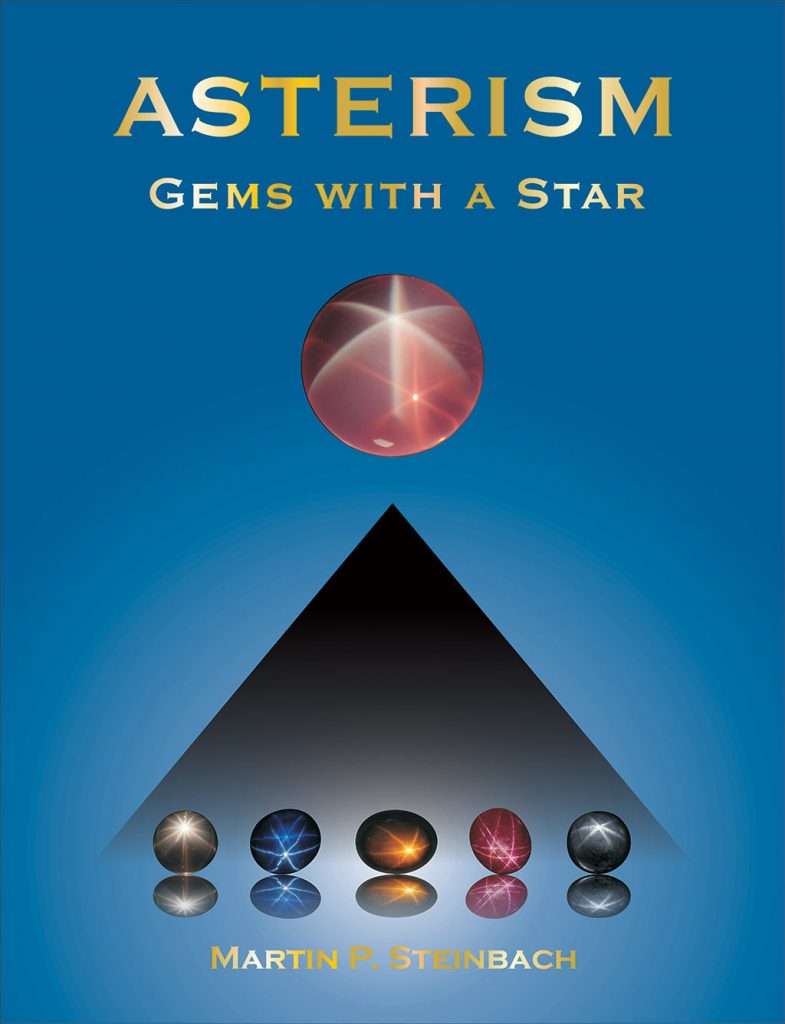
“Asterism – Gems with a Star”
Author: Martin P. Steinbach
Published in Idar-Oberstein, Germany, by MPS Publishing and Media in 2016.
896 pages, 295 x 225 mm
Paperback cover
It can be bought on www.star-sapphires.com or contacting gstargems@aol.com for the price of € 169 ($ 199) plus shipping costs.
Available in bookshops in Bangkok (Thailand) via Lotus Gemology, Richard Hughes; in Paris (France) via Association Française de Gemmologie, Didier Giard; in London (GB) via the Gem-A bookshop.
By Luigi Costantini, published on IGR – Italian Gemological Review #3, January 2018