This content was first published on IGR – Italian Gemological Review no. 23 in 2026. The information provided here is therefore current as of the original publication date.
In recent years, the natural diamond industry has entered a challenging phase, shaped by the rapid rise of synthetics, elevated inventory levels, and weakening demand — particularly in the commercial segment.
In Italy, major national newspapers have also drawn attention to the trend. Estimates cited by “Il Giornale” indicate that rough diamond prices had already fallen to $99.3 per carat by the end of 2025, down from $128.8 the previous year. Yet the “De Beers Diamond Report 2026” points to underlying resilience in demand, suggesting a market still supported by the enduring value of natural stones, even as it undergoes significant structural change.
Rapaport, meanwhile, continues to stress that the industry is searching for a new equilibrium. After a prolonged downturn, recent signals do not yet point to a clear rebound, but rather to a gradual normalization of trading conditions.
On the supply side, a strategic shift is becoming evident. The pipeline is increasingly moving toward tighter control of production volumes, with the aim of safeguarding profitability and addressing the imbalance between supply and the market’s ability to absorb it.
At the top end, resilience remains more pronounced. Larger, higher-quality stones — particularly those above two carats — are holding firmer than standard goods, reinforcing a growing polarization between exceptional stones and the broader commercial category.
The most significant shift, however, concerns the positioning of natural diamonds themselves. The sharp decline in lab-grown prices is widening the gap between the two categories: lab-grown diamonds are consolidating their role as an industrial product, defined by abundant supply and steadily falling prices, while natural diamonds are increasingly positioned as rare, finite assets, with uniqueness as their core value driver.
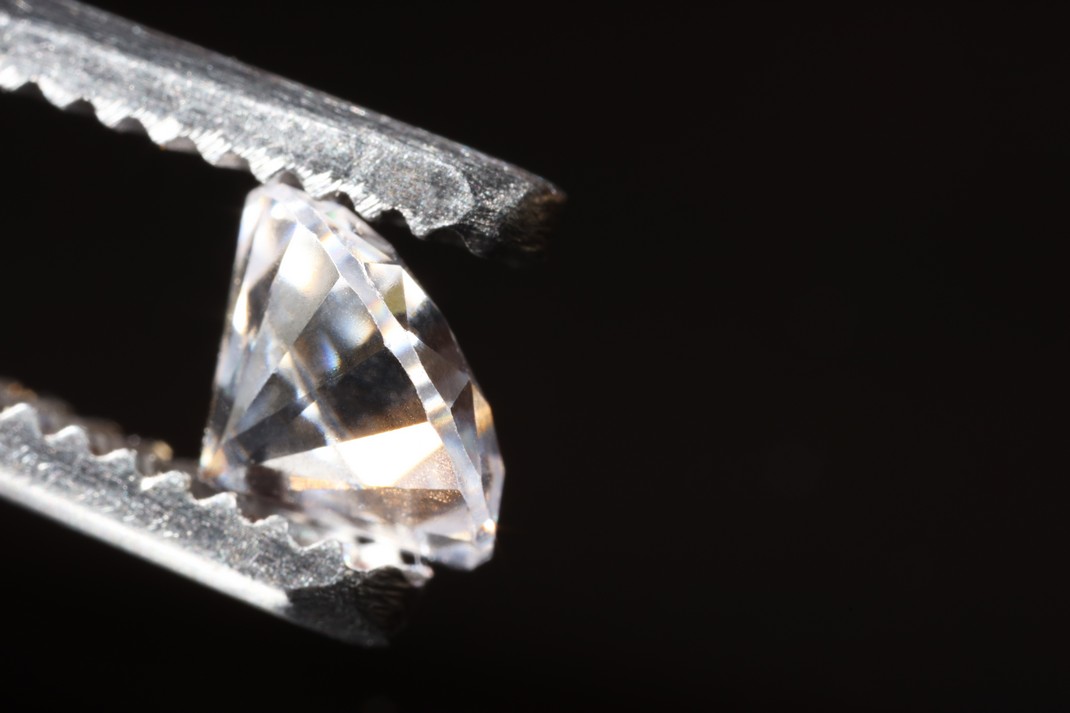
For the jewelry sector, this evolution presents both a challenge and an opportunity. The value proposition of natural diamonds can no longer rely on the “4Cs” alone. Origin, rarity, traceability, independent certification, and responsible sourcing are becoming central to the narrative.
In this context, the role of the gemologist is also gaining prominence — tasked with clarifying differences, accurately interpreting certification, and guiding clients toward informed, confident choices.
Article by Sergio Sorrentino, published on IGR – Italian Gemological Review #23 – Autumn 2026.