This content was first published on IGR – Italian Gemological Review no. 3 in 2018. The information provided here is therefore current as of the original publication date.

Aquamarine is the light blue, light-blue greenish variety of beryl, named after the colour reminding sea water. The typical genesis of this mineral is pegmatitic. The main fields are in Brazil (in the state of Minas Gerais, where stones characterised by very light colours can be found), Russia (on the Eastern Urals, beryls of all colours can be found) Madagascar (very beautiful beryls), Afghanistan, Nigeria, Pakistan, California, South Africa, Sri Lanka, India, Australia, China and Mozambique.
Every enthusiast is well aware of the wonderful stones coming from Brazil or Madagascar that often embellish high range jewels, but very few know that nice stones can be cut from raw aquamarines extracted in Italy!
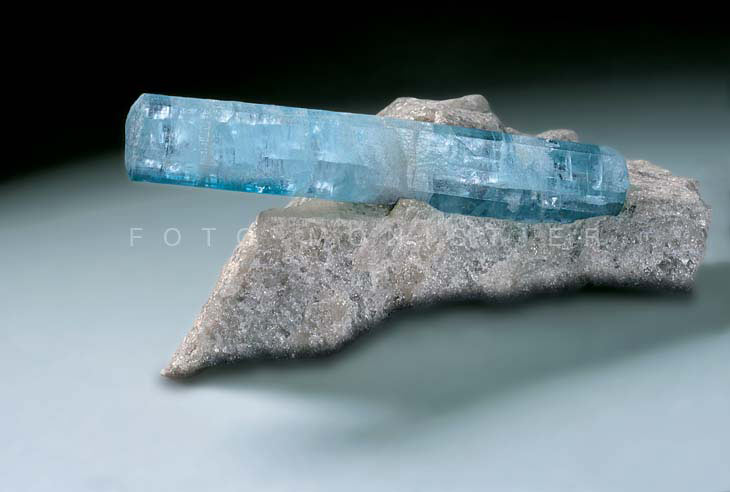
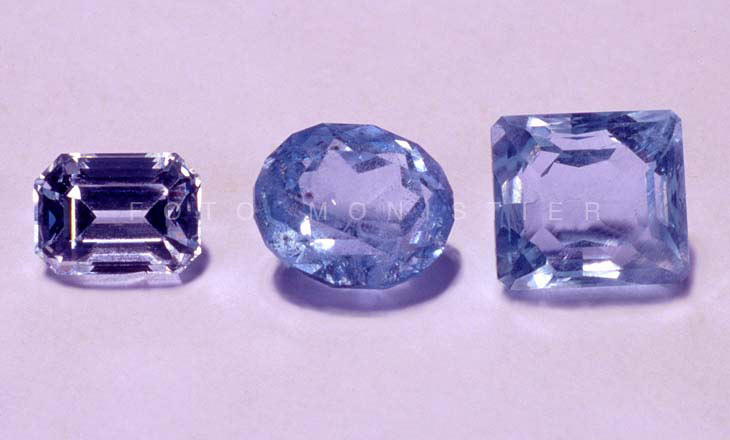
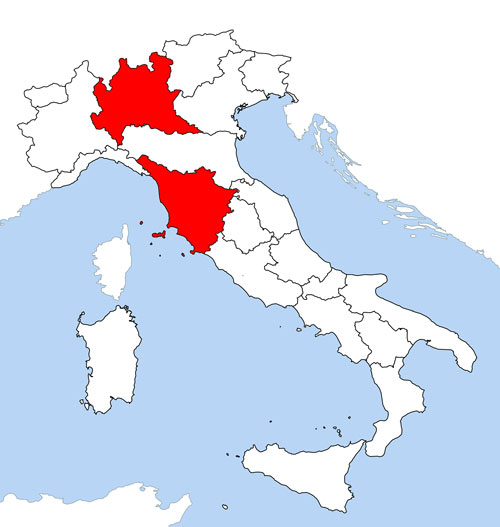
In the central alps, numerous locations exist that occasionally supply aquamarine crystals endowed with an outstanding intense light blue hue (Figure 23). They are in Val Codera, Val Bregaglia and Val Masino. On the Alps, aquamarine can be found in light blue crystals set in a specific type of rocks: pegmatites. They are veins of very light rocks, rich in mica, extremely frequent in Lombardy, north of low Valtellina in an area characterised by beautiful mountains: the massif of Masino-Bregaglia. It is a very interesting area for mineralogy, consisting of a group of granite mountains whose rocks are crossed by veins of lighter rocks (pegmatites); in such veins you can find garnets, beryls (of the aquamarine variety), tourmalines, micas and numerous less flashy and more rare minerals. In these areas you can then find gem quality aquamarines, from which gems of a good colour and limpidity can be obtained (Figure 24).
Moving to Tuscany, in the pegmatites of Monte Capanne at Isola d’Elba, you can instead find white or very light blue crystals, usually clear, but characterised by a small size. In this location also beautiful morganites were found (pink beryl) even though of a rather pale hue.
Visit the Gems of Italy section!
Curated by the qualified group of expert of the section Gems of Italy, published on IGR – Italian Gemological Review #3, January 2018.