This content was first published on IGR – Italian Gemological Review no. 16 in 2023. The information provided here is therefore current as of the original publication date.

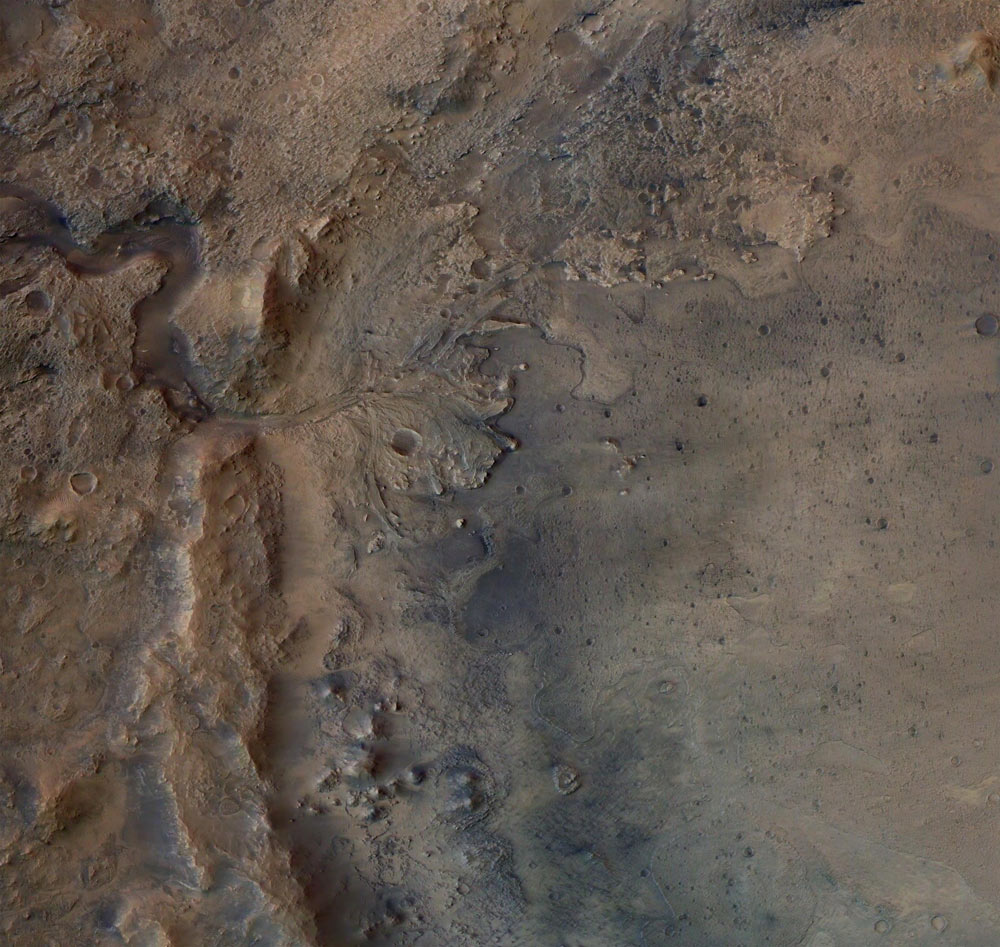
As early as 2017, NASA’s research team identified layers of pale to creamy hued minerals identifiable as opals outside the Valles Marineris canyon system. A recent paper published in the Journal of Geophysical Research: Planets analyzed data recorded by Curiosity in the Gale crater, and what they discovered is stunning. The rover was sent to the Red Planet in 2012 and it has transmitted images where opal can be discerned at the edges of a network of fractures. This discovery is crucial not only as a confirmation that Mars was once a planet rich in water (opal actually is an amorphous mineral consisting of microscopic spheres of silica with water filling the interstitial spaces), but because the water could one day be collected and stored away by extracting it from the opal itself.
Despite the fact that the discovery is outstanding in the scientific world at the moment, it is not yet known whether the opal in question can be referred to the “precious” type, so it is still too early to think about any gemstone quality mining.
Gem News published on IGR – Italian Gemological Review #16, Summer 2023