This content was first published on IGR – Italian Gemological Review no. 3 in 2018. The information provided here is therefore current as of the original publication date.

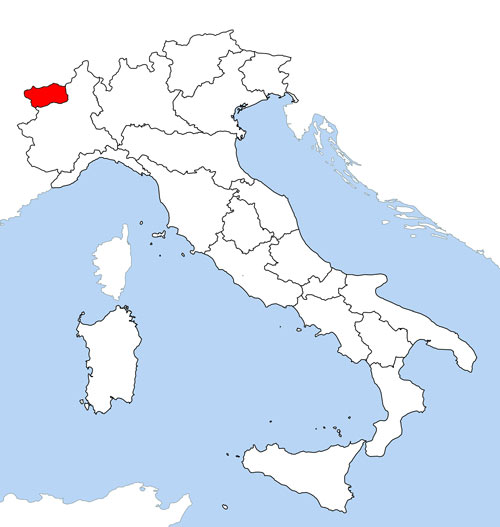
Alurgite is a phylosilicate belonging to the family of micas and specifically indicates a variety of muscovite, rich in manganese, only found in the manganese mine of Praborna, near Saint Marcel, in Valle d’Aosta. This mineral has always been exclusively used for collection purpose in systematic collections.
This mineral is usually found in small veins and sheets with a micaceous appearance, perfectly cleavable, flexible and elastic, of a red colour in a generally braunitic black matrix, though it can sometimes appear as reddish due to the presence of piedmontite and rarely violet because it can contains violane. In other cases it is found in milky quartz.
Alurgite is formed in partially oxidised metamorphic rocks rich in manganese and iron.
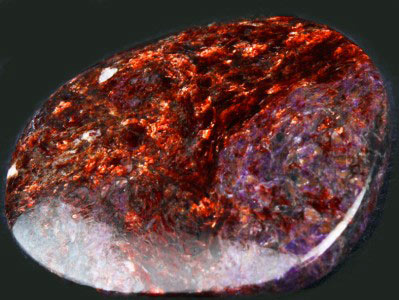
Only recently alurgite has been cut to obtain stones with a pleasant appearance. The only possible cut is the boulder one, that is free-shaped cabochons following the undulation of the micaceous vein (Figure 7).

The resulting cabochons are characterised by a bright red with flames due to the flakes of mica. The most spectacular samples are those where the alurgite is associated to the violane creating a combination of colours unique in the mineral world.
This stone material was marketed at the Tucson Fair in Arizona with the name of Italian Fire (Figure 8).
Visit the Gems of Italy section!
Curated by the qualified group of expert of the section Gems of Italy, published on IGR – Italian Gemological Review #3, January 2018.