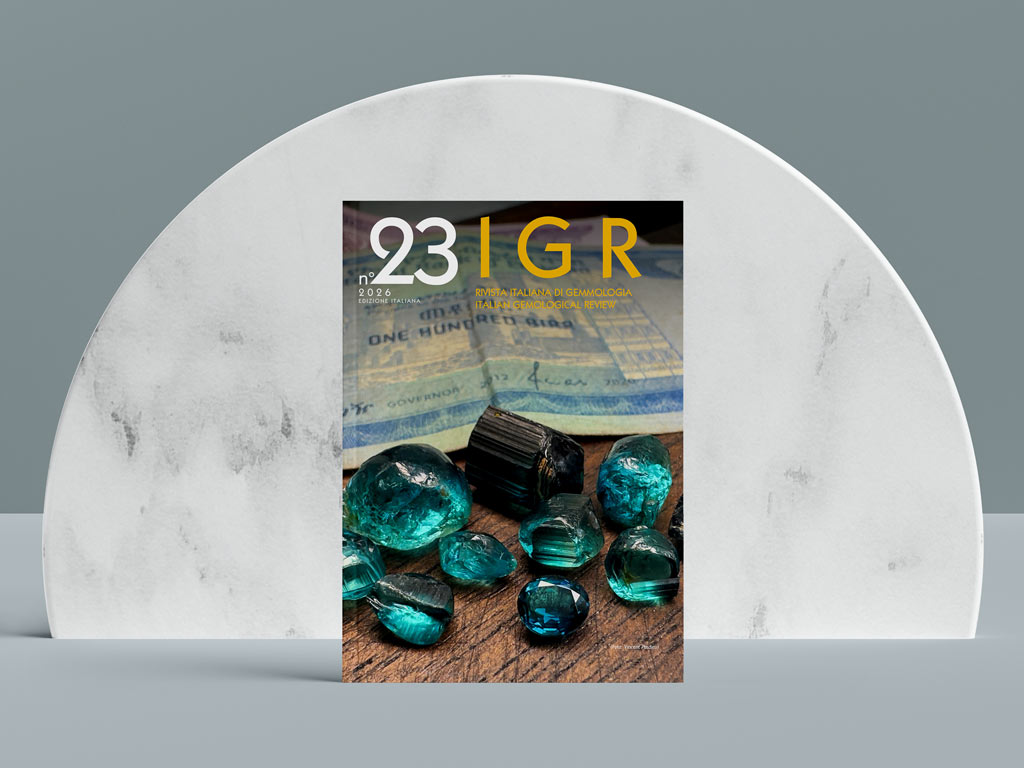
This content was first published on IGR – Italian Gemological Review no. 19 in 2024. The information provided here is therefore current as of the original publication date.

Main topic: De Beers is for sale. In this issue of IGR, we reveal the behind-the-scenes details of what is more than just breaking news — it’s a truly epochal shift. What’s happening? The group controlling De Beers is looking to offload diamonds, which have become (and will increasingly become) less strategic and profitable compared to other materials, such as copper.
In a brilliant book on commodities, Italian economist Alessandro Giraudo points out how their importance and the struggle for control vary depending on economic conditions: «[…] in the past it was pepper, today it’s energy; in the future, it might be coltan, lithium, germanium, promethium, or thulium».
No product is “forever” — that is an economic law. So, will diamonds collapse? No, but every era assigns them a cycle and a repositioning. Pliny the Elder much preferred opals. Lapis lazuli, as a pigment for figurative art, was worth more on the market than diamonds a few centuries ago.
The diamond market was monopolistic yesterday, and until recently no one anticipated the rise of synthetic diamonds. Tomorrow’s market will depend on how much investment is made in today’s mines. That’s why the potential sale of De Beers is a geopolitical watershed worth analyzing, and one that is sure to catch the attention of our readers.
As the mining sector reshuffles its cards in the winds of change, ethical concerns-our second key point-remain stuck in the paralyzing quicksand of two decades of inaction. In these pages, however, IGR points to a possible salvation, another crucial step in our long struggle to bring regulation to the jewelry and gemstone trade.
The news is that we can regulate the industry from the ground up. We still have time to make a difference. Read the insights shared with us by prominent figures such as Almudena Gómez Espada, Teri Brossmer, Jeffery Bergman, Antoinette Matlins, Gary Roskin and many others. The fact is, the lack of laws in the gemological world is not just an Italian problem.
Is shared hardship half the comfort? Not exactly. But how can we not be pleased that the Italian guidelines to combat fraud and misleading sales have passed the test and are now considered adequate by the international community?
Finally, we have a legal framework that will help honest traders. The IGR believes that the gem and jewelry sector must take responsibility and translate ethical principles into concrete actions. Those who admire a gem in a shop window should not just be dazzled — they must be helped to understand the products for what they really are, with transparency and objectivity. It’s time for the gem industry to rediscover the courage to defend the integrity of its value and to drive out the fraudsters — without hesitation, fear, or silence.
Editorial by Paolo Minieri, published on IGR – Italian Gemological Review #19 – Autumn 2024.