This content was first published on IGR – Italian Gemological Review no. 4 in 2018. The information provided here is therefore current as of the original publication date.

Dolomite is a calcium and magnesium carbonate named after the famous French mineralogist Deodat de Dolomieu. It is a mineral with a prevailing sedimentary origin widely spread all over the world; due to its low hardness and its perfect cleavage, dolomite is not generally used in the gemmological field.
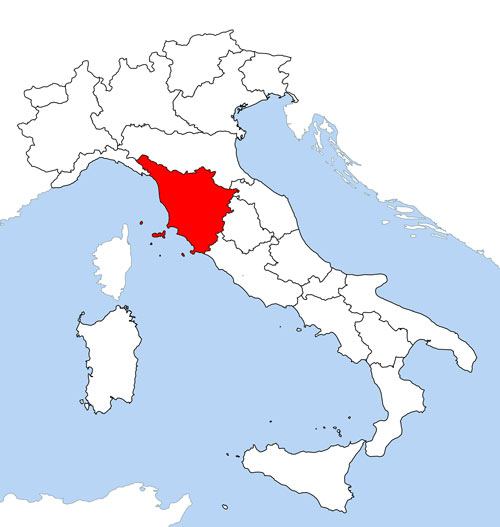
However, in Italy a nice green variety of dolomite can be found in a cave of magnesite near the village of Miemo in the municipality of Montecatini, Val di Cecina in the province of Pisa. It was described in the nineteenth century by doctor Thompson of Naples, but it was rarely used as cutting stone.
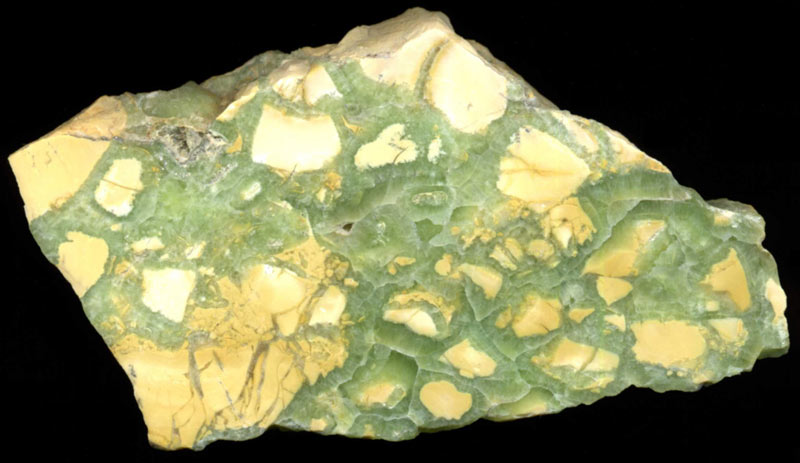
They are fibrous concretions with a 1-2 cm thickness covering a white or yellowish brucitic limestone. It shows a green asparagus colour with an excellent brightness and suitability for cutting (Figure 46).
This material has been used to produce cabochons.
Visit the Gems of Italy section!
Curated by the qualified group of expert of the section Gems of Italy, published on IGR – Italian Gemological Review #4, Summer 2018.