This content was first published on IGR – Italian Gemological Review no. 3 in 2018. The information provided here is therefore current as of the original publication date.

Alabaster is an evaporitic micro crystal rock, usually banded with light colours and often transparent in thin layers, ideal for small size artistic and artisanal workings. The name alabaster generally indicates two mineralogically distinct varieties, calcareous alabaster, also called oriental alabaster, as the most famous fields are located in Iran, and gypseous alabaster also called Volterra alabaster as it is typical of this town near Pisa.
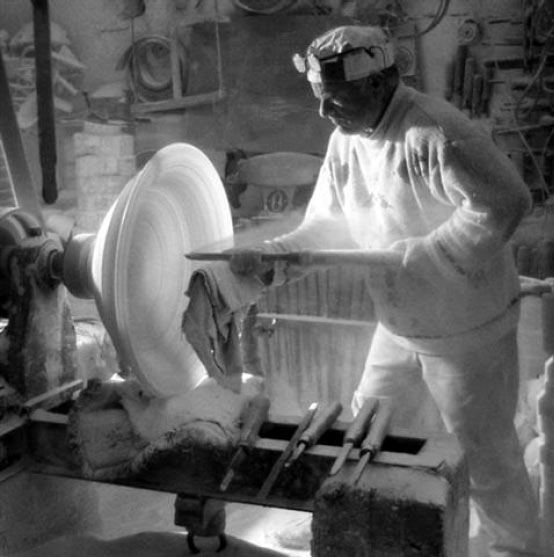
The gypseous alabaster from Volterra is a very precious material due to its compactness and transparency. Its abundance favoured an important artistic artisanship in the city of Volterra. This alabaster is easy to work, offering a good polishing, and is extremely compact, despite the fact that gypsum has a very low hardness (Figure 1). The best quality of such a material is its being translucid, giving the possibility to create outstanding light plays and wonderful lamps. In ancient times alabaster sheets were used to create small windows in the Romanic churches of central and northern Italy.
The gypseous alabaster originates from the recrystallization of evaporitc deposits of the messinian age that accumulated during the crisis of salinity that led to the drying of the Mediterranean about 6 million years ago. There are numerous varieties based on colours and patterns. Maybe the most precious is the homogenous white variety called statuary alabaster used exactly to create artistic items. Other varieties are characterised by the presence of dark (vulpinite), red or brown veins. A grey variety (“cinerino” or “panchino”) is used for frame workings and bases.
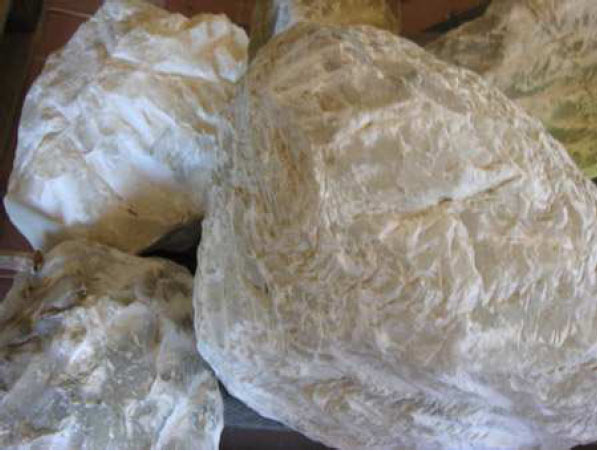
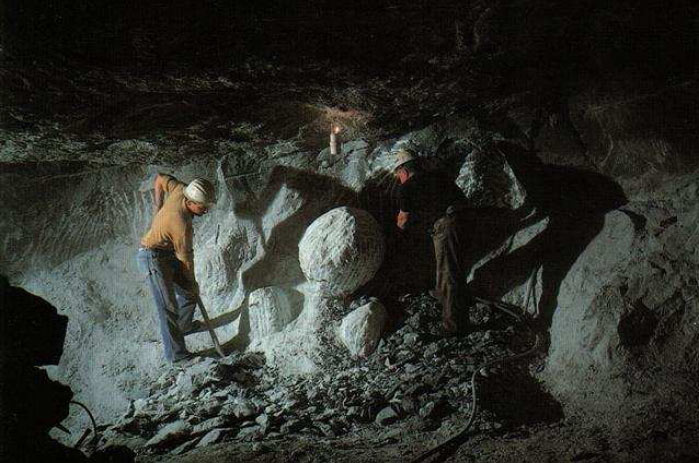
In the past there were some fields in gallery, but today alabaster is extracted from a single opencast mine near S. Anastasio, in the municipality of Volterra. Alabaster can be found in oval blocks called kidney-shaped masses set into a clay matrix. This kidney-shaped mass is extracted by sapping it from the rock and freeing it from the shell it is covered by (Figures 2 and 3).
Unlike the gypseous alabaster, the calcareous one originates in a Karst environment and it is generally banded, consisting in calcite or fibrous aragonite. Honey yellow is the most common hue, though white and other coloured varieties also exist. Calcareous alabaster is stronger than the gypseous one, though it is worked in a very similar way.
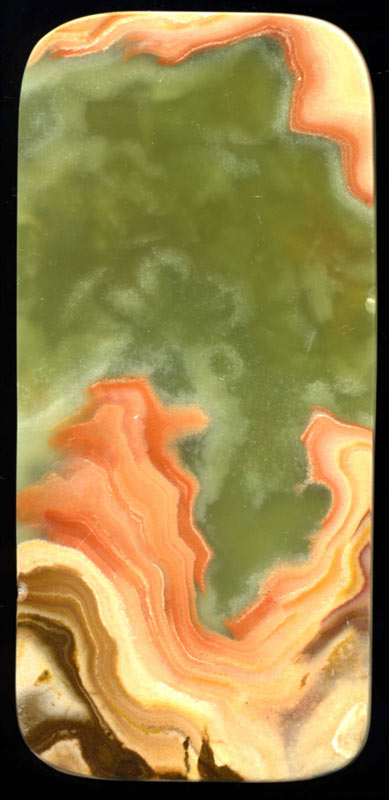
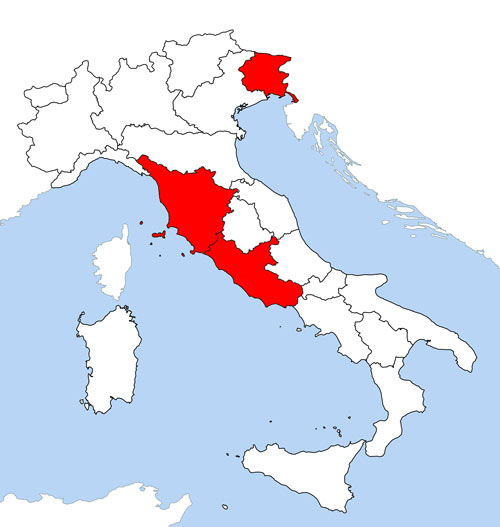
Although the Italian fields of calcareous alabaster are not of a big size, there are numerous places where this material can be extracted. Maybe the best known materials are the turtle alabaster coming from Jano di Montaione in the province of Florence, the white “ghiaccione” from Circeo, Lazio and the stalactite of the karst in the Trieste area.
Visit the Gems of Italy section!
Curated by the qualified group of expert of the section Gems of Italy, published on IGR – Italian Gemological Review #3, January 2018.