This content was first published on IGR – Italian Gemological Review no. 3 in 2018. The information provided here is therefore current as of the original publication date.

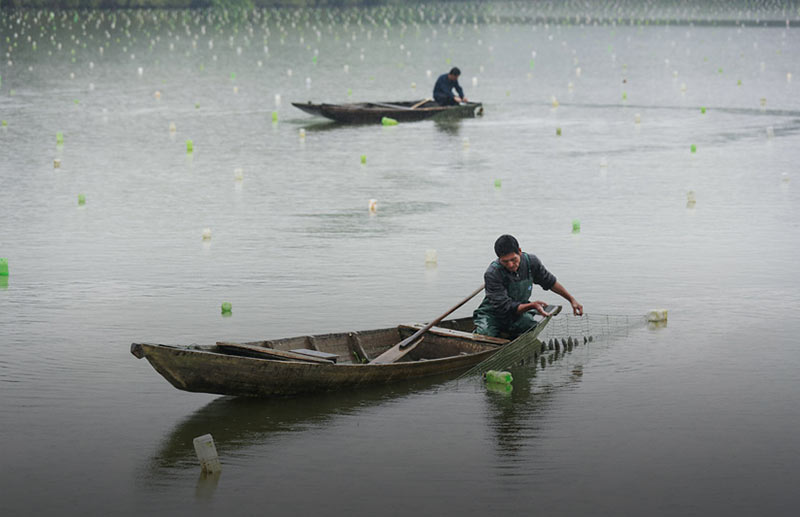
Due to pollution, the lake area of South East China experienced a decrease in the surfaces intended for the farming of pearl molluscs (Zhejiang province) from 38 million mus (a Chinese measuring unit equal to 666.7 square metres) in 2005 to just 160,000 in 2016 with a drop in manufacture from the peak of 2000 tons to nearly a half. This is the inevitable consequence of a very strict plan enforced on 16th April 2015 by the Chinese Council of State aiming at improving the quality of waters starting from 2020. Wide areas included in the bid were actually abandoned by farmers who had to stop at production cycles lower than those planned (usually 5 years). In such conditions prices have been continuously rising for some years now, mainly when the most precious qualities are concerned. Many of the Chinese lakes, mostly artificial, were treated with animal manure and clogged with sludges so as to favour the development of algae, nutrients of molluscs. The extension of such practices led to the phenomenon called eutrophication, an excess in nutrients with a subsequent lack of oxygen. Environmental sustainability is the new watchword for freshwater pearls.
Gem News by Trasparenze News, published on IGR – Italian Gemological Review #3, January 2018.