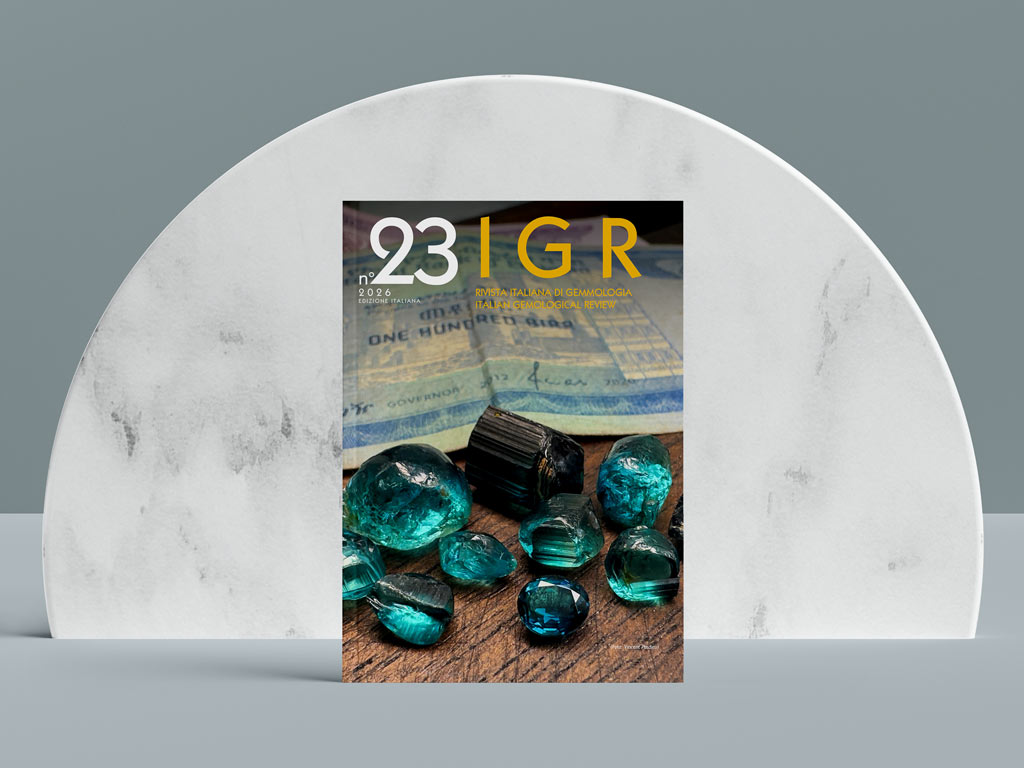
Gemstones in Italy are on their way again. Finally, gemologists, academics, laboratory analysts, dealers and the gem cutting industry have come together. And between the bright lights of the new beginning and the clouds following the long pit stop, the key point could be in this simple question: where were we?
As media partner IGR sponsored and covered the proceedings of the III National Conference “Diamonds and Color Gems – Genesis, Provenance and Market Implications”, hosted by the Department of Earth and Geoenvironmental Sciences at the University of Bari “Aldo Moro” on July 22 and 23, 2021.
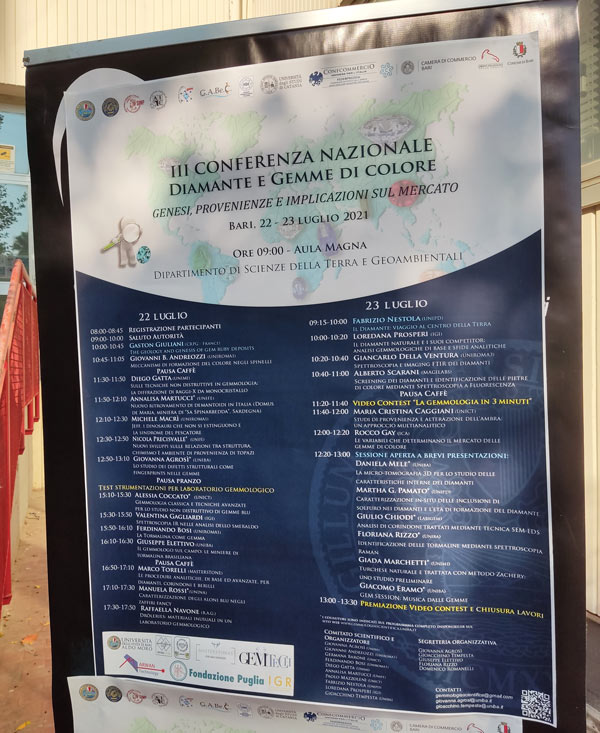
Our country has not hosted internationally recognized gemmological events on a regular basis. Nevertheless, a lot had been done with the CIGES conferences, organized by a group of mineralogical departments of the main Italian Universities. But CIGES was discontinued after the 2013 edition. After that there had been two meetings promoted by representatives of Italian universities and research and gemological institutes in Catania in 2016 (first edition) and in 2019 (second edition). All in all, after the COVID crisis there was an urgent need to start over and meet outside the screens. The audience was already waiting there, it was just necessary to grab it back.
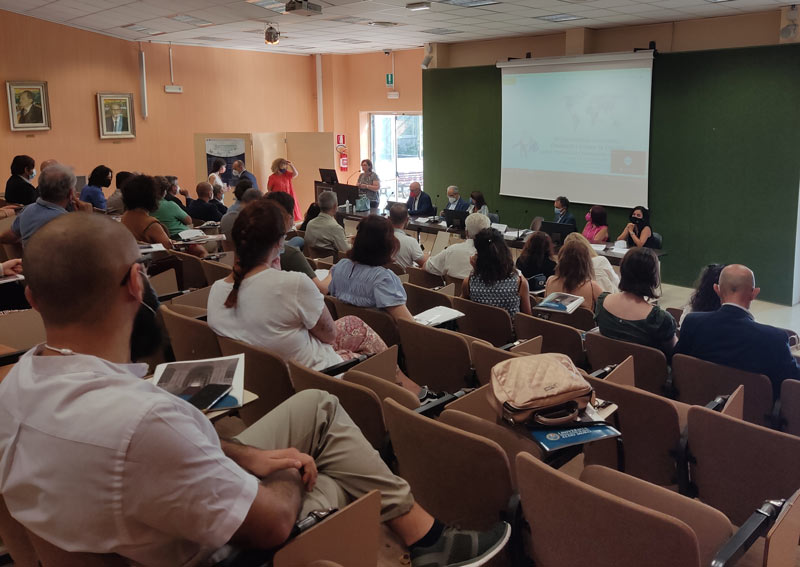
Where were we? We were on a fault line, the one where the world of Mineralogy in the Academic field and the world of the gemstone and jewelry industry meet (or – rather – should meet). No question there is still much to be done. Accredited scientific research and practical applications for the jewelry business are still distant planets. Yet today, more than ever, cooperation is mandatory.
Italian Earth Science faculties and their department of Mineralogy must contend with a drastic fall in attendance. Gemological testing laboratories must adapt their protocols to a much more advanced standard than they used to. The market is demanding more and more in terms of innovative gem characterizations, geographic origin determination and ethical tracking. Everyone has something, everyone needs something.
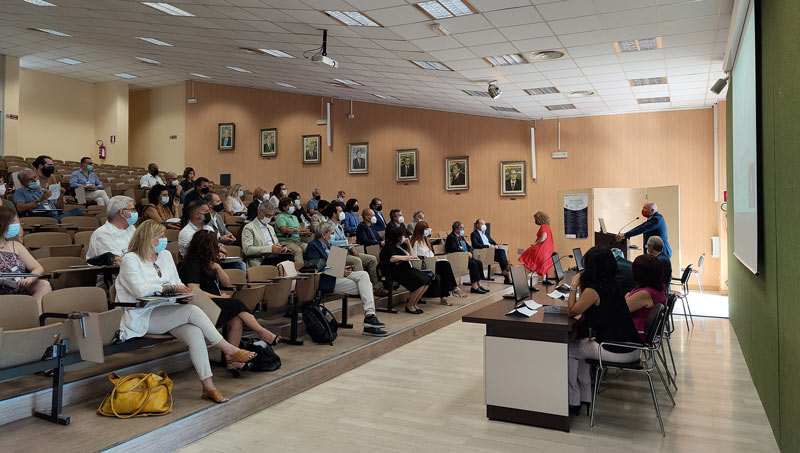
The congress in Bari opened the door to considerations that, beyond the single specific topics, clearly show that a stable network of exchanges is needed. This is one result: a congress can be successfully arranged when dialogues and projects have been developed, but also when a good dose of imagination and courage has been deployed along the way. And most importantly, when regular and coherent steps have been planned. Goodwill aside, it can’t be denied that sometimes it seems as if the selected subjects arise from exogenous random inputs, which aren’t all shared, and aren’t always rooted in the living business reality and experience the companies are involved in. And, with respect to mineralogical studies, many companies have nothing but a hasty approach: let them do it, as long as they write down what we want.
So, the good news now. The very good news will come when IGR will publish Issue No.13 (Autumn 2021) featuring a more comprehensive coverage and later on, when we will release selected papers provided by some of the speakers in full.
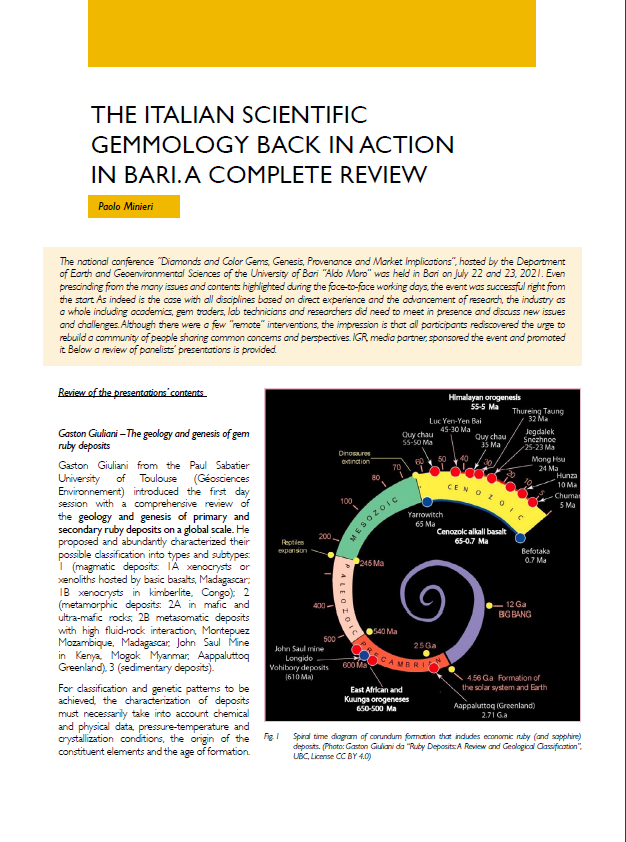
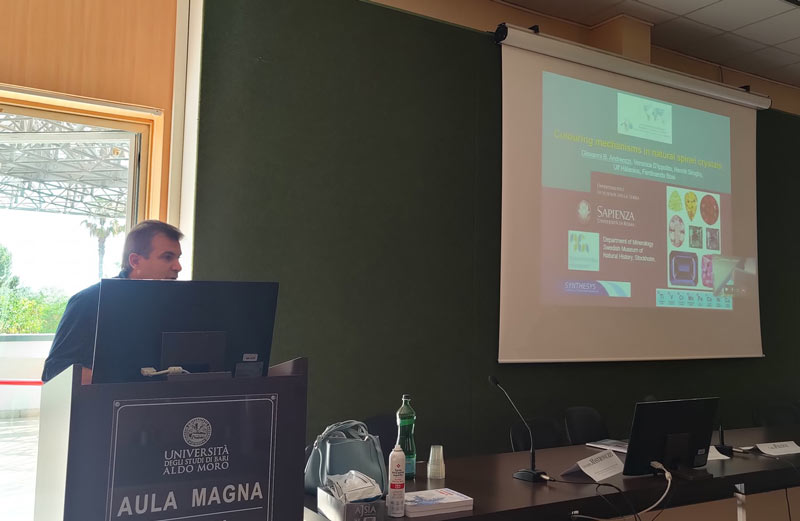
Here we go. Attendees in Bari could enjoy Gaston Giuliani’s detailed account of the Ruby Deposit Typology, a systematic work which, among many applications, is a stimulation for the foundation of a procedure for the geographical origin determination. The participants have witnessed very useful descriptions of the crystallographic systems of spinels (Giovanni B. Andreozzi), tourmalines (Ferdinando Bosi), topazes with particular regard to the origins (Nicola Precisvalle). Characterizations of the Sardinian demantoid of Sa Spinarbedda, of ambers such as romanite and simetite (Alessia Coccato) have been offered.
Laboratory procedures were extensively discussed. Practical cases, such as the distinction of diamonds from natural and artificial colorless gems (Loredana Prosperi), separation of natural diamonds from synthetic ones (Loredana Prosperi; Marco Torelli) and from mixed lots of melee through mass screening (Alberto Scarani) have been brought to the attention of the audience.
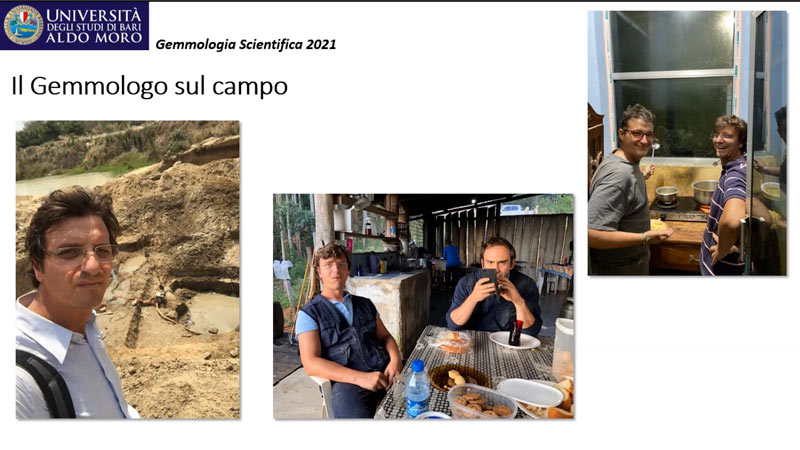
Insights concerning the use of instrumentation have covered the X-ray diffraction (Diego Gatta), the GPR georadar (Giuseppe Elettivo), the rX topography (Giovanna Agrosì and Gioacchino Tempesta), the infrared spectroscopy (FTIR) applied to diamonds (Giancarlo della Ventura), the SEM-EDS Phenom XL applied to corundum (Giulio Chiodi).
The fascinating plunge into the earth mantle depths offered by Fabrizio Nestola and his group working on diamonds as messengers of the underground was involving and enthralling, somewhat different from the rest of the presentations.
The thoughts of Michele Macrì also occupy a space of their own. The search for the definition of “Gem” is a work in progress reflecting the wonderful indeterminacy of the gemmological matter, ambiguously fluctuating between solid data and subjectivity.
The meeting ended with the awarding ceremony of the “Gemmology in 3 minutes” Video Contest organized by the Accademia Pugliese delle Scienze. Professors Eugenio Scandale, Francesco Sdao, Giovanna Agrosì and Gioacchino Tempesta, members of the board, after selecting the three best videos, awarded the winner with 500 euros and merit certificates.
The video winner of the competition is“Gemology in one hundred and eighty seconds”, made by Maria Cristina Caggiani, Alessia Coccato and Maura Fugazzotto. The video briefly illustrates some of the key points of gemmological studies, starting from the gem’s characteristics and from the figure of the gemmologist to develop then in three main chapters, respectively concerning diamonds, colored gems and pearls.
The video “Viaggio nel mondo delle gemme” (Journey in the world of gems), realized by Nicola Precisvalle, Annalisa Martucci and Costanza Bonadiman, ranked second. It is a short but suggestive journey in the fascinating gemstone and gemmology world.
3rd place goes to the video “La Gemmologia”, realized by Barbara Oliverio, focused on the relationship between gemmology and science, history, fashion, symbolism and marketing.
For the benefit of those among its readers who were unable to attend the event, IGR issue no. 13 (Autumn 2021), containing an exhaustive account of all the interventions, is coming in support and cannot be missed. See you soon there.