This content was first published on IGR – Italian Gemological Review no. 5 in 2018. The information provided here is therefore current as of the original publication date.

Blue Glaucophane can be found on Mount Pollone, Biella province, in Sesia-Lanzo area, characterized by high pressure low temperature rocks. They are intense blue crystalline heaps mixed with green fuchsite (Figure 59a). This nice looking material is quite hard to work due to its high porosity and some kind of impregnation is necessary. No doubt cutting can be worth and can result in attractive cabochons.

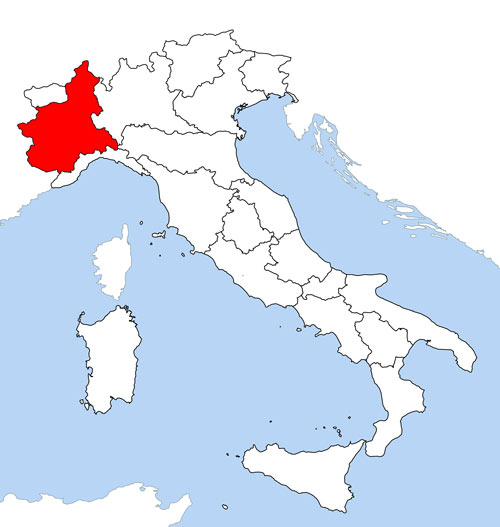
A very nice and sparkling rock is located near the Bric Vert, in the surroundings of Quincinetto, a village in northern Piedmont not far from Val d’Aosta (Figure 59b).

It’s a dark blue rock with red garnets standing out. The composition of the rock is complex and variable according to the samples. It contains glaucophane, which is blue, as the main mineral, along with omphacite (brilliant green) in varying proportions, epidote (yellowish white), anchorite (brown), fengite (light, silky) and pyrite.
The rock originated from regional metamorphism at high pressure and low temperature starting from a probable basic tuffaceous precursor. So it is a typical basic eclogite presenting garnet instead of quartz.
It is a crustal block resulted in subduction. The age of the subduction has been dated around 65 million years and the ascent around 33 to 30 million years. The ascent took place at 0.2 cm per year, a speed that allowed to keep the eclogitic characteristics untouched. For example omohacite is unstable at 40 km depth.
This rock can be used as a gem for beads, cabochons and small objects.
Visit the Gems of Italy section!
Curated by the qualified group of expert of the section Gems of Italy, published on IGR – Italian Gemological Review #5, Autumn 2018.